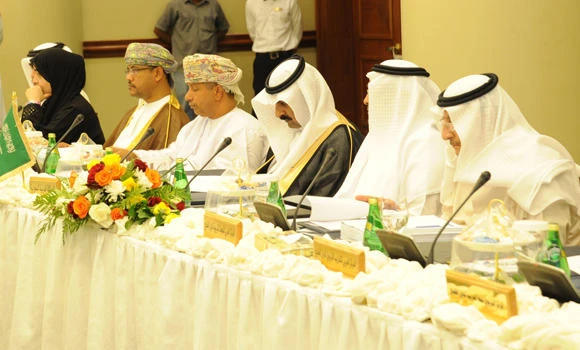
Asir Gov. Prince Faisal bin Khaled launched a workshop on urban population strategies in Gulf states at the Abha Palace Hotel on Tuesday.
The prince also launched a media site and database of urban centers.
Urban observatories address the urgent need to improve knowledge of urban patterns to help decision-makers shape policies and apply policy oriented urban indicators, statistics and other information, said Khaled Al-Nafie, director-general of research at the Ministry of Municipal and Rural Affairs.
“It was at an international meeting held in Istanbul in 1996 that the goals of providing suitable housing and creating sustainable urban development were defined,” Al-Nafie said.
He said Saudi Arabia was one of the first countries to set up an urban observatory in Madinah. Similar observatories were later established in Makkah, Jeddah, Riyadh, Abha and Baha.
One of the major tasks of national urban observatories is to develop local indices that are in line with international norms.
The observatory is coordinating with UN-Habitat, the United Nations human settlements program, to develop indices for the Kingdom.
It will also develop indices for welfare and prosperity in line with creating sustainable urban growth post-2015, he said.
Arab countries share the problem of job opportunities and housing for youth despite huge discrepancies in natural resources and educational levels, said Tareq Al-Sheikh, regional representative of the United Nations Commission on Human Settlements (UNCHS) for GCC states.
They also share the problem of land shortage and affordable utilities, in addition to lack of funding for housing, negligence to make fund allocations for major cities and weak local administration.
Al-Sheikh said urban populations in Arab countries had quadrupled between 1970 and 2013, while growth is expected to double between 2013 to 2050.
He said the GCC population would cross the 646 million mark in 2050 while 68 percent of the population would be living in cities. He put the number of expatriate workers at 15 million accounting for one third of the Gulf population.
Workshop on GCC urban population strategy launched