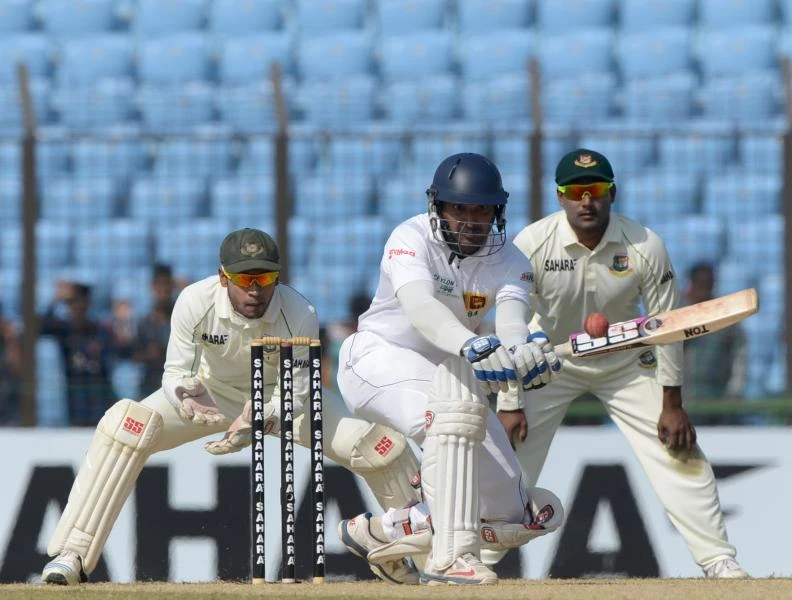
Pakistan and Sri Lanka are likely to maintain their opposition to giving more power to India, England and Australia in cricket when the ICC meets and possibly votes on the proposals on Saturday.
The positions of South Africa and Bangladesh, initially opposed to the changes, are unclear.
The Pakistan Cricket Board says its members have expressed "serious concerns" over the proposals which were "neither in line with the principle of equity nor in the interest of the game of cricket."
Sri Lanka Cricket says it will oppose them at the International Cricket Council meeting in Singapore following a unanimous decision by its executive committee.
Sri Lanka have insisted plans for wholesale reform of the International Cricket Council are in conflict with the organization's "fundamental principles".
In a letter seen by AFP in London, Sri Lanka Cricket board president Jayantha Dharmadasa has written to the ICC's head of legal affairs, Iain Higgins, warning the reforms are "not valid" in law.
The letter, sent to the ICC's Dubai headquarters on February 5, states that one of the objects for which the ICC was established was to regulate and promote the game worldwide "in co-operation with its members".
However, Dharmadasa argued the proposed changes take away power from the 10 full members and vest it "in an inordinately disproportionate manner in just three full members, namely the boards of India, England and Australia".
"The purported resolutions also have the effect of taking a disproportionately large share of the funding available from the ICC and distributing it among these three full members," Dharmadasa added.
"This is contrary to the equal revenue share model that is enshrined in the constitution."
The other major proposed change is the end of the current Future Tours Program, designed to give all 10 leading countries a regular diet of international cricket, and a return to 'bilateral' series.
Critics such as former England captain Michael Atherton have said the plans represent "the end of the notion that a fair and principled and just body can govern cricket in the interests of all".
But the 'Big Three' have insisted their scheme is about more than their own self-interest, with England and Wales Cricket Board (ECB) chairman Giles Clarke saying: "If the status quo was so successful, why were so many countries in a perilous financial state?"
He added: "All countries earn more through this proposal. No member would earn less and, if our predictions are correct, most will earn an awful lot more. How can that be bad for cricket?"
Cricket: Pakistan, Sri Lanka still oppose ICC reforms