ISLAMABAD: Pakistan, South Africa, Sri Lanka and Bangladesh are likely to oppose sweeping changes in the International Cricket Council as the governing body's executive board meeting began in Dubai on Tuesday.
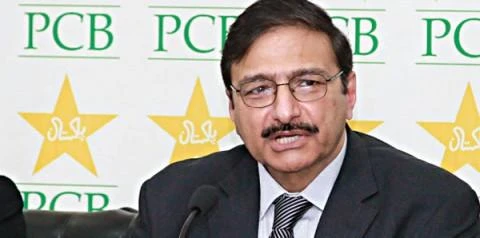
Before attending the meeting, possibly one of the sport's most important in years, Pakistan Cricket Board chairman Zaka Ashraf told private television channels in Pakistan that the four countries "have one stance and we will stick to our stance." The three richest cricket boards of India, England and Australia have drafted a radical "position paper" in an apparent bid to get more powers in the administrative and financial matters of the ICC.
"I will vote for Pakistan and whatever is in Pakistan's interests," Ashraf told Geo Television. "We have to see what is in our interests when we vote. Bangladesh, Pakistan, South Africa and Sri Lanka, we all have one stance. Four of us have the same stance. Let's see what we vote inside. We will stick to our stance." The draft has been widely criticized by former Test cricketers and ICC officials Ehsan Mani, Malcolm Gray and Malcom Speed as ceding control to India, England and Australia.
South Africa was the first to country to openly criticize the paper saying the so-called big three — the Board of Control for Cricket in India, the England and Wales Cricket Board and Cricket Australia — had not followed the correct procedure of consultation within the ICC when putting together the proposals for change.
Cricket South Africa described them as therefore "fundamentally flawed" while South Africa's Olympic committee said the proposed changes "would certainly not be in the spirit of the game." Paul Marsh, the head of the Federation of International Cricketers' Associations, which combines the player associations of seven of the ICC's 10 full members, called sections of the proposals "disturbing" and said they would broaden disparities between cricket's rich and poor.
If the big three face opposition at the ICC's two-day board meeting on Tuesday and Wednesday, it's possible the draft could not be tabled or might be adjusted because to get any special resolution passed it would require the backing of eight out of the 10 Test-playing countries — the full ICC members — according to the ICC constitution.
Officials from the BCCI, ECB and CA reportedly first presented the document to other countries at a meeting this month, with ICC officials apparently even having limited knowledge of the proposals.
The reforms would likely see the revision or abandonment of the ICC-controlled Future Tours Program which guarantees smaller nations regular series against the big three sides. Instead, India, England and Australia would have greater scope to pick and choose their games and turn down unprofitable or undesirable series.
The leaked 21-page document from the ICC's influential financial and commercial affairs committee, which hasn't gone down well with the four opposing full members, also proposes that a new four-member executive committee be set up, with three of the places taken by the India, England and Australia boards. They would decide on the fourth member.
The paper recommends the troubled Test Championship, which was set for introduction in 2017 be scrapped and the limited-overs Champions Trophy be retained in its place.
Apparently the four opposing members are also not in favor of a promotion-relegation system suggested in the draft. That would establish a reduced eight-country top tier for Test cricket from 2015, but with India, England and Australia immune from relegation because of "the importance of those markets and teams" to the ICC's money-making potential.
South Africa's Olympic committee called that specific proposal an "undemocratic principle." The overall angle of the document is that cricket, especially Test cricket, is often not financially viable outside of the big three countries and they should now take control. Instead of the Test Championship, the two lowest-ranked of the 10 Test-playing nations, currently Bangladesh and Zimbabwe, would be relegated from the format next year and have to fight their way back up to the top division through the four-day Intercontinental Cup and then a playoff. If a relegated nation doesn't win back its place in the top tier on the first attempt, it would lose money from the ICC.
The proposals do offer associate members Afghanistan, Canada, Ireland, Kenya, the Netherlands and Scotland a chance to play Tests through promotion, and a Test cricket fund would give money to Bangladesh, Zimbabwe, New Zealand, Sri Lanka, Pakistan and West Indies.
South Africa, which has the top-ranked Test team, was the only Test-playing country outside the top three excluded from that proposed fund.
PCB chief says four nations to oppose ICC changes