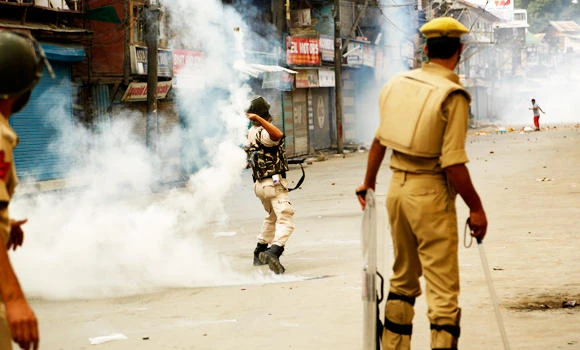
The mob is now on the roads of India and the desire to ‘get even’ is paramount. Is this a social indictment or a symptom of a greater frustration with a system that promises but seems not to deliver? Does the rage need a target, any target and is the corrosion of the protectors now the fuel that burns the fury?
Here is a chronology of violence.
• July 5, 2015: A woman in Jammu and Kashmir was stripped and abused by five men in full view of a ‘deadwitted’ public. One of the five was an army soldier. The police came late and so far have not much to say.
• Jan. 27, 2015: A 62-year-old NRI had misbehaved with a Jharkand passenger on-board a Mumbai-Bhubaneswar Indigo flight. She went for him, taped him saying sorry. The video went viral. The NRI says it was a “mistake.” “Everybody makes mistakes in life. I made a mistake, a big mistake.” Was she right in sending out the video after complaining to the police?
• Dec. 2, 2014: A man was thrashed by the public in JP Nagar in Bengaluru. It was alleged, not proven, that he was teasing women. Onlookers went berserk. Earlier, in June 2014, two men in their mid-twenties were roughed up, dragged and paraded naked by a mob after locals suspected they were thieves. How the cleansing begins.
• Sept. 28, 2014: Three men of African origin were brutally attacked by a mob in Rajiv Chowk Metro Station in the middle of Delhi. They were accused of teasing women but no evidence was forwarded. Outraged, the public got violent and went at them with belts, shoes, rods and glass. One of the men suffered injuries on his back due to the glass used as a weapon. Was their being black something to do with being made easy targets?
• Jan. 21, 2014: A 20-year-old tribal girl of Subolpur village of Labhpur police station area was allegedly gang-raped by a group of people for having an affair with a boy from a different community. A village kangaroo court allegedly ordered that the girl should be raped as a punishment. On Sept.19, 2014, a district court found all 13 guilty and sentenced them to 20 years imprisonment. After this, the Mamata Banerjee administration decided to ban kangaroo courts, especially in tribal-dominated areas. It resulted in angry demonstrations by tribal leaders.
Nido Tania, 20, from Arunachal Pradesh was murdered in Lajpat Nagar, Delhi, triggering widespread protests. Shopowners did not like his hairdo. Nido responded by breaking a glass door at the sweet shop. The incident escalated as four persons beat him on his head and face with a blunt object, killing him. Racial prejudice winner.
• Jan. 18, 2014: Somnath Bharti, Delhi's law minister under the AAP, conducted a vigilante-style raid on African women in a south Delhi locality, saying they were running a drug and prostitution racket and demanded their arrest. It is alleged an African woman was even forced to give a urine sample in public for a drug test. This in a nation where there are over three million prostitutes.
• March 12, 2012: Simant Kumar, 22, an engineering student of Bhopal-based Corporate Institute of Science and Technology was beaten to death in Patna while visiting his family on Feb. 28 to celebrate Holi. He was killed by family members of a girl who were against her love affair with him. Earlier, Parma Vishnu, a middle-aged man, was beaten to death by a mob in a village in Saran district when he opposed an alleged attempt by some villagers to spray water color on him.
• June 12, 2009: A 17-year-old girl was abducted and gang-raped in a moving car in the city by three men posing as policemen. After being arrested the men, two of whom were sons of policemen, were surrounded by a large group of people and beaten.
• March 2, 2005: Instances of vigilante justice have also cropped up in rural parts of Maharashtra. One thousand residents of Agashi village in Virar publicly lynched three burglars after they tried to break into the apartment of a temple designer.
• March 3, 2005: A mob from Arnala village, spears and swords, ganged up to hunt down burglars in their area. On March 4, 2005, residents of Nalla Sopara beat up two men they suspected to be thieves after a spurt of robberies in the Vasai-Virar belt over the past year.
A litany of violence