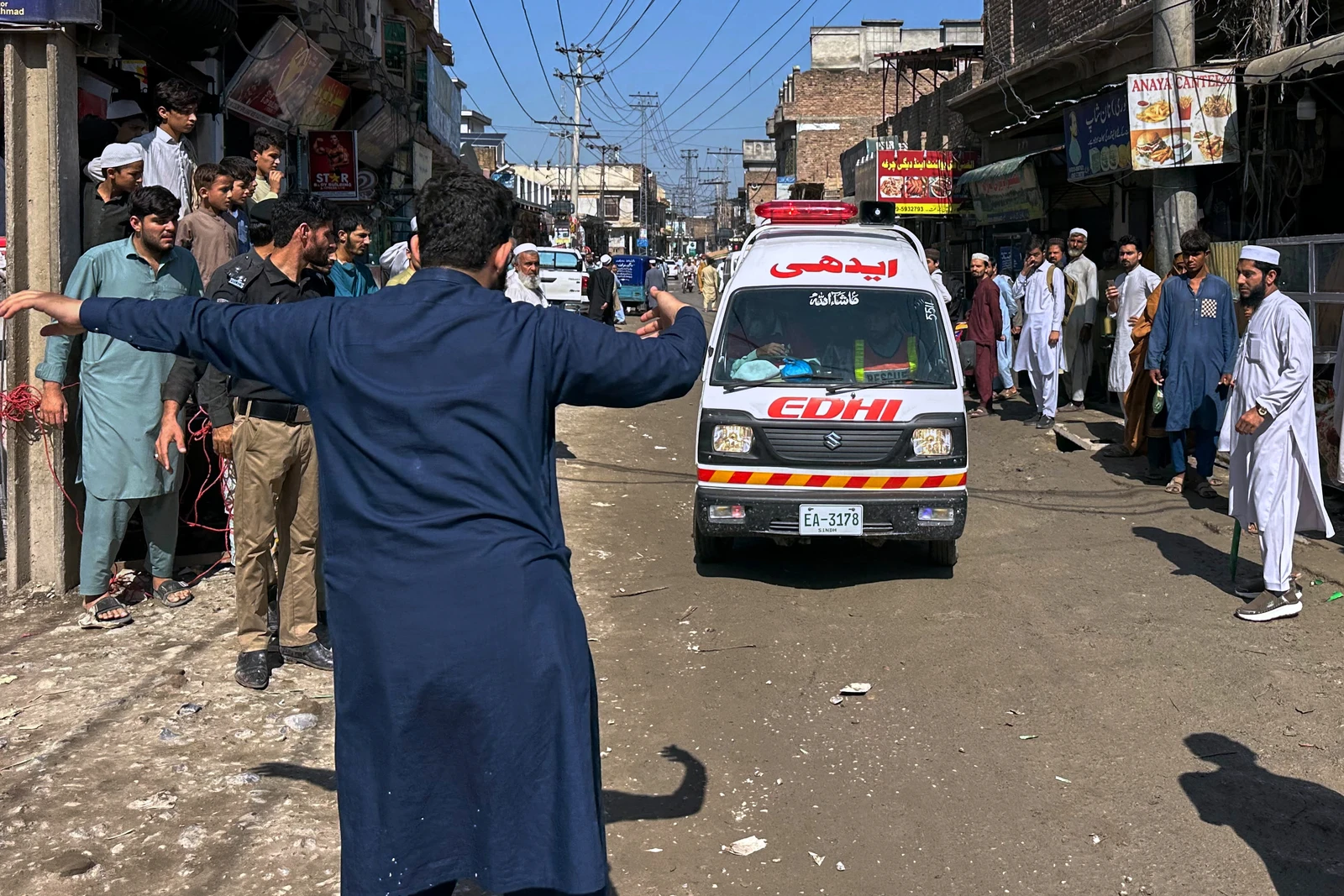
GHAZNI: Around 73 people were killed and scores were injured on Sunday when two buses and an oil tanker collided, causing a massive explosion in eastern Afghanistan, health officials said.
Afghan army units were rushed to the scene of the accident in Moqor district in the central province of Ghazni and managed to save some passengers but many of the injured were in a critical condition.
Many of the dead, including women and children, were burned beyond recognition and dozens of others were left wounded in the accident in Ghazni province, near the Afghan capital.
“The death toll has soared to 73,” ministry spokesman Ismail Kawoosi told AFP, warning that the toll was expected to rise still further.
“Most of them are completely burned. Many of the survivors have been rushed to hospitals in (southern) Kandahar city and Ghazni.”
Kawoosi gave a sharply higher toll than other officials. Ghazni’s governor Mohammad Aman Hamimi earlier reported seven fatalities but his own spokesman gave a death toll of 50.
The collision, in one of the worst road accidents in the war-battered nation, occurred on the highway connecting the cities of Kabul and Kandahar, a major roadway that passes through volatile insurgent areas.
Many bus drivers are known to drive recklessly at top speeds so as not to get caught up in insurgent activity.
“Our driver was at fault, he was driving too rashly,” said Esmatullah, one of the few lucky passengers who survived Sunday’s crash with minor injuries. “Most bus drivers on the high ways are known to smoke hashish, opium and other drugs. They are completely out of control.”
Afghanistan has some of the world’s most dangerous roads and many in the country rely on old and rickety passenger vehicles, meaning that high casualty road traffic accidents are common.
At least 18 people were killed in May last year when a minivan overturned in the western province of Badghis. And in April 2013 a bus hit a wrecked fuel tanker in the southern province of Kandahar, killing 45 people. The World Bank in November signed off a $250 million grant to upgrade roads crossing Afghanistan’s Hindu Kush mountains, crucial trade links that are often closed in winter by snow.
Afghan army units were rushed to the scene of the accident in Moqor district in the central province of Ghazni and managed to save some passengers but many of the injured were in a critical condition.
Many of the dead, including women and children, were burned beyond recognition and dozens of others were left wounded in the accident in Ghazni province, near the Afghan capital.
“The death toll has soared to 73,” ministry spokesman Ismail Kawoosi told AFP, warning that the toll was expected to rise still further.
“Most of them are completely burned. Many of the survivors have been rushed to hospitals in (southern) Kandahar city and Ghazni.”
Kawoosi gave a sharply higher toll than other officials. Ghazni’s governor Mohammad Aman Hamimi earlier reported seven fatalities but his own spokesman gave a death toll of 50.
The collision, in one of the worst road accidents in the war-battered nation, occurred on the highway connecting the cities of Kabul and Kandahar, a major roadway that passes through volatile insurgent areas.
Many bus drivers are known to drive recklessly at top speeds so as not to get caught up in insurgent activity.
“Our driver was at fault, he was driving too rashly,” said Esmatullah, one of the few lucky passengers who survived Sunday’s crash with minor injuries. “Most bus drivers on the high ways are known to smoke hashish, opium and other drugs. They are completely out of control.”
Afghanistan has some of the world’s most dangerous roads and many in the country rely on old and rickety passenger vehicles, meaning that high casualty road traffic accidents are common.
At least 18 people were killed in May last year when a minivan overturned in the western province of Badghis. And in April 2013 a bus hit a wrecked fuel tanker in the southern province of Kandahar, killing 45 people. The World Bank in November signed off a $250 million grant to upgrade roads crossing Afghanistan’s Hindu Kush mountains, crucial trade links that are often closed in winter by snow.