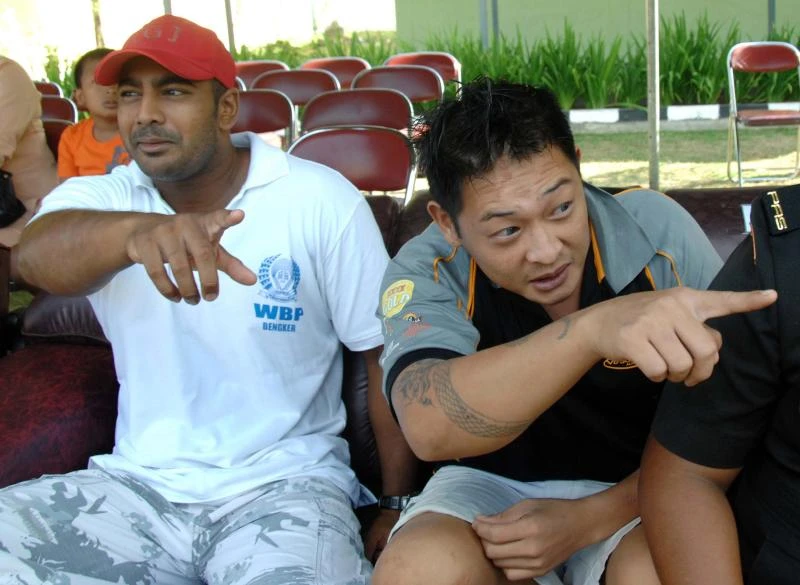
SYDNEY: Two Australian drug smugglers on death row in Indonesia have made a desperate plea for their lives, insisting they are reformed characters and deserve a second chance.
Andrew Chan and Myuran Sukumaran, part of the “Bali Nine,” were convicted and sentenced to death for their role in an attempt to smuggle eight kilograms (18 pounds) of heroin into Australia from the resort island in 2005.
The rest are serving lengthy sentences, including life terms.
Both men have lost their final appeals, with their fate now in the hands of President Susilo Bambang Yudhoyono, who can grant clemency.
But with Indonesia in February announcing it planned to put to death some convicts for murder and drugs offenses in 2013 after not carrying out an execution for several years, concerns about their fate are growing.
Sukumaran and Chan told Sydney’s Sunday Telegraph newspaper they were having nightmares involving being shot dead by a firing squad.
“That scenario, being lined up, having a thing tied over your face and seeing these people in front of you with guns. That is the image that comes to my mind,” said Sukumaran, 32.
He said execution would end their lives just when they were achieving good for others, pointing to their part in running computing, English, and art workshops for prisoners in Kerobokan jail.
“We are sorry for what we did. We were young and stupid. I would ask, please forgive us and give us a second chance, a chance to make up for what we have done,” he said.
“I want to become a better person and I want to help everybody else become a better person as well.” Chan also said he was a changed man.
“Sincerely I am sorry for the crime that I did commit and I apologize to the Australian public for that,” he said.
Indonesia has stiff penalties for drug trafficking, including life imprisonment and death.
There is no time-frame for Yudhoyono to grant clemency and Australian Foreign Minister Bob Carr said Canberra has repeatedly urged the president to spare them.
“There hasn’t been a meeting the prime minister’s had with the Indonesian president or one that I’ve had with the foreign minister where I haven’t raised the case for clemency,” he told the ABC.
“We can make representations, but we haven’t got the key to their cells in our bottom drawers.”
5 arrested for torture
Indonesian police have arrested a factory owner and four foremen for allegedly torturing workers and illegally confining them, an official said yesterday.
Factory owner Yuki Irawan and the four were accused of “torturing and depriving the personal freedom” of 34 workers, after a tip-off led to a raid Friday on the illegal aluminum pot company in Tangerang city outside Jakarta, city chief detective Shinto Silitonga said.
The male workers, including four 17-year-olds, were forced to work at least 16 hours a day with only two meals a day and no pay, for between two months and one-and-a-half years, he said.
“They told us they were slapped, kicked, pushed, burned with cigarettes, and had hot water poured on them if they disobeyed,” he added.
“At night, they were locked in an eight-by-six-meter room and forced to sleep on concrete floor and thin mats. They had no way to escape,” Silitonga added.
The workers have since returned to their hometowns, he said.
“They were disheveled. Their clothes were tattered, their skin was covered with bug bites and rashes, some were really skinny. They were also fearful of people,” he said, adding that investigations were ongoing.
Despite fears that wage increases will encourage businesses to move to neighboring countries such as Vietnam, Indonesian factory workers remain some of the lowest-paid in Asia, often earning less than workers in China or India.
Around 55,000 workers gathered in Jakarta for the May Day rally, the biggest the capital has seen in recent years as Southeast Asia’s biggest economy booms.
Labour activists say the number of protesters has swelled this year as anger grows at businesses denying many workers their basic rights, with poor salaries and a lack of benefits for those who are not employed full time.
Aussies on death row plead for lives