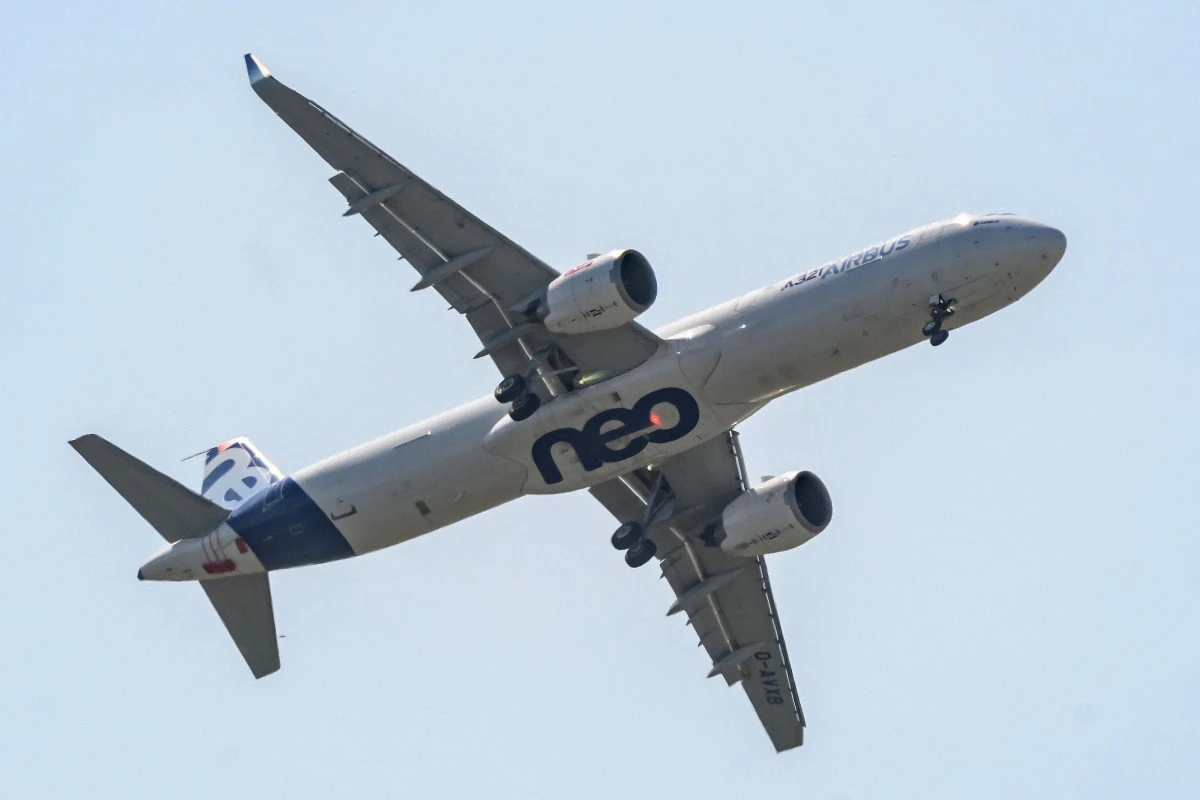
BEIJING: China on Friday scrambled fighter jets to monitor a dozen US and Japanese military aircraft which entered its new air defense zone, state media said.
Beijing’s announcement last weekend of the air defense identification zone, which covers islands at the center of a dispute between China and Japan, has raised tensions in the region.
The report indicated that Japan and the US are continuing to disregard Beijing’s demands that aircraft submit flight plans when traversing the zone in the East China Sea or face unspecified “defensive emergency measures.”
“Several combat aircraft were scrambled to verify the identities” of US and Japanese aircraft entering the air defense zone, the official Xinhua news agency said, quoting air force spokesman Shen Jinke.
The Chinese aircraft, which included at least two fighter jets, identified two US surveillance aircraft and 10 Japanese aircraft including an F-15 warplane.
The US, South Korea, Japan and other countries have accused Beijing of increasing regional tensions with its new air defense zone.
Shen said the air force had a mission to monitor foreign aircraft inside the zone “throughout the entire process, with timely identification.”
Japan and South Korea both said Thursday they had disregarded the ADIZ, showing a united front after US B-52 bombers also entered the area.
But Beijing is facing considerable internal pressure to assert itself. China’s state media called Friday for “timely countermeasures without hesitation” if Japan violates the zone.
Washington has security alliances with both Tokyo and Seoul, and analysts say that neither China nor Japan — the world’s second- and third-biggest economies, and major trading partners of each other — want to engage in armed conflict.
The Global Times newspaper, which generally takes a more nationalistic tone than China’s government, said in an editorial Friday: “We should carry out timely countermeasures without hesitation against Japan when it challenges China’s newly declared ADIZ.
The paper, which is close to the ruling Communist party, said: “We are willing to engage in a protracted confrontation with Japan.”
But it shied away from threatening Washington, which sent giant Stratofortress bombers inside the zone.
The Communist Party seeks to bolster its public support by tapping into deep-seated resentment of Japan for its brutal invasion of the country in the 1930s.
Such passions are easily ignited, and posters on Chinese social media networks have urged Beijing to act, with one saying Friday: “Japan, US and South Korea jointly ran the red light on purpose, the Chinese government should take decisive measures to deal with them as a war of words won’t solve any problems.”
Arab News