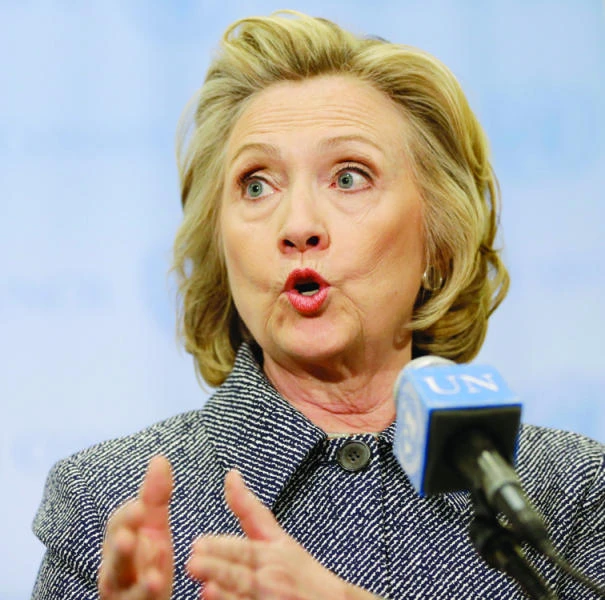
UNITED NATIONS: Hillary Rodham Clinton tried to get the rollout of her likely presidential campaign back on track by admitting she should have used a government e-mail address while serving as the top US diplomat, an admission that sought to quell a political furor that even some Democratic allies said she could no longer avoid.
The focus on Clinton’s e-mails has jumbled what had been expected to be a smooth glide toward the kickoff of her presidential campaign next month. The former secretary of state has been considered the overwhelmingly favorite for the Democratic nomination, even though she has not officially entered the race.
Clinton had planned to spend March promoting her work on women’s equality, a signature issue for someone who could become the first female US president. Instead, questions about her e-mail habits have dominated her activities in the past week, following revelations that she used a personal e-mail account at the State Department and did so via a private server kept at her home in suburban New York.
The practice has raised questions about whether she was complying with regulations requiring government officials to preserve written communications involving official business.
During a news conference Tuesday at the United Nations, after she had delivered a previously scheduled speech on women’s rights, Clinton pledged that all her work-related e-mail would be made public “for everyone to see.” But she also acknowledged that she deleted tens of thousands of e-mails related to personal matters. She refused calls from Republicans to turn over the e-mail server she kept at her home to an independent reviewer.
“The server contains personal communications from my husband and me, and I believe I have met all of my responsibilities, and the server will remain private,” Clinton told reporters who crammed into a hallway to ask questions at her first news conference in more than two years.
While Democrats have dismissed the notion that Clinton’s e-mails are something voters will care about come Election Day 2016, her silence — aside from a late-night tweet sent last week — had led several to Democratic senators to urge her to tell her side of the story.
For Republicans, the e-mail controversy represents an opportunity to tarnish Clinton’s image at a time polls show her leading all the likely Republican presidential contenders.
Clinton tries to put likely presidential bid back on track