- The agreement includes the sixth review of Jordan’s economic reform program under the Extended Fund Facility and the third under the Resilience and Sustainability Facility.
- The IMF projects Jordan’s economy to grow by 2.7% in 2026 and 3.1% in 2027, despite ongoing regional instability.
- Jordan aims to reduce public debt to around 80% of GDP by 2028 while protecting essential social and development spending.
RIYADH: Jordan has reached a staff-level agreement with the International Monetary Fund on two programme reviews, paving the way for approximately $294 million in financing, subject to approval by the fund’s management and executive board.
The agreement covers the sixth review of Jordan’s economic reform program supported by the Extended Fund Facility and the third review under the Resilience and Sustainability Facility.
Growth outlook, debt targets
The IMF projected Jordan’s economy to grow by 2.7 percent in 2026 and accelerate to 3.1 percent in 2027, according to its June review of the country’s economic programme.
The outlook comes as the country continues to contend with the economic effects of regional instability.
Jordan has also committed to reducing public debt to around 80 percent of gross domestic product by 2028, according to the official news agency, Petra, which reported that the government intends to pursue gradual fiscal consolidation while protecting priority social and development spending.
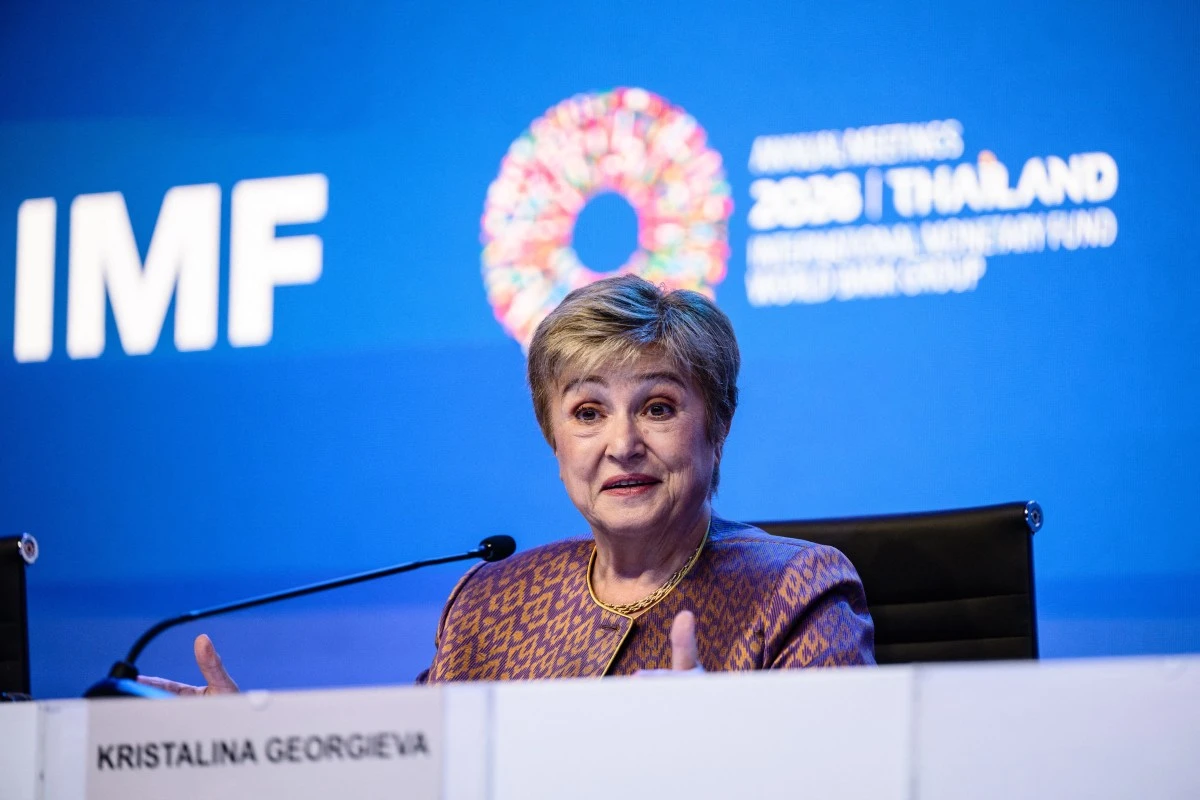
Deputy Chief of the Regional Analytics and Strategy Division in the Middle East and Central Asia Department at the IMF Cesar Serra said in a statement: “Jordan’s economy has continued to demonstrate resilience, supported by the authorities’ commitment to prudent macroeconomic policies, proactive measures to mitigate the spillovers from the regional conflict, and strong support from international partners.”
Serra added: “While the war has weighed on Jordan’s economy through lower tourism inflows, higher trade and transportation costs, weaker foreign direct investment, and elevated energy price volatility, these headwinds have thus far been largely offset.”
The reviews could make $133 million and $161 million available, respectively, according to a statement.
Jordan’s economic resilience amid regional conflict
The IMF said performance under the program had remained strong despite ongoing challenges and heightened uncertainty stemming from the prolonged war in the Middle East.
Jordan met all quantitative performance criteria and most structural benchmarks for the sixth review, while all three reform measures due under the third RSF review were on track for completion.
Real gross domestic product growth reached 3 percent year on year in the first half of 2026, while inflation remained contained despite fluctuations in global commodity prices, the IMF said.
The current account deficit narrowed, supported by strong exports, lower non-energy imports, and steady remittance and regional tourism inflows, which helped offset the higher cost of energy imports.
The Central Bank of Jordan also continued to build its foreign currency reserves, maintaining coverage above program targets.
The IMF said this, alongside prudent monetary and financial policies, helped sustain confidence in the Jordanian dinar’s peg to the US dollar, as reflected in declining dollarization. Jordan’s banking sector remained sound, with strong capital buffers and ample liquidity.
The fund added that while the economy was expected to remain resilient, its near-term outlook would depend heavily on the duration and intensity of the war and the extent to which its effects continue to spill over across the region.