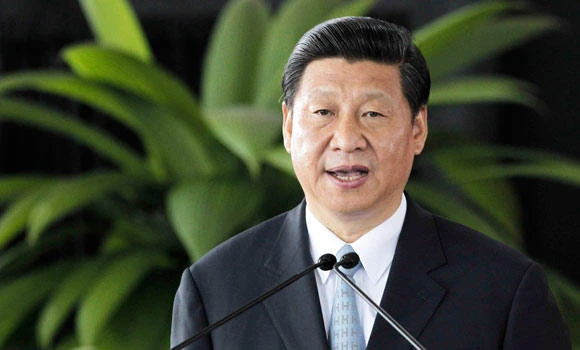
WASHINGTON: President Barack Obama will be looking for signs from China’s leader at their upcoming meeting that Beijing is ready to address its reported high-tech spying, which the White House sees as a top threat to the US economy and national security.
The talks between Obama and Chinese President Xi Jinping will be followed by a July meeting between US and Chinese officials focusing on cyberespionage, along with other strategic and economic issues. Secretary of State John Kerry announced the US-China meetings when he visited Beijing in April.
President Xi is having state visits to Trinidad and Tobago, Costa Rica and Mexico from May 31 to June 6 and a stopover in the US.
The summit Friday and Saturday at a California estate also is aimed at establishing personal ties between Obama and Xi as relations between the two global powers grow increasingly complex.
Obama needs Xi’s help in stemming nuclear threats from North Korea and Iran, combating the violence in Syria, and continuing the US economic recovery.
The meeting at the 200-acre (80-hectare) Sunnylands estate once owned by late publishing tycoon Walter Annenberg is their first since Xi took power in March. The talks also are coming months before the leaders originally had planned to meet, underscoring growing concern in both countries about potential fractures in the relationship.
Cybersecurity is likely to be the prickliest issue, given new reports on the extent and regularity of China’s cyberhacking and increasing interest in Congress about how the US can punish Beijing for its actions.
The Chinese government denies it engages in such spying against the US But analysts say Beijing has started to indicate some willingness to address the problem during private talks with Kerry, national security adviser Tom Donilon and others.
The Chinese have been “much more positive in private meetings,” James Lewis, a cybersecurity expert and former State Department official. The goal during Obama’s meeting, Lewis said, will be to “test whether the Chinese have really moved to a better position where they want to engage.”
A senior Obama administration official said that in recent talks, the Chinese seem to be less dismissive of US concerns about cyberattacks, but that the matter would be not settled in one meeting. Despite subtle signs of progress in private talks, security analysts say there is little evidence that Chinese-based hacking has eased.
“If the Chinese government wanted to signal to the United States that it wanted to curb its activity, the US government would see it and we would see it,” said Richard Bejtlich, chief security officer at the US-based firm Mandiant. “But it’s the same as it’s always been.” Defense Secretary Chuck Hagel said Saturday at a security conference in Singapore that the US has expressed its concerns about “the growing threat of cyberintrusions, some of which appear to be tied to the Chinese government and military.” Obama and Xi were not expected to meet until September, on the sidelines of an international economic summit in St. Petersburg, Russia. But the US saw signs that Xi was able to organize his government more quickly than previous Chinese leaders.
Cybersecurity tops Obama’s agenda for China talks