LONDON: Britain’s High Court rules Abu Hamza, other terror suspects can be extradited to US.
Radical Islamist preacher Abu Hamza and four other men yesterday failed in bids to block their extradition from Britain to the United States to face terrorism charges, as the High Court rejected their requests.
Judge John Thomas said: “The applications by all five claimants must be dismissed. It follows that their extradition to the United States of America may proceed immediately.”
Two judges at the court in London rejected a plea by Hamza, an Egyptian-born 54-year-old former imam, to be allowed a stay of extradition in order for medical tests to be carried out to assess his fitness to face trial.
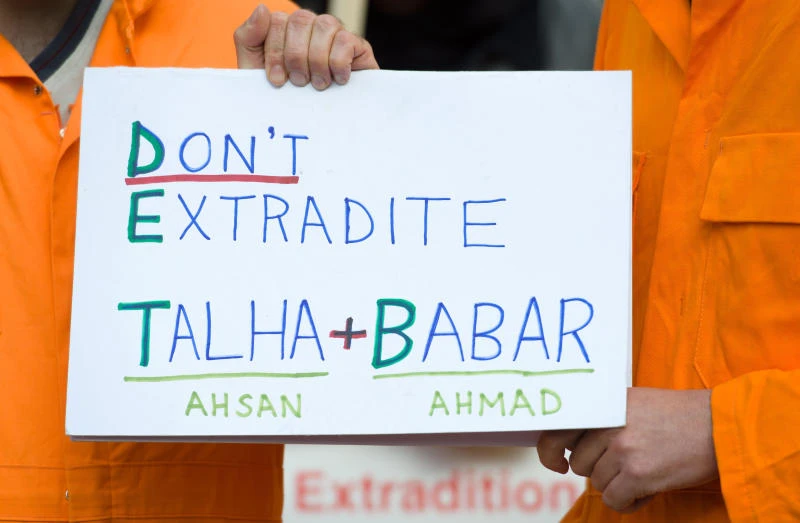
Fellow terror suspects Khaled Al-Fawwaz, Syed Tahla Ahsan, Adel Abdul Bary and Babar Ahmad were also denied an injunction.
The European Court of Human Rights ruled in September that all five men could be extradited, but the High Court ordered the government to halt their removal while it heard their final appeals.
The government dismissed the appeals as delaying tactics.
Ahmad and Ahsan, both British nationals, are accused of operating websites supporting Chechen and Afghan insurgents.
Hamza — who wears a hook where his right hand once was — has been in prison for eight years after being convicted in Britain of inciting hatred.
Fawwaz and Bary have been in prison without trial since 1999, while Ahmad has been behind bars since 2004 and Ahsan since 2006.
A lawyer for Abu Hamza had told the High Court in London on the second day of hearings on Wednesday that the 54-year-old was making an application “pending the obtaining of an MRI (magnetic resonance imaging) brain scan which has been recommended by two doctors”.
The former imam of the Finsbury Park mosque in north London, who has been in prison in Britain for eight years, has “at least mild clinical depression” and could have an underlying neurological condition, lawyer Alun Jones said. But judge John Thomas said “the risk of a degenerative condition can only strengthen the case for extradition”, because Abu Hamza should go on trial and plead as soon as possible before his condition worsens.
Abu Hamza also suffers from repeated infections of the stumps of his amputated forearms and sweats excessively, requiring him to change clothes twice a day, the lawyer said.
He was moved from Belmarsh to another high-security prison, Long Lartin in central England, on Sept. 20, the day before the European Court of Human Rights gave the green light for the five men’s extradition.
Abu Hamza has been indicted in the United States on charges including setting up an Al-Qaeda-style training camp for militants in the northwestern state of Oregon. He has also been charged with criminal conduct related to the taking of 16 hostages in Yemen in 1998 and with advocating violent jihad in Afghanistan in 2001.
Neither Abu Hamza nor the four other suspects were in court in person to hear the appeals.
A bid by a British businessman to halt the extradition of two terror suspects to the US had also failed on Thursday as a High Court judge warned that the legal system was at risk of being brought into disrepute.
Karl Watkin, a campaigner against the terms of Britain’s extradition treaty with the United States, applied to prosecute Babar Ahmad and Syed Tahla Ahsan for solicitation to murder in the hope they would face trial in Britain.
But judge Howard Riddle, sitting at Westminster Magistrates’ Court in London, refused the application, calling it “an abuse of the process” of the court.
“In this case I am satisfied that the purpose of these proposed proceedings is to stop or delay extradition of the two named proposed defendants to the USA.
“The application is made many years after the events complained of,” he added. “It appears to have the cooperation and support of the proposed defendants themselves.
“It comes as almost all other ways of resisting extradition have been exhausted,” he explained.
Patrick O’Connor, representing Watkin’s legal team, told the High Court there would be no appeal over the decision.
The ruling came as the High Court considered separate last-ditch efforts by the two men and three other terror suspects, including radical cleric Abu Hamza, to secure injunctions against extradition.
Hamza loses final appeal against extradition to US