- ICJ verdict marks first time that a state is held responsible for committing genocide
- Rohingya expect accountability, seek return to homeland in Myanmar’s Rakhine State
DHAKA: Mujibur Rahaman remembers the harrowing journey he undertook with his family nearly 10 years ago after the Myanmar military burned down villages and killed his neighbors, forcing survivors to flee to neighboring Bangladesh.
It took them several days to cross the border from their home in Myanmar’s northern Rakhine State, navigating difficult terrain without proper food, drinking water or rest and carrying only a handful of essentials as they tried to save themselves.
“The journey was extremely difficult and frightening. We traveled mostly on foot, walking through villages, fields, hills and difficult routes to escape the violence,” the 26-year-old told Arab News on Saturday.
“My last memories of Rakhine are painful and unforgettable. I remember the fear, violence and suffering of our people during the military crackdown in 2017.”
Rahaman and his family were among more than 700,000 Rohingya forced to flee that year, as Myanmar forces launched a military campaign that killed at least 10,000 people, including up to 2,109 children under five.
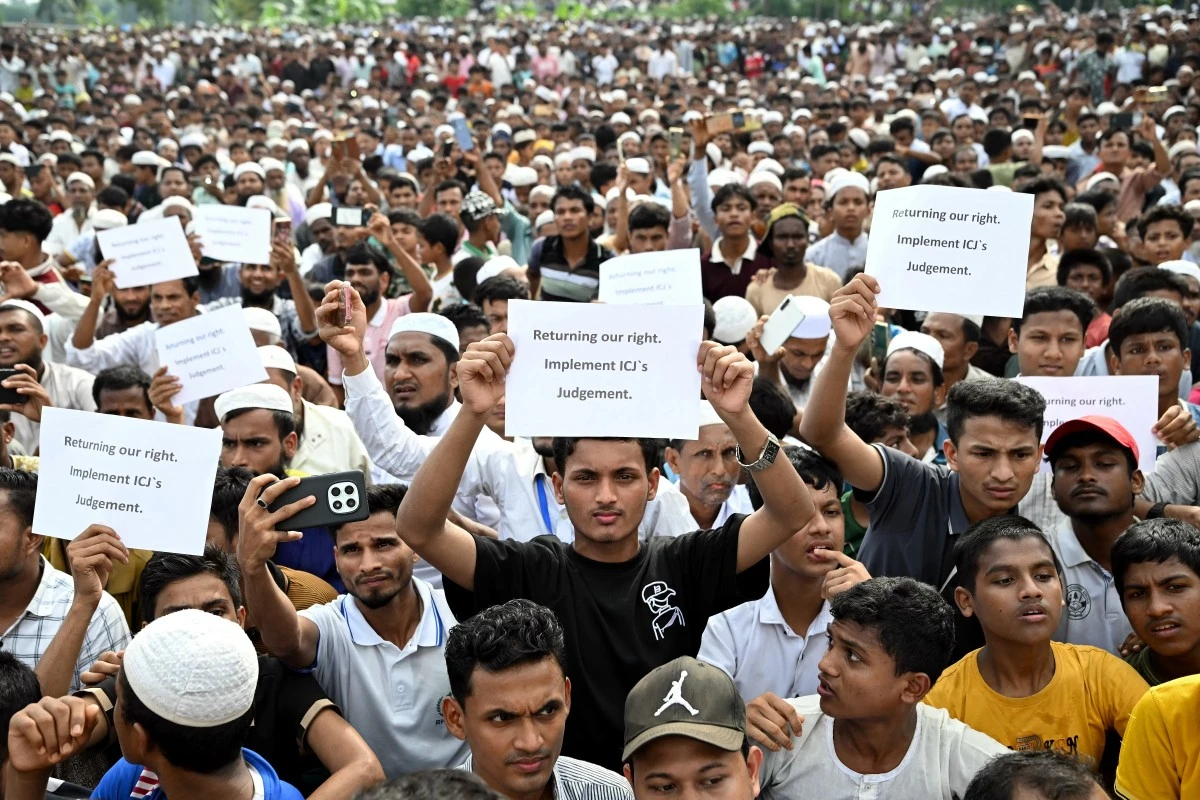
On Thursday, the International Court of Justice at The Hague ruled that Myanmar committed genocide against the Rohingya minority in that brutal military operation. The landmark judgment marked the first time the court held a state responsible for the gravest of crimes under international law.
“I feel deeply emotional, relieved, and hopeful. This is a historic moment for the Rohingya people, who have suffered decades of persecution, violence, and injustice,” he said.
“For many years, we have been waiting for international recognition of the atrocities committed against our community. This ruling gives us hope that justice is possible.”
A mostly Muslim ethnic minority, the Rohingya have lived for centuries in Myanmar’s northern Rakhine State but were stripped of their citizenship in the 1980s and have faced systemic persecution ever since.
Many crossed to Bangladesh to escape the atrocities, with the UN calling the 2017 mass displacement a textbook case of ethnic cleansing by Myanmar.
Today, around 1.3 million Rohingya shelter in Cox’s Bazar, turning the coastal district into the world’s largest refugee settlement. Year after year, they face some of the harshest conditions in the squalid camps, as international aid dwindled.
Mohammad Arafat, a 16-year-old Rohingya living in Bangladesh, is hoping that the ruling will allow his people to return to Rakhine soon.
“If we are given assurance of safety and security, citizenship rights with dignity, we want to return home without any delay. This is not our country and no one wants to live a refugee life in a highly congested camp. It’s a life full of sorrows and hardships,” he told Arab News.
Arafat recalled how his community had witnessed the brutal killings of their families.
“Many in our community were forced to witness our mothers being violated right in front of our eyes and burned alive … Those experiences still haunt us even today,” he said.
“What we expect from the ICJ is not just justice but rather getting justice delivered or enforced. And those who did this, those who committed genocide; we want actions against them.”
The Rohingya case was first brought to the ICJ in 2019 by Gambia, which alleged that Myanmar’s 2017 military offensive amounted to genocide.
On Thursday, the ICJ also ordered Myanmar’s military-supported government to allow the Rohingya to return home safely, pay reparations to the minority population and prosecute those suspected of having committed genocide.
The court’s rulings are final and legally binding, but it has no way to enforce them beyond reporting noncompliance to the UN Security Council.
Despite the uncertainty ahead, the ICJ judgment still carried a lot of weight for the Rohingya, who saw justice for their community for the first time.
“I feel very happy about the ICJ ruling. I have never heard of any justice for the Rohingya. In Myanmar, justice was never given to us. We were a community who were always ignored and unwanted,” 60-year-old Bosu Khatun said.
Khatun told Arab News that she has been suffering from various health complications due to her age, but felt much better physically and mentally after the ICJ ruling.
“It seems like half of my pain and agony have disappeared,” she said.
Khatun bore witness to how “young girls and women were violated randomly, men were killed with gunshots and houses were set ablaze” in Rakhine State. She lost 10 family members during the genocide, including her brother and nephew.
“They tortured us in every possible way,” Khatun said.
She is hoping to return to Myanmar soon along with her five children, as she hopes for them a dignified and peaceful life in their homeland.
“The sooner it takes place, the better for all of our Rohingya community,” she said.
“Now, my only dream is to live the remainder of my life in my homeland and to be buried over there. I don’t want to die as a refugee.”