SUBOTICA, Serbia: Swifts darted in and out of nesting holes in the scrubland around an old brick factory in northern Serbia. In the shade of the trees, Syrians and Afghans rested amid the rubbish of those who came before them, waiting for nightfall to walk across the nearby Hungarian border and into the European Union.
Thirty-year-old Mohammed, from the devastated Syrian city of Aleppo, said it had taken him just two weeks to come this far. “We are quick,” he said. “We are quick, to beat the fence.”
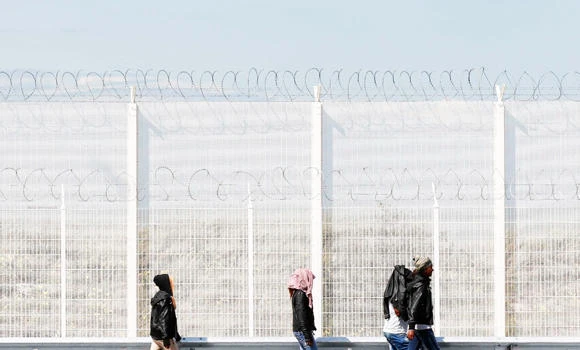
A month from now Hungary says it will seal its border with Serbia with a 4-meter high, 175-km barrier to keep out migrants streaming through the Balkans, fleeing war, poverty and upheaval in the Middle East and Africa for a better life in western Europe.
The move, with its Cold War echoes in ex-Communist eastern Europe, threatens Serbia with disaster, creating a new migrant bottleneck, one of several on Europe’s fringes, in a country woefully ill-equipped to cope.
One migration expert compared the likely outcome to the French port of Calais, where nine migrants are believed to have died since June trying to breach the entrance to the tunnel than runs under the channel to Britain.
But Serbia “will be on a far greater scale,” said Rados Djurovic, head of the Asylum Protection Center, a local non-governmental organization.
In Calais, some 3,000 migrants are camped out trying to cross the water to Britain; in the Balkans, well over 100,000 are believed to have entered illegally into Hungary so far this year.
While the fence is unlikely to stop many of them, it will slow them down, likely creating vast squats in northern Serbia as winter approaches and temperatures drop below freezing. Migrants are entering Serbia from southern neighbor Macedonia at a rate of over 1,000 per day.
While the fence may push some east into Romania or west into Croatia, Djurovic said, neither EU member is part of the borderless Schengen zone that makes Hungary so attractive, so many migrants are likely to bide their time in Serbia until they find a way through.
Hungarian fence to create new front in Europe’s migrant crisis