- 29 diplomats take part in Sushma Swaraj Institute of Foreign Service course
- They were received by Foreign Minister S. Jaishankar on Monday
NEW DELHI: Diplomats from Arab League member states are undergoing training this week at the Sushma Swaraj Institute of Foreign Service in New Delhi as part of the inaugural program of the Arab-India Cooperation Forum.
The forum is a high-level diplomatic platform that guides and strengthens relations between India and the 22 member states of the Arab League.
The framework was formally established in December 2008, with the India-Arab Foreign Ministers’ Meeting serving as the forum’s main institutional mechanism of the forum. The first meeting took place in Manama in January 2016, and the second was held in New Delhi in January 2026.
During the Delhi meeting, the foreign ministers agreed to institutionalize cooperation between their diplomatic institutes, with the SSIFS hosting annual training for representatives of all Arab states.
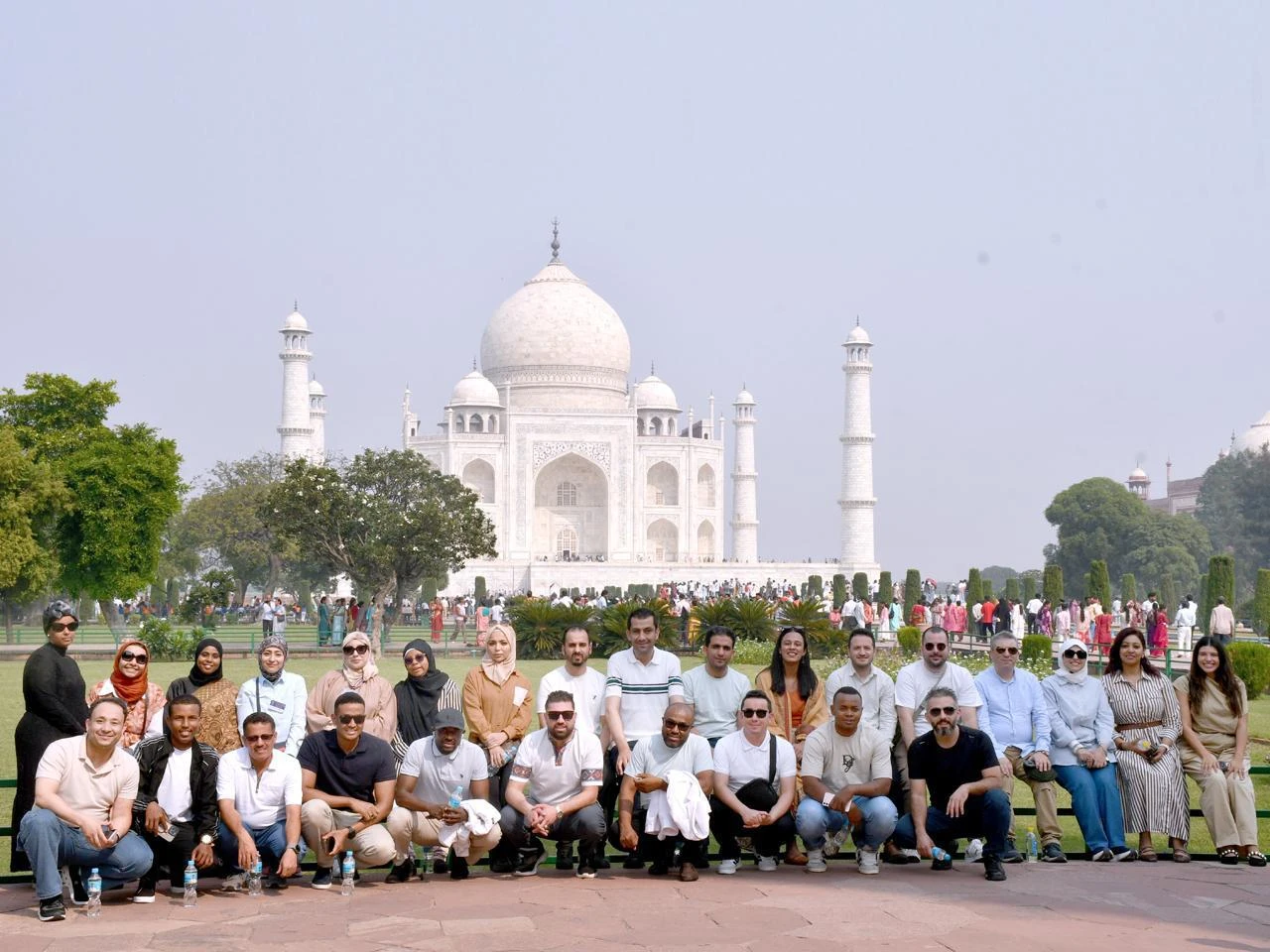
The first such program was launched on Oct. 21 and will run through Oct. 30, with 29 mid-career diplomats from nearly all Arab League countries, including Saudi Arabia and Kuwait from the Gulf region, as well as Egypt, Algeria, Palestine, the Syrian Arab Republic, Iraq, Libya, and Comoros.
“Our idea is basically to create an opportunity for these mid-career diplomats to understand India, have a physical presence in India and get a feel of India beyond just the classroom,” Ambassador Raj Kumar Srivastava, dean of the SSIFS, told Arab News.
“What they not only learn but also experience in India will help them in their policymaking … and understanding the history of our relationship.”
A capacity-building program, the training covers sessions on negotiations, security frameworks, energy, artificial intelligence, cybersecurity, digital public infrastructure architecture, and cultural diplomacy.
“Apart from diplomacy and geopolitics and geoeconomics, we also focus on diplomacy for development, which means 5Ts — trade, technology, tourism, talent, traditions,” Srivastava said.
The SSIFS program includes visits to heritage sites. The diplomats have already visited the Taj Mahal in Agra and Gandhi Smriti, a national monument in New Delhi, where Mahatma Gandhi spent the final days of his life.
Participants also get to meet Indian leaders and on Monday were received by Foreign Minister S. Jaishankar.
“Those kinds of connections, in a very subtle way, explain that India is a civilizational country, and it has had connections not just now, but for a long time, and going and seeing them makes a bigger impact than somebody telling it in a history classroom,” Srivastava said, as the course will also strengthen the diplomatic network fostered by the school.
“This is not a standalone kind of a training program; they become a part of our alumni network … That network becomes a network for future reference.”