NEW DELHI: Pakistan yesterday denied consular access to an Indian national on death row who is fighting for his life after being attacked by fellow prisoners, Indian government officials said in New Delhi.
Sarabjit Singh, who was sentenced to death 16 years ago on espionage charges by a Pakistani court, was rushed to hospital on Friday with multiple wounds, including a severe head injury, after an argument in Lahore’s Kot Lakhpat Jail.
“Officials from the Indian High Commission in Pakistan were not allowed to visit Sarabjit Singh yesterday. The authorities have also refused to share his medical updates with the Indian officials,” said a senior Indian official, speaking on condition of anonymity.
The official said the Indian foreign ministry was making “every possible attempt” to get information about Singh’s health and using every “diplomatic mechanism to get an update about the situation.” “It is crucial for us to know about Singh’s health and Pakistan cannot deny information to India,” said another government official in New Delhi.
The Pakistan foreign ministry was not immediately available for comment.
Singh is in a critical condition in the intensive care unit of Jinnah hospital in the eastern Pakistani city of Lahore following the attack in which he was hit with bricks and other blunt objects.
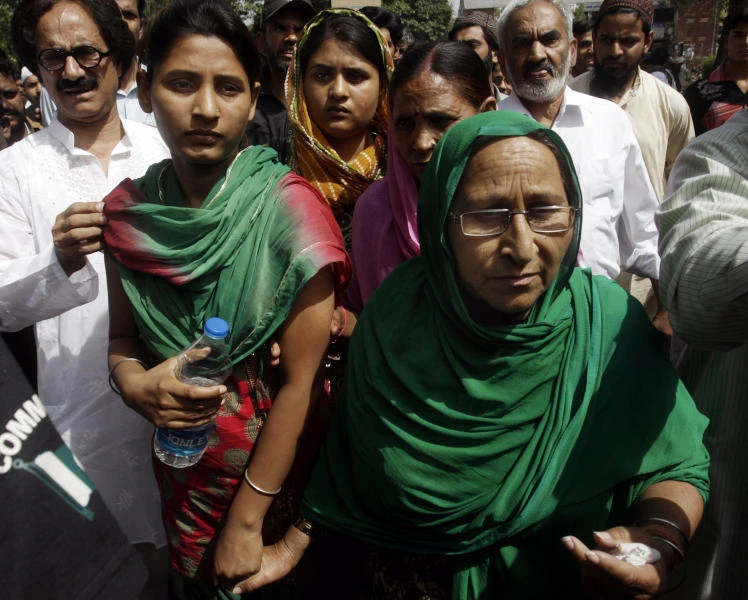
His wife, two daughters and sister arrived in Pakistan by the land border at Wagah, near Lahore, and visited him yesterday, a senior doctor at the hospital told AFP.
“The family have been provided a room inside the hospital. They met Sarabjit Singh. He was still in a coma and his condition was critical,” the doctor said.
On arrival in Pakistan, Singh’s sister Dalbir Kaur thanked the Pakistani people for their prayers for her brother’s recovery and hoped that he would get well soon and be allowed to return to India.
Singh’s lawyer, Owais Sheikh, earlier said that his client had received threats following the execution of a Kashmiri separatist in India. Mohammed Afzal Guru was hanged in New Delhi on February 9 for his part in a deadly Islamist attack on the Indian parliament in 2001.
According to doctors, Singh’s chances of survival are slim. He has been incubated and linked to the ventilator in the intensive care unit.
One of the doctors treating Singh said that the treatment has turned out to be a major neurosurgical challenge for the medical board. He said Singh had suffered a critical bone fracture. During clinical assessment it was established that Singh had diffused brain injury over a widespread area of his head that led to unconsciousness. Doctors also discovered a localized collection of blood outside the blood vessels, which was greater than 3 cm, which indicated that the patient was in dire need of surgical intervention. Singh is in a separate intensive care unit in unprecedented police security and no one is allowed to see him except his doctors. According to Punjab prison authorities, the attack on Singh was due to a security lapse. Police have formally opened an investigation into the attack. A source in the prisons department revealed that one of the alleged prisoners told the inquiry officers that he attacked Singh in a ‘national grudge’. Singh, 49, was convicted over a string of bomb attacks in Punjab province in Pakistan which killed 14 people in 1990. His mercy petitions were rejected by the courts and former president Pervez Musharraf.
His family says he is a victim of mistaken identity and had inadvertently strayed across the border.
Islamabad allows family to see Sarabjit, denies consular access