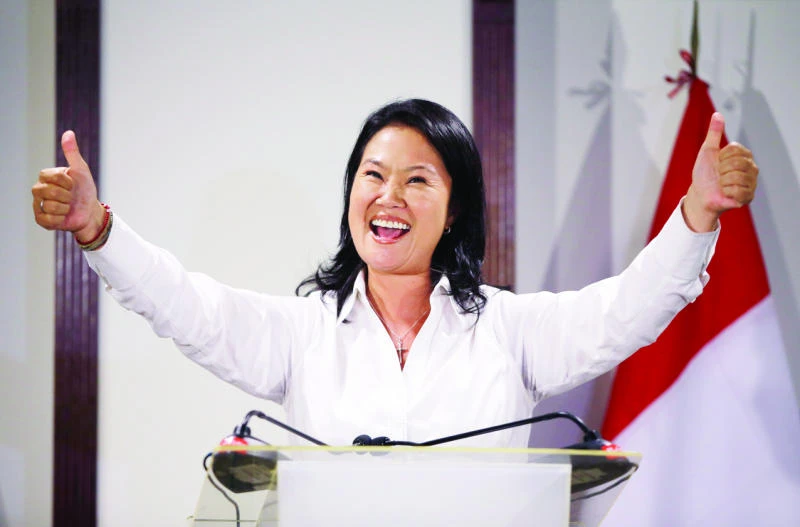
LIMA: Keiko Fujimori, daughter of an ex-president jailed for massacres, was heading Monday for a runoff vote that could make her Peru’s first female leader.
In an election marred by allegations of vote-buying and a day after a guerrilla attack left seven people dead, Fujimori, 40, had a double-digit lead over the second-place contender, centrist rival Pedro Pablo Kuczynski, 77.
But since Fujimori fell short of 50 percent, she must now face Kuczynski in a second round vote on June 5.
Both have promised to boost the economy and fight crime in this South American mineral-exporting country of 30 million people.
Fujimori earlier celebrated victory as unofficial surveys showed her far in the lead.
Voters “are demanding change. This is a great responsibility, which we are going to honor,” she told cheering supporters. “Peru wants reconciliation and no more conflict,” she said.
Fujimori was on top with 39.18 percent of votes in line with exit polls, after nearly half of the ballots were counted. Kuczynski had 24.25 percent, according to state electoral body ONPE.
Observers complained that the electoral process was undermined when half the candidates dropped out or were excluded from the running under a tough new electoral law.
Keiko, daughter of former leader Alberto Fujimori, survived attempts to ban her from the race and mistrust over her father’s legacy.
She and other leading candidates were accused of wooing voters with gifts. Fujimori and Kuczynski were cleared of the charges.
But centrist candidate Julio Guzman, previously second in the polls, was banned from running for irregularities in the candidate-selection process.
Eight other candidates were similarly excluded or dropped out for lack of support. One of them, Gregorio Santos, was running for office from a jail cell where he is detained on corruption charges.
Alberto Fujimori’s dark decade in power from 1990-2000 lives in the memory of many Peruvians
Now 77, he is serving a 25-year jail sentence for crimes against humanity. The courts held him responsible for the massacre of 25 people he said were terrorists in 1991 and 1992.
Despite his authoritarian rule, Alberto Fujimori liberalized the economy and oversaw an economic boom. Growth has slowed in recent years under outgoing President Ollanta Humala.
European Union observers said they saw no serious incidents during voting, though some polling stations were late in opening.
Keiko Fujimori headed for runoff in Peru vote