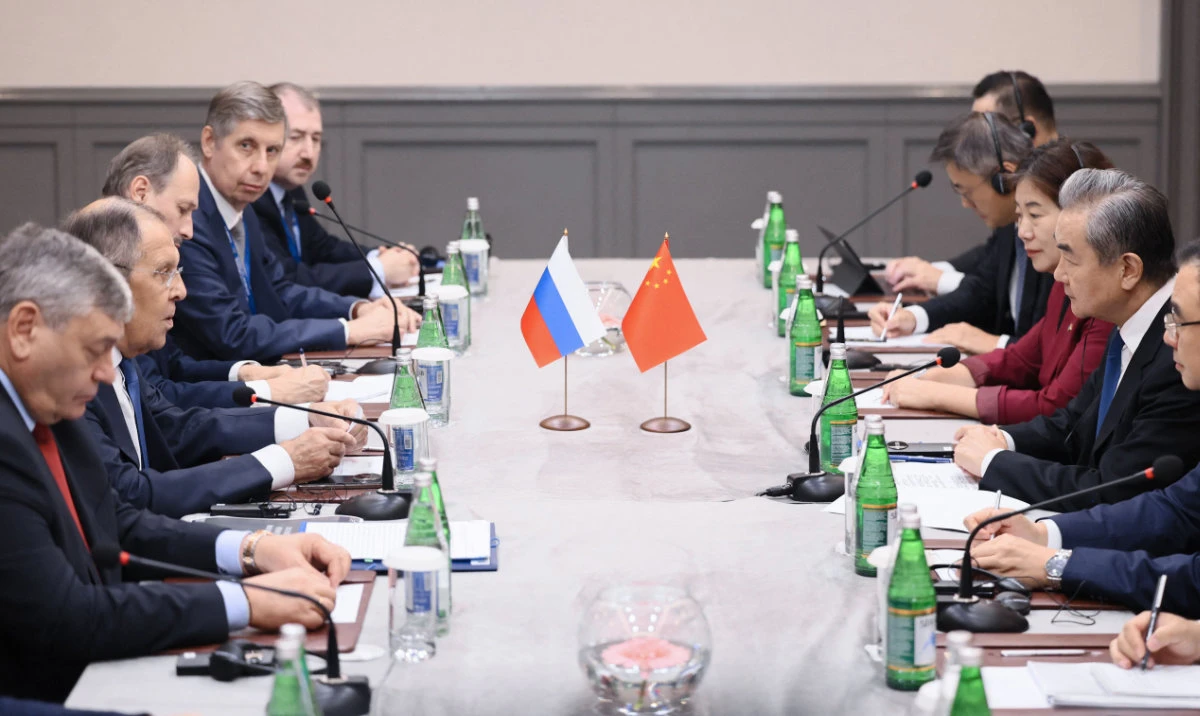
HARPSUND, Sweden: German Chancellor Angela Merkel reaffirmed her support Tuesday for Jean-Claude Juncker as new EU Commission president, at a mini-summit with other center-right European leaders who are deeply opposed to his candidacy.
Britain is leading the campaign against Juncker, even reportedly threatening to pull out of the EU if the former Luxembourg prime minister is chosen to head the bloc’s executive body, fearing he would lead it down a more federalist route.
“I’ve said that Juncker is my candidate for the presidency of the Commission, that I want him to be the president,” Merkel said at a meeting on the European economy with Prime Minister David Cameron of Britain, Sweden’s Fredrik Reinfeldt and Mark Rutte of the Netherlands.
“But that was not our topic today,” she added at the summit being held in Harpsund near Stockholm.
Cameron said his government did not back an interpretation of new rules giving the European Parliament a greater say in appointing the commission president.
“I believe that the European Council (EU leadership) has the job — as the elected heads of state and government — to come together and recommend candidates that are capable of carrying the reform program that is necessary in Europe,” he said.
Cameron is spearheading a push for reforms to allow greater autonomy for EU member states ahead of a referendum on Britain’s membership in 2017.
Juncker faces strong opposition from many member states which say the EU’s future policy direction is paramount and are reluctant to give the assembly such an important role in a key appointment.
Juncker, 59, is a dyed-in-the-wool pro-EU federalist who believes the answer to Europe’s problems lies in greater integration between member states.
Cameron’s Dutch and Swedish counterparts agreed Tuesday that the European Parliament should not have the major say in deciding who will replace Jose Manuel Barroso as commission head later this year, and called for new candidates to be considered.
“We have agreed that the future policy priorities of the EU must be decided before we can decide on appointments of different top jobs,” said Reinfeldt.
As well as Juncker, there are four other candidates backed by the Socialists, the Liberals, Greens and the radical left in the European Parliament.
The various parties say that for EU leaders to name a commission head outside their choice of candidates would be a slap in the face for the EU’s democratic credibility.
Cameron also said Tuesday that the four leaders meeting in Sweden had reached an agreement to tackle “abuse of free movement” in the European Union.
“It is a right that people should be able to move across Europe to work but they should not be able to free ride on the back of welfare systems,” he said.
The European Parliament elections last month delivered victory to anti-EU and euroskeptic parties, both on the right and left wings, at the expense of mainstream parties.
In Britain, the question of eastern European immigrants allegedly competing for jobs with Britons was a hot campaign issue for the euroskeptic UK Independence Party, which won a larger share of the vote than both Cameron’s Conservatives and the opposition Labour Party.
“We also believe the European Union needs to change in response to voters’ concerns,” Cameron said.
“That was the clear message from the European elections and that has been a large part of the focus of our discussions here.”
His comments were echoed by Rutte.
“In order to preserve free movement of labor we need a level playing (field) in the labor market,” he said. “That means tackling abuses.”
Merkel said the issue had also been hotly debated in Germany.
“We are for free movement of people but want to do everything possible to prevent people abusing it,” said Merkel.
“And from this point of view, Britain, Germany and other countries are going in the same direction.”
Arab News