NEWPORT, Wales: NATO leaders agreed on Friday to set up a new force to meet emerging global security threats and to maintain a “continuous” presence in an eastern Europe rattled by Russian moves in Ukraine.
The new “spearhead” force, comprising several thousand troops and ready to deploy in a few days, means “we can deal swiftly and firmly with any threat,” NATO head Anders Fogh Rasmussen said.
“This decision sends a clear message -- NATO protects all allies at all times” and any “potential aggressor” should bear that in mind, he said at a NATO summit in Newport, Wales.
NATO has a larger Response Force but it has never been deployed in action and analysts believe it would take weeks to put in the field, way too long to be a credible deterrent in the face of fast changing threats.
Russian tactics in Ukraine, its use of social media and new technologies to sway public opinion and catch opponents off-guard, coupled with its traditional military strengths have all surprised NATO and challenged its accepted thinking, analysts say.
Rasmussen gave no further details of the new unit’s structure or size but a spokesman for British Prime Minister David Cameron said London could contribute 1,000 troops, while press reports put the total number at around 4,000.
NATO’s 28 leaders also adopted a broad Readiness Action Plan to strengthen overall collective defence.
Obama and Cameron have also been pressing their NATO counterparts to follow through on commitments to spend 2 percent of their nations’ gross domestic product on defense. Only four NATO nations meet that threshold: The US, Britain, Greece and Estonia.
Cameron said Friday that it was time for the rest of the alliance to put their money where it counts.
“What matters most of all is what are we are able to do. What are we able to deploy,” Cameron said. “What enables us to respond rapidly and together collectively to the threats that we face.”
On the sidelines of the summit, Cameron and US President Barack Obama have been seeking support from their counterparts for a campaign to degrade Islamic State militants that have wreaked havoc in Iraq and Syria.
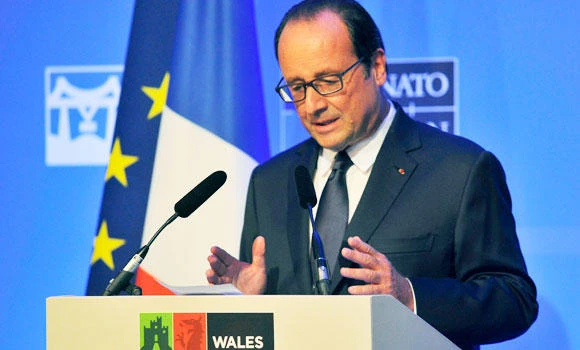
Both leaders had meetings planned with Turkish President Recep Tayyip Erdogan, a key regional player whose support would be crucial to defeating the militants. Obama also met Friday morning with French President Francois Hollande.
Significantly, in response to a growing threat on a new front highlighted by Russian actions in the Ukraine crisis, cyber-defence was designated as a core NATO task.
Cyber-attacks “can reach a level that threatens the prosperity, security and stability of our countries and the Euro-Atlantic area,” Rasmussen said.
The two-day NATO summit has been billed as the most important since the end of the Cold War as the 28 allies put together a response to Russia’s intervention in Ukraine in what Rasmussen described as “these turbulent times.”
NATO to boost force in Europe deterring Russia