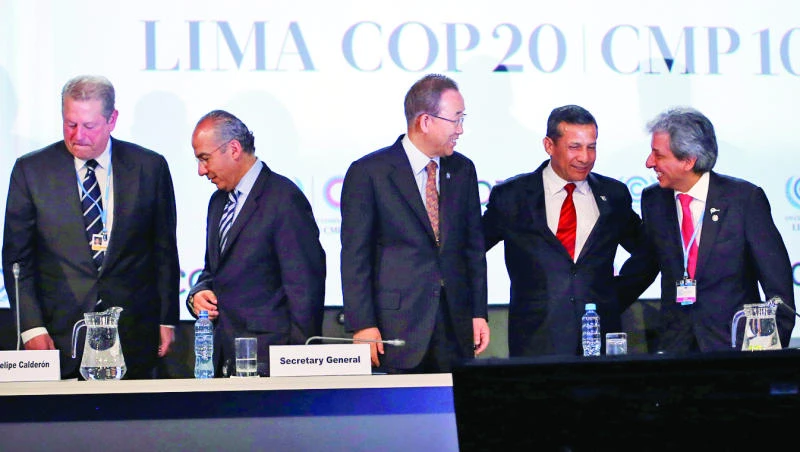
LIMA: A carbon-curbing deal struck in Lima on Sunday was a watered-down compromise where national intransigence threatened the goal of a pact to save Earth’s climate system, green groups said.
The hard-fought agreement sets out guidelines for the submission of national greenhouse-gas pledges next year.
But, the groups said, initially ambitious standards became weaker the longer the talks wound on. Climate negotiators salvaged a compromise deal in Lima early Sunday that sets the stage for a global pact in Paris next year, but rejected a rigorous review of the greenhouse gas emissions limits they plan.
More than 30 hours behind schedule, delegates from more than 190 countries agreed on what information should go into the pledges that countries submit for the expected Paris pact. They argued all day Saturday over the wording of the decision, with developing nations worried that the text blurred the distinction between what rich and poor countries can be expected to do.
In a tug-of-war between rich and developing nation interests, the end result was a “lackluster plan with little scientific relevancy,” said WWF’s climate expert, Samantha Smith.
“Against the backdrop of extreme weather in the Philippines and potentially the hottest year ever recorded, governments at the UN climate talks in Lima opted for a half-baked plan to cut emissions,” she added. NGOs and developing nations alike had hoped the agreement would compel rich countries to include information in their pledges on climate adaptation and other financial help.
Observers slam ‘lackluster’ Lima climate deal