PESHAWAR: The Taleban yesterday stepped up their threats against Pakistan’s landmark elections, warning voters to boycott polling stations to save their lives as bloody attacks targeted party offices.
Campaigning ended at midnight with impassioned pleas for votes from frontrunner Nawaz Sharif, a steel tycoon bidding for a historic third term as prime minister, and cricket star Imran Khan looking for a breakthrough.
Pakistan’s umbrella Tehreek-e-Taleban (TTP) movement says democracy is unIslamic and has singled out the outgoing parties for particular threat, curtailing campaigning for the Pakistan People’s Party and its main allies.
Attacks on politicians and political parties have killed more than 120 people since mid-April, according to AFP, and the Human Rights Commission of Pakistan (HRCP) said the elections were the most violent in the country’s history.
“To revolt against this system, the TTP has planned several actions on May 11, so we appeal to the people to stay away from polling stations to save their lives,” Taleban spokesman Ehsanullah Ehsan said.
The PPP has run a lacklustre and rudderless campaign in the face of the threats and with its chairman, Bilawal Bhutto Zardari, too young to run.
HRCP yesterday voiced “acute concern” not just from threats and violence targeting individuals “but much more from the manner in which the violence has already impaired the fairness of the elections almost beyond repair.”
It called on all institutions to “stretch themselves to their absolute limit to ensure security of voters, candidates and polling stations on Saturday so that the people can exercise their right to choose their representatives.”
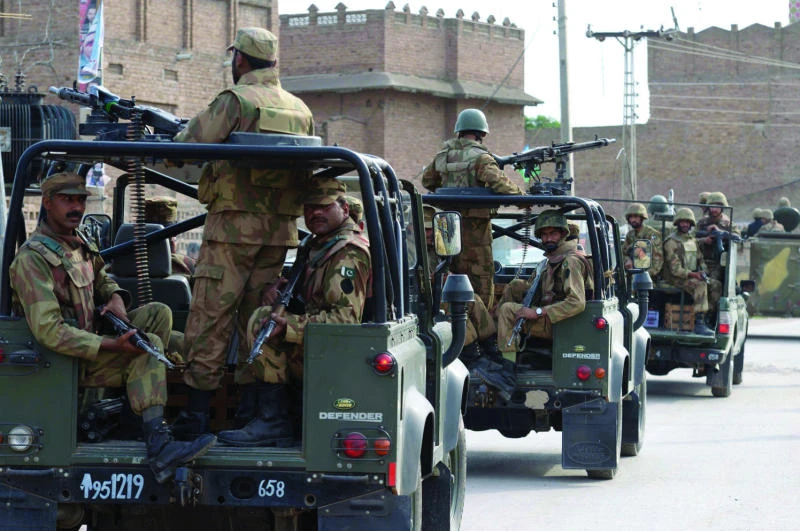
The election commission says that 179 million ballot papers are being distributed to around 70,000 polling stations nationwide under army supervision.
Most commentators expect Sharif’s center-right Pakistan Muslim League-N (PML-N) to win but it remains unclear how far Pakistan Tehreek-e-Insaf (PTI) can provide an upset and restrict his chances of forming a stable coalition. More than 600,000 security personnel, including tens of thousands of soldiers, have been ordered to deploy to guard against attacks on polling day.
Yesterday, a motorbike bomb killed four people and wounded 15 close to offices of different parties in the main town of North Waziristan, the premier stronghold of the Taleban and Al-Qaeda-linked groups on the Afghan border.
Security officials said PML-N, PTI and right-wing religious party Jamiat Ulema-e-Islam, an ally of the outgoing government, had offices nearby.
Witnesses and officials said 15 people were taken to the state-run Miranshah hospital, some of them in a serious condition.
In the southwest, a low-intensity bomb planted on the roof of the office of a PPP candidate in Quetta wounded five people early yesterday, police said.
The device detonated when supporters of former cabinet minister and PPP national assembly lawmaker Sardar Omar Gorgaj were gathering in his office.
Saturday’s polls are the first time in Pakistan’s turbulent history that an elected civilian administration has handed power to another through the ballot box. The nuclear-armed state has been ruled by the military for half its life.
More than 86 million voters have from 8 a.m. to 5 p.m. to elect 272 lawmakers to the 342-member national assembly and lawmakers to four provincial assemblies.
No one claimed responsibility for yesterday’s bombings, but the Taleban have carried out numerous attacks to undermine the polls and say they have dispatched suicide bombers for polling day.
The Taleban have singled out the secular-leaning PPP and its main coalition partners, the Muttahida Qaumi Movement, which controls Pakistan’s biggest city of Karachi, and the Awami National Party in the northwest.
On Thursday, a son of former PPP Prime Minister Yousuf Raza Gilani was kidnapped and two of his aides killed in the central city of Multan.
Gilani told reporters yesterday that there had been no claim of responsibility for the abduction of his son, Ali Haider Gilani, a 27-year-old PPP candidate for the assembly in Punjab province.
“We should create a conducive atmosphere for the elections, so that polls look fair and transparent,” Gilani said.