VIENNA: The UN drug body warned on Friday that record poppy output in Afghanistan will translate into a spike in heroin-induced deaths, with death rates already rising in Britain and the United States.
Opium cultivation and production in Afghanistan have reached record levels, triggering “a large increase” in cheaper heroin supply in the US, it said.
Afghanistan accounts for about 85 percent of opium production and 77 percent of worldwide heroin production, UNODC’s annual World Drug Report showed.
“We know there is much larger supply of opiates that will be translating into heroin ... It’s important to warn that the supply is there,” Angela Me, one of the main authors of the report, told reporters in Vienna.
“In the (United States) and in (Britain)... we see a market with increased supply particularly of cheap heroin and we already see some impact in terms of deaths. We see heroin-related deaths are going up,” she said.
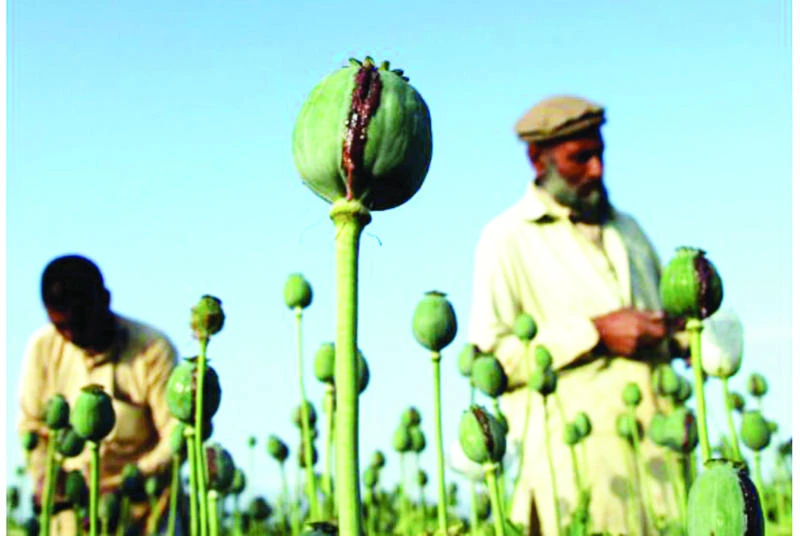
Afghan poppy fields covered some 224,000 hectares (553,500 acres) in 2014, a seven-percent rise from the 209,000 hectares the previous year, according to a new study by the UN Office on Drugs and Crime (UNODC).
As the world’s largest opium producer, Afghanistan’s steady increase has had a direct impact on global opium cultivation, which with 310,891 hectares is now at its highest since the late 1930s, UNODC noted in its annual World Drugs report.
Estimated global production of opiates meanwhile doubled in two years from 3,700 tons in 2012 to 7,554 tons in 2014.
As a result, “we have been seeing signs in the US and the UK of a large increase of supply,” Me told AFP.
“In the US there’s been an increase in heroin-related deaths and also signs of more and cheaper heroin available. The same goes for the UK where heroin-related deaths have increased recently.”
Record drug output to spur more deaths: UN