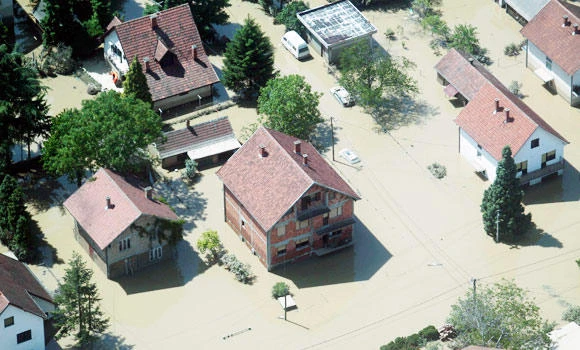
BELGRADE: Rainfall in Serbia abated, helping emergency workers begin the muddy cleanup of deadly floods that inundated whole towns and farms and prompted the country to seek worldwide aid in food, medicine and building materials.
Kristalina Georgieva, the European commissioner for humanitarian aid, arrives in Belgrade Tuesday to discuss post- disaster assistance and help prepare a request for aid of as much as 1 billion euros ($1.4 billion) a year, Michael Davenport, the head of the EU delegation to Serbia, said in an interview with state TV broadcaster RTS. Serbia started European Union accession talks on Jan. 21.
“The situation is under control” and the state of emergency will be lifted by week’s end, Premier Minister Aleksandar Vucic said. “We have a large number of victims and it will be even greater when the waters retreat.”
Serbia declared a state of emergency on May 15 after the worst rainfall since records began to be kept 127 years ago triggered floods leaving 19 dead in the largest former Yugoslav republic, 17 in neighboring Bosnia and two in Croatia. In Serbia alone, more than 30,000 people have been evacuated, the Interior Ministry said Tuesday. The government declared a three-day mourning through May 23 for the flood victims.
“Despite incoming aid, the impact of the flooding on Serbia’s fundamentals risks being considerable,” UniCredit economist Carlos Ortiz said in a note to clients. The floods will affect growth, raise prices and put at risk planned fiscal restraint making “the signing of an IMF deal by” the third quarter “of utmost significance.”
Serbia planned to save about 400 million euros ($548 million) this year through public wage cuts, delayed retirement for women, a crackdown on the gray economy and incentives to investors as it seeks to narrow Europe’s highest fiscal deficit of more than 7 percent of gross domestic product to qualify for an International Monetary Fund loan.
Serbia appeals for worldwide assistance after deadly floods