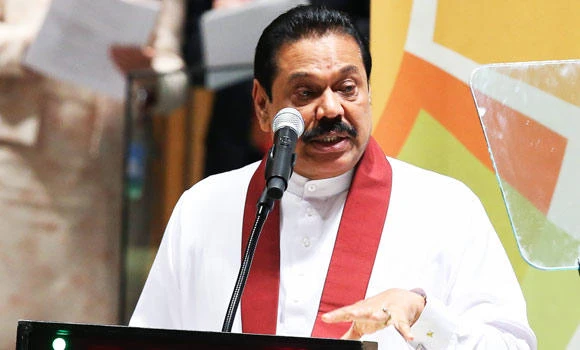
COLOMBO: Sri Lankan President Mahinda Rajapaksa could hold a snap election in January, nearly two years before he has to, a close ally said, amid signs his popularity is fading among people who criticize his party for abusing power.
Rajapaksa, 68, came to power in 2005 and retained the presidency in 2010 on a wave of popularity after the military defeated Tamil Tiger separatists in 2009, ending a 26-year-old civil war.
Now seeking a third term, he has been tainted by accusations of nepotism, although he has responded by saying that any relatives in Parliament are there because people elected them and not because he chose them.
No rival with realistic chances of defeating Rajapaksa has emerged, although the president is unlikely to take winning a third six-year term for granted.
A close ally of Rajapaksa, who spoke on condition of anonymity, told Reuters that the president was considering holding the vote on Jan. 9. His second term ends in November 2016, but he can call for an early election after Nov. 19 this year, according to the constitution.
Cabinet spokesman Keheliya Rambukwella also hinted at an early poll. “The president has arrived at a decision that, following the completion of four years, he will exercise his constitutional right,” he said. .”..Therefore an election can be held. If that happens, the election will most probably be in January.”
The 2009 victory over the Tamil Tigers helped the president secure more than two thirds of parliamentary seats, enabling him to change the constitution that had limited leaders to two terms in office.
The euphoria has long faded, however, and, although the ruling United People’s Freedom Alliance (UPFA) party won a local election in the southeastern province of Uva last month, it was with 21 percent less support than in 2009.
The president re-appointed his nephew, Shasheendra, as chief minister of Uva.
His younger brother, Gotabaya, is defense secretary, and another younger brother, Basil, is economic development minister. Elder brother Chamal is parliamentary speaker and the president’s son, Namal, is a parliamentarian.
Political analysts said sooner would be better than later for Rajapaksa, amid growing support for political opponents, led by the main opposition United National Party.
“Rajapaksa’s popularity is continuing to fade as the government’s 2009 victory over the Tamil Tigers slips further into the past,” said Sasha Riser-Kositsky of the Eurasia group.
“He stands the best chance of winning a third term, albeit by a slimmer margin than his 58 percent of popular vote in 2010, if an election is held earlier rather than later.”
Several recent policy decisions point to an early poll.
Sri Lankan president considers early polls