BANGKOK, Thailand: Thailand’s new military junta summoned ousted government leaders on Friday after it seized power, as opponents of the coup engaged in a tense confrontation with soldiers enforcing martial law on the streets of Bangkok.
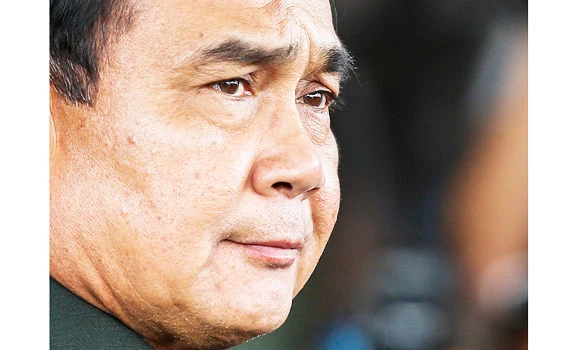
The kingdom’s tough-talking army chief Prayut Chan-O-Cha deposed the civilian government on Thursday, the latest twist in years of escalating political turmoil in a move that drew a chorus of international criticism.
Former prime minister Yingluck Shinawatra, who was removed from office in a controversial court ruling earlier this month, was among more than three dozen prominent figures from both sides of Thailand’s political divide summoned by the junta.
She reported to a Bangkok army facility and had not been seen in public hours later.
Yingluck’s aide Wim Rungwattanajinda said the former premier was thought to have been taken to a military camp outside the capital, but the junta stayed silent on her whereabouts as well as those of others called in including her successor Niwattumrong Boonsongpaisan.
A military source said army barracks had been prepared for people detained during the coup.
Under the new regime civil liberties have been drastically curbed, most of the constitution suspended, and a night-time curfew imposed as the army cleared warring protesters from Bangkok’s streets.
But in a sign of emerging disquiet on the streets, scores of demonstrators confronted and hurled abuse at soldiers in tense scenes Friday afternoon in the center of the capital, amid other smaller protests.
The army poured dozens of soldiers in to clear the area of the protesters, some of whom held protest signs with slogan such as “We will never lick dictatorship’s boots.”
Witnesses reported seeing several people taken away by troops but no clashes were seen.
The army said 155 prominent figures were banned from leaving the country without permission, a step analysts said appeared aimed at averting formation of a government-in-exile.
The coup has drawn rebukes from Washington, Europe and UN chief Ban Ki-moon, who all called for civilian control to be restored.
Secretary of State John Kerry said there was “no justification” for a coup that would have “negative implications” for US relations, and demanded early elections. The Pentagon said it was reviewing military cooperation with America’s oldest ally in Asia.
Southeast Asian neighbors urged caution, with Malaysia warning its nationals to defer non-essential travel to Thailand.
Japan, Thailand’s biggest foreign investor, called for a “prompt restoration of a democratic political system.”
Toyota and Honda had curtailed night-time shifts at their Thai plants over the curfew, but a Toyota spokesman said it “received authorization” to resume.
Thailand has been in political crisis since a 2006 military coup deposed Yingluck’s elder brother Thaksin Shinawatra, a billionaire tycoon-turned-populist politician who clashed with the royalist establishment.
The military held power for more than a year.
Since then, a power bloc centerd on Thaksin’s family has battled for primacy with a Bangkok-based royalist camp closely tied to the powerful military.
His so-called “Red Shirt” supporters have warned that an overthrow of the government could trigger civil war and all eyes are on the movement’s response.
All television and radio stations including foreign broadcasters were ordered to air only army announcements, and the junta warned it would block social media platforms that carry anti-coup content.
However, certain regular programming was restored on some channels on Friday.
Bangkok was calm Friday although its usually bustling streets were quieter than usual with schools ordered to temporarily close across the country.
Some people took to the Internet to vent their anger, posting messages such as “Thailand’s democracy was murdered by the coup.”
In contrast to the previous coup eight years ago, there was no sign of tanks or significant troop numbers deployed around the capital.
While some people welcomed the coup as a possible way out of the crisis, others voiced unease.
“The army can do anything now and the people will not know,” said Wanit, a 50-year-old taxi driver who gave only one name.
A day earlier as the coup unfolded, there were dramatic scenes at a military-hosted meeting between the kingdom’s political rivals as army trucks blocked exits.
Inside, Prayut abruptly announced he was taking power after the two sides failed to reach a compromise, according to an official at the talks who did not want to be named.
“Because you cannot agree and the situation is likely to escalate into violence I declare that I seize power, so soldiers detain everyone inside this room,” the source quoted Prayut as saying.
The opposition said some of its politicians were later released.
Thailand’s democratic development has now been interrupted by 19 actual or attempted coups since 1932, interventions that traditionally require the monarchy’s approval.
It was unclear whether the palace had blessed Prayut’s coup.
Some observers see the crisis as a struggle to decide who will run the country when the more than six-decade reign of ailing 86-year-old King Bhumibol Adulyadej eventually ends.
Experts expect the junta to draw up a new constitution aimed at curbing the political dominance of Thaksin and his allies.
Thai junta summons ousted leaders, protests erupt