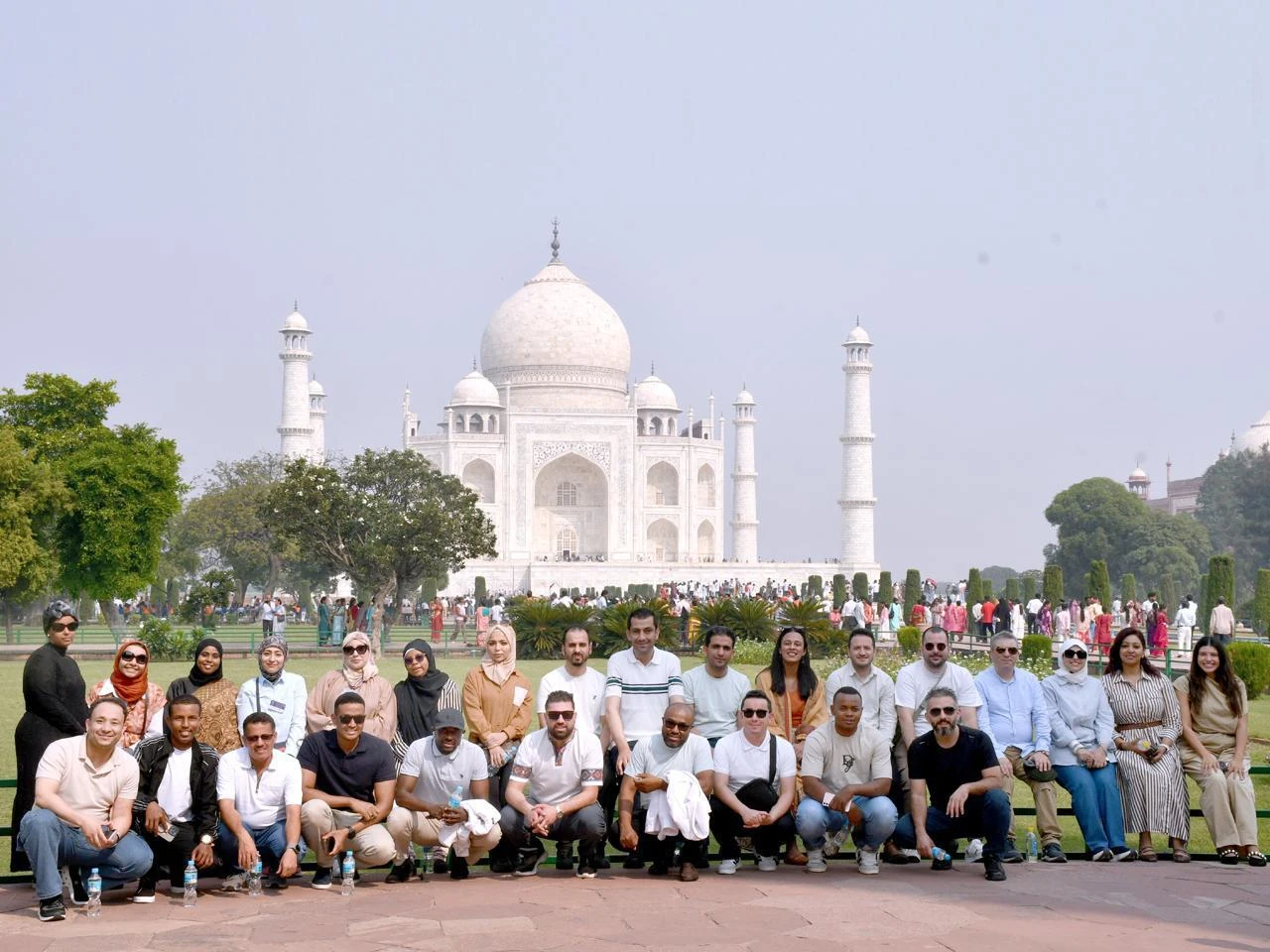
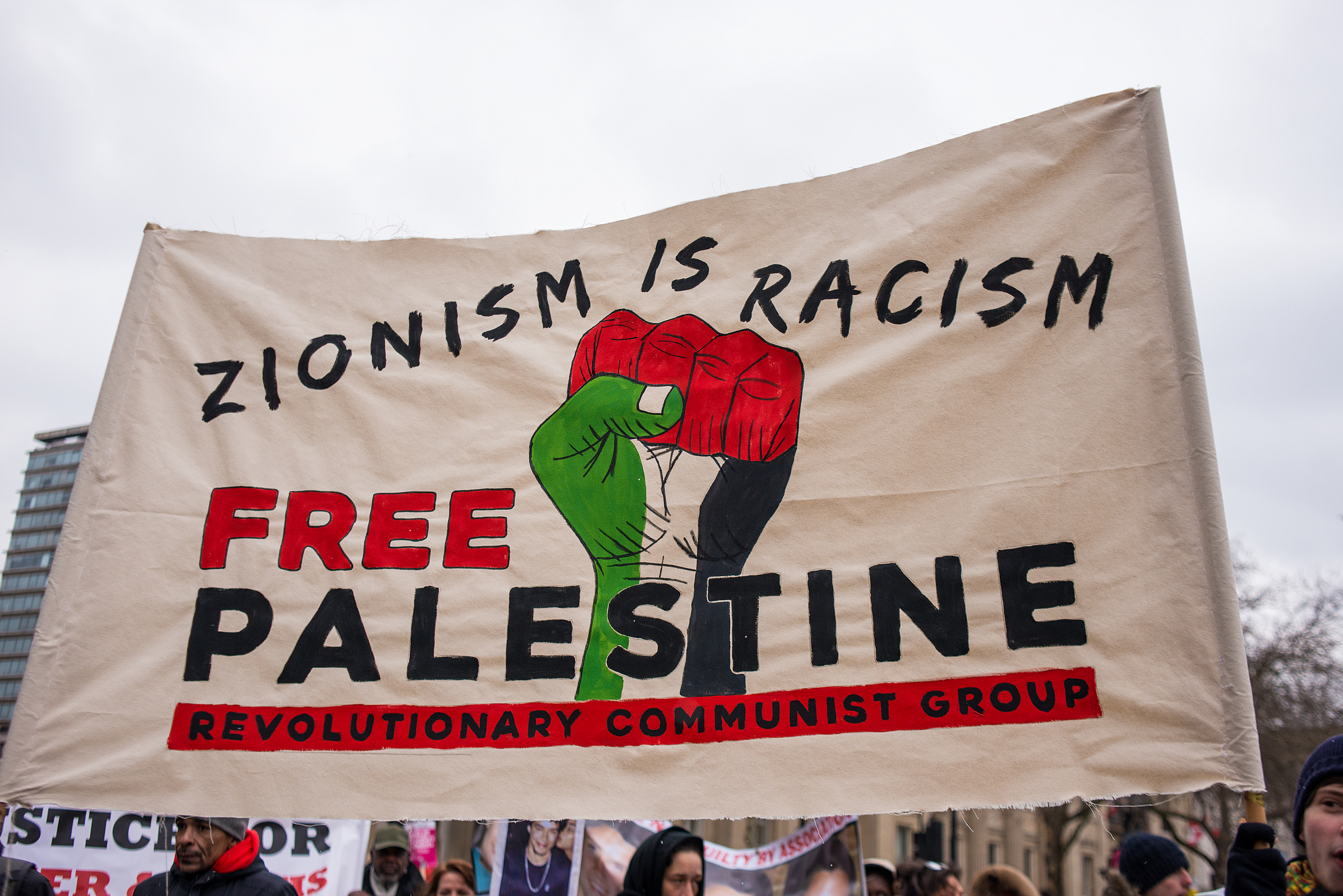
LONDON: It is half a century since the United Nations General Assembly adopted Resolution 3379, declaring that “Zionism is a form of racism and racial discrimination.”
Passed on Nov. 10, 1975, with 72 states in favor — including all six members of the Gulf Cooperation Council — 35 against and 32 abstentions, the resolution stood for 16 years until it was revoked under pressure from the US on Dec. 16, 1991.
The autumn conference of a minor UK political party usually attracts less attention than the annual gathering of the UN General Assembly.
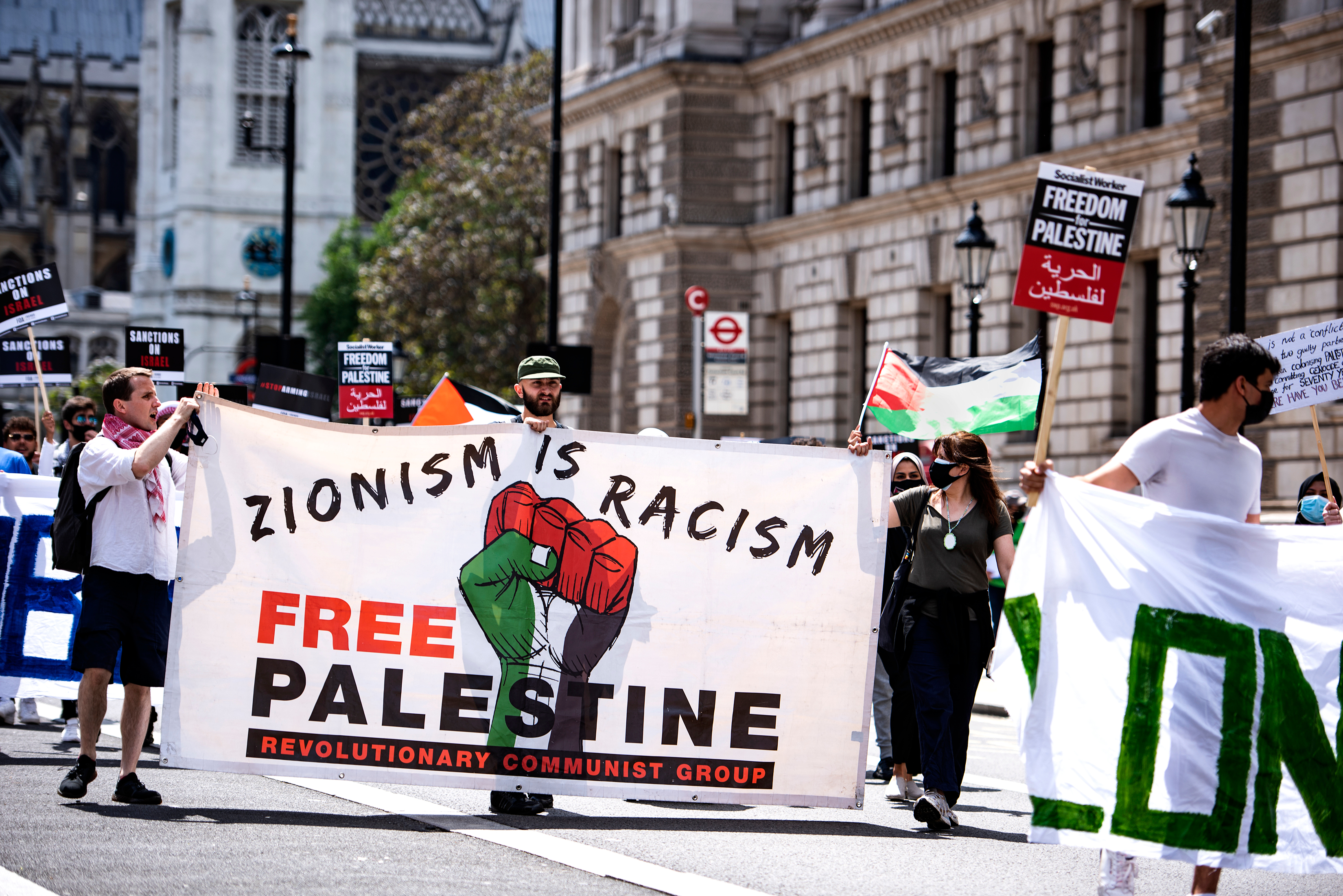
But the reaction to Sunday’s motion by the Green Party, declaring Zionism to be a racist movement, shows how divided opinion remains over the ideology underpinning the creation and character of the state of Israel.
Zionism emerged in late-19th-century Europe, largely in response to antisemitism. In 1897 the World Zionist Organization, led by Austrian Jew Theodor Herzl, declared its aim was “to create for the Jewish people a home in Palestine,” on the basis of ancient Jewish links with the territory.
In 1917 the British government, seeking support for its ongoing war with Germany, issued the Balfour Declaration, backing “the establishment in Palestine of a national home for the Jewish people.” There was a condition, which many critics of modern-day Zionism say has been forgotten — “it being clearly understood that nothing shall be done which may prejudice the civil and religious rights of existing non-Jewish communities in Palestine.”
Critics argue that the promise in the Balfour Declaration to protect the rights of Palestine’s non-Jewish inhabitants was not fulfilled. But it was the displacement of Palestinians during the creation of Israel in 1948, the subsequent occupation of territories captured in 1967, and continuing inequalities experienced by Palestinians that have led to the accusations, both today and in 1975, that Zionism is a racist movement.
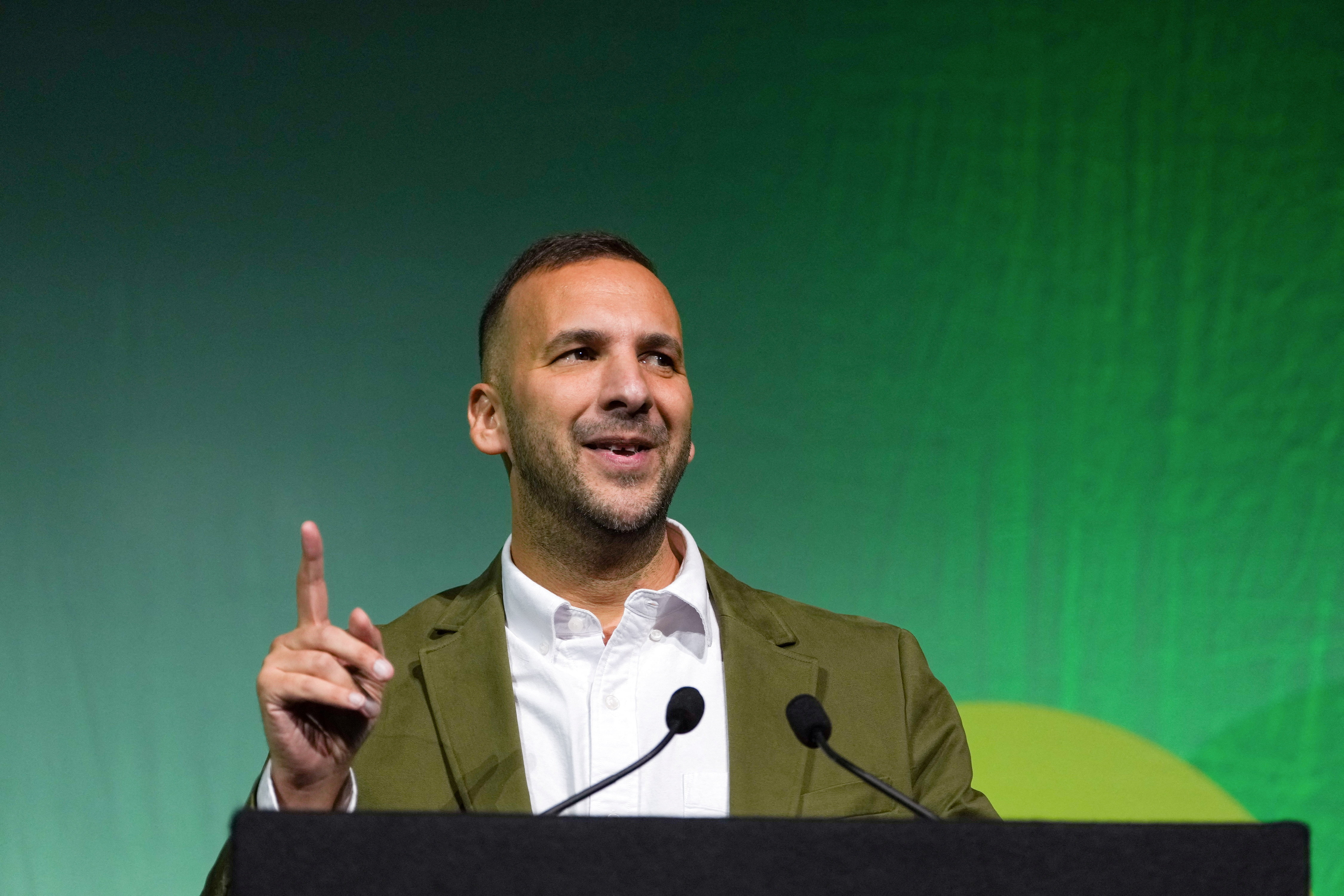
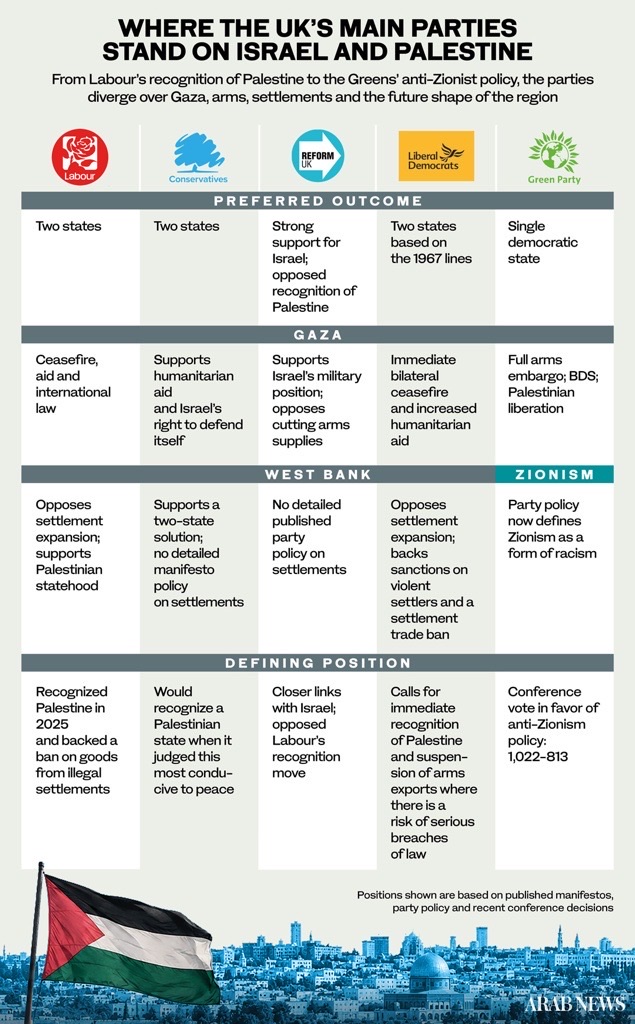
Even the Greens themselves were clearly divided on the issue. The motion passed by 1,022 votes to 813.
The party’s leader, Zack Polanski, himself Jewish, did not vote on the motion.
Asked about it on Friday, ahead of the vote, he said: “If your Zionism is the displacement of the Palestinian people then that is clearly racist, and I say that as a Jewish leader of a British political party.”
A statement issued jointly by Polanski and the four other Green MPs after the vote left little doubt about where they stood on the wider issue.
“We will never tolerate any form of discrimination or harassment,” they said.
“We will continue to stand in opposition to genocide, ethnic cleansing, apartheid and the illegal occupation. We will continue to call out the heinous crimes of the Netanyahu government.”
They added: “We know there is no conflict between supporting the rights of Palestinians and the rights of Jewish people.”
Now, as in 1975, there has been no shortage of outraged responses.
One came from the UK’s Movement for Progressive Judaism, headed by rabbis Charley Baginsky and Josh Levy.
The motion, they said in a statement on Sunday, was “antisemitic in its formulation and intention,” adding that by adopting it “the Green Party has made antisemitism party policy and become a racist party.”
The Israeli government also condemned what it called a “clear antisemitic text” and barred Polanski from entering the country.
The Board of Deputies of British Jews and the Jewish Leadership Council issued a joint statement arguing that “Zionism is anti-racism, creating a refuge for Jews in their ancient homeland after millennia of persecution outside it.”
For some British Jews, however, the accusation that Zionism has become inseparable from discriminatory policies toward Palestinians cannot simply be dismissed.
“We would say that what is happening now in Gaza and in the West Bank is quite clearly racist,” Richard Kuper, founder and former chairman of Jews for Justice for Palestinians, told Arab News.
The organization, he said, is “a group of Jews open to all who oppose the oppression of the Palestinians.”
“What unites us is a revulsion against the occupation, and now what we unambiguously call a genocide in Gaza.”
Kuper argued that Zionism had not begun as an inherently racist movement.
“Zionism grew up as a response to virulent antisemitism in Europe and was a liberation movement,” he said.
“Its intention was to rescue Jews from racism, not to oppress other people.
“Many Jews who settled in Palestine in the early days were looking for a spiritual home as well as a refuge, and were quite happy to consider living alongside and working with the Palestinians.
“I think the fact that it was Jewish nationalism didn’t necessarily imply that it had to be anti-Palestinian and that it had to be racist. But that is the form of Zionism which has become dominant and is perhaps the only form of Zionism which exists in reality in Israel today.”
He added: “That it has turned out as it has, I don’t think was inevitable.”
But, he said, after the establishment of Israel, “the expulsion of three quarters of a million Palestinians set in stone a kind of ethnic direction.”
Despite understanding the anger behind the Green Party motion, Kuper said Jews for Justice for Palestinians did not believe it would help.
“Our attitude is that this motion certainly won’t help,” he said.
“Although the wording of the motion and the intention of the movers is not to discriminate against Jews, some people may interpret it as antisemitic, and we can certainly understand fears that it might be used in ways that could be upsetting to Jews and to Jewish members of the Green Party.”
Dr. Jonathan Boyd, executive director of the UK Institute for Jewish Policy Research, said there was likely to be little support for the Greens’ position among the wider British Jewish community.
“One needs to differentiate between Zionism — the belief that Jews have the right to self-determination in their ancestral homeland — and political criticism of the current Israeli government,” he said.
“Many British Jews are critical of how the Netanyahu government has prosecuted the war, but that has not affected their fundamental emotional attachment to Israel or Zionism.”
Today, he added, “antizionism far too often provides cover for antisemites bent on hurting Jewish communities outside Israel, adding fuel to language and behaviour that is experienced by the majority of British Jews as prejudiced, discriminatory and threatening.”
In many respects, he said, Zionism is “a non-term today in contemporary Jewish or Israeli life — its goals were achieved in May 1948 with the establishment of the State of Israel.”
“One can certainly criticise the ways in which the current Israeli government has fought the war against Hamas since Oct. 7.
“But to argue that that in some way negates Zionism itself, or renders it fundamentally racist, is either ignorant, mischievous, or racist in and of itself.”
Mike Cushman, membership secretary of Jewish Voice for Liberation, said there was “no consensus” among historians over whether the Zionist project had been racist from the outset.
“But personally, I think it was always inherently ethno-nationalist,” he told Arab News, arguing that it carried the potential to lead to ethnic cleansing.
“Had the cultural Zionists ever got any traction, which was the idea of moving to Palestine to live in and among the inhabitants, then history might have been very different and much more peaceable.
“But it was never more than a very minor thread in Zionism.”
From the beginning, Cushman argued, “Zionism always envisaged a special position for Jews inside Palestine, and that is a racist concept.”
“Had they wanted to live alongside and with the Palestinian population, life could have been different.”
He also described the concept of the “new Jew,” or Sabra, as carrying authoritarian and exclusionary elements.
Dr. Ahron Bregman, an Israeli-born lecturer in the Department of War Studies at King’s College London and author of several books on Israeli history, took a different view.
“The original Zionist project had its flaws, but it was not rooted in racism,” he told Arab News.
“However, the turning point occurred with Israel’s victory in 1967 — a victory I once described as ‘cursed,’” a reference to his book “Cursed Victory: A History of Israel and the Occupied Territories” published in 2014.
“Over the years, racist elements within Israeli society have gained increasing strength, and (Benajmin) Netanyahu’s invitation to racists like (Itamar) Ben-Gvir and (Bezalel) Smotrich to join the government led to racists governing Israel, which is so sad.”
Bregman does not, however, support the Green Party’s position.
“Their decision reflects widespread anger towards Israel, shared by many around the world. This anger is justified given what Israel has done to Gaza and its people.
“But the decisions passed by the Greens are not helpful and will do nothing to promote the emergence of a Palestinian state.”
The motion, he argued, “effectively calls for the removal of Israel as it currently exists, and as such is more radical than the views held by most Palestinians and aligns with those of Hamas.
“Mainstream Palestinian factions accept Israel’s legitimacy and right to exist on 78 percent of historical Palestine and only call for a Palestinian state to be established on the remaining 22 percent. This perspective is reflected in their acceptance of UN Resolution 242.”
Bregman also warned that the Green Party’s decision could have unintended consequences inside Israel.
It could, he said, “push many in Israel even more to the right, especially the young generation.”
Fifty years after the UN first formally equated Zionism with racism, the debate therefore remains no less combustible.
What has changed is the context.
The argument is no longer primarily about an abstract ideological definition. It is being fought against the backdrop of Gaza, the occupation of the West Bank, the rise of Israel’s far right and growing fears of antisemitism among Jewish communities abroad.
And even among Jewish critics of Israel’s conduct toward Palestinians, there is little agreement that branding Zionism itself as racist will do anything to bring either side closer to peace.