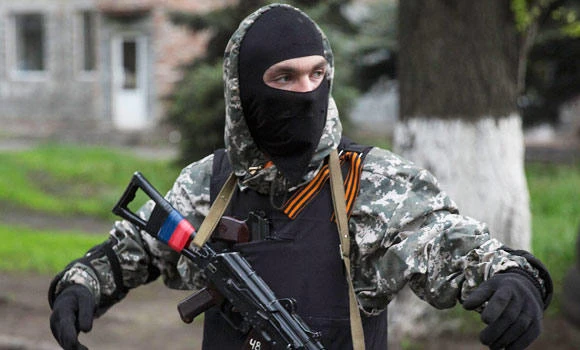
DONETSK, Ukraine: Pro-Moscow rebels fighting in east Ukraine vowed Thursday to press on with disputed independence referendums, defying a call from President Vladimir Putin to postpone the vote in a bid to ease tensions.
“The vote will happen on May 11,” the leader of the self-proclaimed People’s Republic of Donetsk, Denis Pushilin, declared to reporters.
“The people’s desire to hold the referendum is becoming even greater. There was a vote and a 100 percent decision was made not to change the date of the referendum,” Pushilin said, to applause from members of the “republic’s” ruling council.
On Sunday, people in the restive eastern region will be called to answer one simple question: “Do you support the declaration of independence by the Donetsk People’s Republic?“
Insurgents in the other main rebel-held towns of Slavyansk and Lugansk also declared they would hold a plebiscite.
“Since the fascists came to power we are left with no option but to separate from them,” said retiree Olga, a resident of beleaguered Slavyansk, using the epithet many in the east use for the interim leaders in Kiev.
The move dashed hopes of an easing in the crisis sparked on Wednesday by Putin’s surprise call to the rebels to postpone their referendums.
In a stunning about-face, the Kremlin strongman also backed a presidential election planned by Kiev’s interim leaders on May 25 that Moscow had only recently described as “absurd.”
But the Cold War-style tension was ratcheted up another notch on Thursday as Russia conducted military drills, including test-firing ballistic missiles.
Russia’s defense minister also warned that the country’s nuclear capable forces remained on “constant combat alert.”
Crimea faces ‘human tragedy’ on AIDS
The UN AIDS envoy for eastern Europe on Thursday said Crimea faced a “human tragedy” and risks to public health after a program for intravenous drug users was scrapped following Russia’s takeover.
“Politics has won out over science — and doctors, scientists, and humanitarians are right to feel abhorrence that a new human tragedy has been imposed on Crimea,” Michel Kazatchkine said in a commentary published by the British Medical Journal (BMJ).
Kazatchkine said that under Ukrainian rule, Crimea provided addicts with access to methadone, a safer substitute for heroin, and to buprenorphine, a drug used to ease dependence.
Endorsed by the World Health Organization (WHO), this “substitution” therapy is a proven success in weaning addicts off heroin and halting the spread of HIV, Kazatchkine said.
But under Russian law, these drugs are prohibited, and leading figures in Russian law enforcement and addiction treatment, as well as the peninsula’s deputy prime minister and deputy health minister, all oppose them, he said.
“This will bring unnecessary suffering to the people of Crimea and is a blatant example of health policy being hijacked for political ends rather than being led by evidence,” he charged.
Dosages of drugs for the 800 people enrolled in Crimea’s substitution program were gradually reduced from mid-March and the therapy officially stopped on May 1, Kazatchkine said.
About 80 people have sought to leave Crimea to continue treatment, 32 of whom are also receiving AIDS drugs, he said, quoting the International HIV/AIDS Alliance in Ukraine.
Under Ukraine’s governance, Crimea also widely used needle exchange programs and focussed support on sex workers and gays, which are also important niche groups for the spread of HIV. The services cover 14,000 people, Kazatchkine said.
Ukraine rebels defy Putin call to press ahead with vote