During the Soviet era, Arab relations with Moscow were mostly positive given their similar stances on many matters, mainly the Palestinian cause. The Soviet Union’s collapse left a vacuum in the Middle East that was filled by the West. The vacuum led to chaos in Somalia, South Sudan and later Iraq, Syria, Yemen and Libya, not to forget the emergence of terrorism and the deterioration of security in hitherto stable countries, such as Pakistan and Ethiopia.
Regional countries were afraid of competition between the two camps over passages and markets that could create tensions and wars. Later, it turned out that the absence of regional balance could be even more dangerous as struggles cannot be organized or framed. With Russia’s recovery, it has gone back to playing a balancing role in our region and other areas in the world.
We are witnessing the formation of a new reality, and it seems Syria is the main arena for Russia’s military parade. Moscow’s position on Syria is shrouded in mystery, which is unjustifiable to many countries in the region.
Russia has good relations with all Arab countries, including those close to the US, such as Egypt, the Gulf states and Jordan. Trade between both sides is at its highest. There is cooperation in crucial areas, and for the first time there is an agreement on oil production and pricing as well as security cooperation against terrorism. This cannot be said about Arab relations with Iran, which is tense on all levels.
Moscow ought to change its position on Syria, and thus become the key to ending the crisis within a plan that appeals to the moderate opposition. This must be preceded by convincing answers about the Kremlin’s enthusiasm and insistence on heavily supporting the Syrian regime and Iran. It could be interpreted as a revived rivalry between the US and Russia.
Moscow’s attitude is an extension of its struggle with the West, specifically in areas close to Russia, such as Ukraine. Ukraine was part of the Soviet Union, and Russia considers it stolen by the West during the Orange Revolution. Similar to the Arab Spring, during the Orange Revolution protesters filled the streets of Kiev. This reveals Russia’s over-sensitivity toward the Syrian revolution, despite differences between Ukraine and Syria.
Moscow ought to change its position on Damascus, and thus become the key to ending the crisis within a plan that appeals to the moderate opposition.
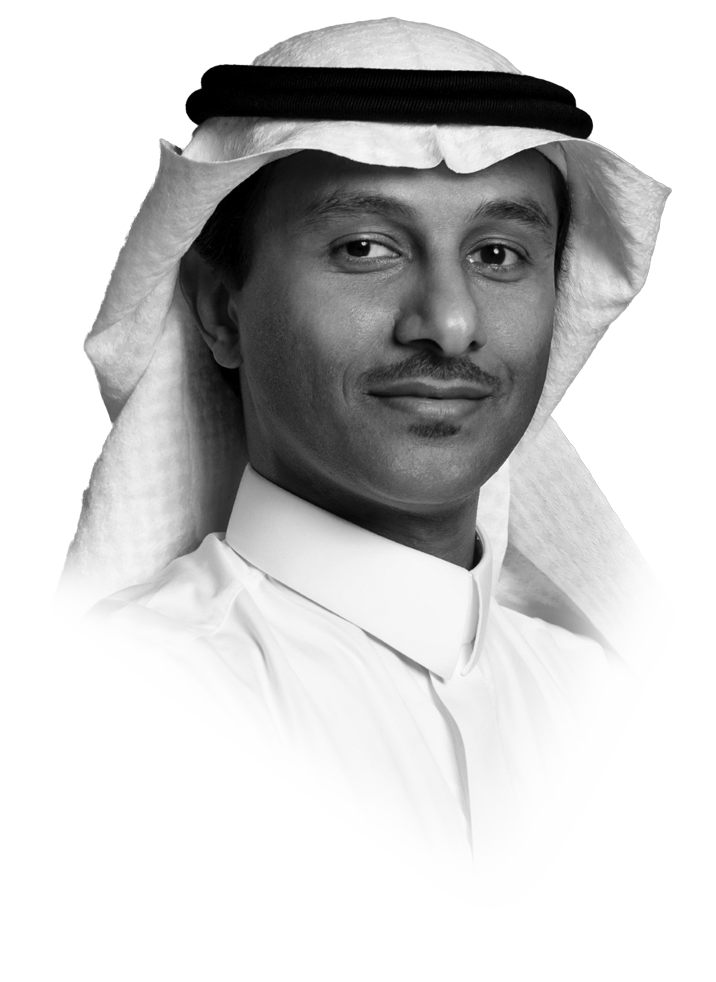
Abdulrahman Al-Rashed
The conflict between Russia and the West is ongoing in a number of old zones of influence. So is Russian support for the Syrian regime part of raising the level of conflict with the US? The US does not care much about the Syrian conflict as it is focused on fighting Daesh.
Russian willingness to challenge the US in its areas of control is understandable, and can be explained as a response to Western activity in west Russia and east Europe. But we cannot consider Syria an arena for proxy wars between both camps.
Several indications suggest that Russia is willing to reconcile with regional countries over Syria and reach practical solutions. This could be accepted by the US, which seems willing to be involved in the Syrian conflict now more than ever.
The US will not repeat its only attack on Idlib in response to the chemical attack. Without a political solution, Washington will most likely support the moderate Syrian opposition in order to pressure the regime and Iran to accept a moderate political solution. This would further complicate the situation and prolong the civil war, yet Russia will not budge from its current position and thus become a true peacemaker in Syria.
• Abdulrahman Al-Rashed is a veteran columnist. He is the former general manager of Al Arabiya News Channel, and former editor-in-chief of Asharq Al-Awsat, where this article was originally published.