



Analysis: Someone else’s war, everyone’s crisis


https://arab.news/p4vvp
Writing this from Abu Dhabi, where the sound of intercepted projectiles has become an unwelcome feature of daily life over the past two weeks, it is difficult not to feel the weight of what the region has stumbled into.
The war that was supposed to be somebody else’s fight has arrived at our doorstep and, as often happens, the people paying the highest price are those who never had a say in starting it. This is the point the international response has still not faced squarely enough.
Lebanon is once again suffering the consequences of a conflict shaped far beyond its borders. For decades, Iran has relied on armed non-state proxies, above all Hezbollah, to project influence across the region. That strategy has often served Tehran’s interests.

But the human cost has been borne elsewhere, by ordinary people living in the places where those groups operate. Few countries illustrate this more painfully than Lebanon.
This did not begin yesterday. When Hezbollah began firing rockets into northern Israel following the attacks of Oct. 7, 2023, it pulled Lebanon further into a confrontation that was never truly about Lebanon’s own national interest.
The ceasefire in November 2024 brought only temporary relief. Nothing fundamental changed. Hezbollah remained heavily armed, deeply embedded, and willing to use Lebanese territory in pursuit of a wider regional struggle.

When it fired into Israel again on March 2, 2026, days after the US-Israeli strikes on Iran, it made a deliberate choice with entirely foreseeable consequences for the Lebanese people.
It was also a choice that served Iran’s strategic narrative far more than it served Lebanon’s interests.
In less than two weeks, more than 800,000 people have been displaced across Lebanon. Around 700 people have reportedly been killed since March 2, including many children.
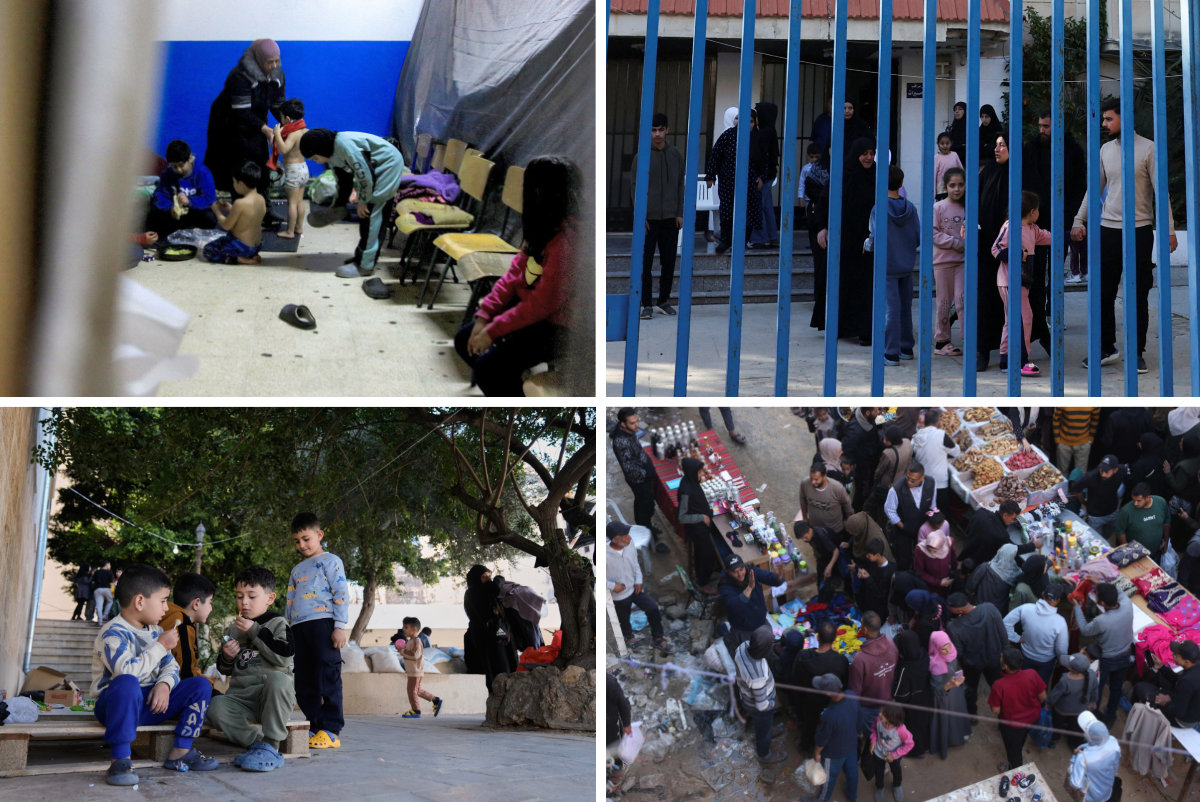
Shelters in Beirut are overcrowded and under-supplied. Families are sleeping in school corridors, on pavements, and on beaches. This is happening in a country where more than 80 percent of the population was already living in poverty before this latest escalation.
As Lebanese Prime Minister Nawaf Salam put it: “Our country has been drawn into a devastating war that we did not seek and did not choose.” The tragedy is that this is not rhetoric. It is precisely true, and precisely the point.
This is what proxy warfare does. When armed groups operate from within civilian spaces, civilians end up trapped in the middle. Their suffering is not simply an unfortunate side effect. It is built into the logic of this kind of conflict.

That is why it is not enough to speak vaguely about escalation or instability. Responsibility matters and it needs to be acknowledged honestly. Without that, the international debate risks focusing entirely on the symptoms while ignoring the cause.
The humanitarian response, meanwhile, cannot wait for the politics to catch up.
The UAE has long understood this. During the Hezbollah-Israel escalation in autumn 2024, Abu Dhabi directed $100 million in urgent relief for the Lebanese people, alongside a further $30 million for Lebanese citizens displaced into Syria.
Through the “UAE Stands with Lebanon” campaign, aircraft and ships carried food, medical supplies, and shelter equipment to those in need.
More broadly, the UAE’s position as one of the world’s leading humanitarian donors reflects a consistent principle: Civilians must not be abandoned because political leaders and armed actors have failed.
But this crisis is moving quickly, and Lebanon simply cannot cope on its own. The country was already under immense strain before this latest round of violence, not least because of its economic collapse and the burden of hosting large refugee populations.

Aid agencies are warning that needs are rising faster than available resources. That should concern everyone. What is needed now is immediate access, immediate funding, and immediate coordination. Not another round of carefully worded concern.
This crisis will also not stop at Lebanon’s borders. Disruptions linked to Iranian attacks on shipping are already affecting global trade routes and energy flows. Rising fuel prices and pressure on supply chains will have consequences far beyond the Middle East.
Food-insecure regions of Africa and South Asia may yet pay another price for a conflict in which they had no role. This is one of the cruelest truths about wars of this kind: They rarely remain local for long.
It is also important to remember the humanitarian crises the region was already grappling with before Feb. 28.

In Sudan, years of fighting have devastated the country’s social fabric and created the largest displacement crisis of our generation, pushing entire communities to the brink of starvation.
Refugee camps are overwhelmed, aid is dwindling, and the international response has been slow. With the Sudan crisis still reverberating across the region, the Middle East can ill afford another one.
There is no serious path forward without three things.
First, emergency humanitarian access and funding for Lebanon must be secured now. Every delay means more avoidable suffering.

Second, diplomacy must move beyond vague appeals and toward a ceasefire mechanism that can actually hold.
For the first time, the Lebanese government has signaled its readiness to engage directly with Israel for an immediate cessation of hostilities, and that call must be taken seriously.
Third, there must be a more honest international reckoning with Iran’s use of proxy forces as tools of regional destabilization.
Humanitarian aid can keep people alive, but it does not solve the deeper problem.
The people sleeping on beaches, alongside the rest of the Lebanese population, did not choose this war. They deserve more than sympathy. They deserve both our assistance and our honesty about who chose it for them.
• Dr. Rikard Jalkebro is an associate professor at Anwar Gargash Diplomatic Academy X: @RikardJalkebro


