BAGHDAD/WASHINGTON, 9 March 2003 — President Saddam Hussein called on the UN Security Council yesterday to lift 12 years of sanctions against Iraq, saying inspectors’ reports showed his country had fulfilled its disarmament commitments.
In a statement after a meeting chaired by Saddam, the Iraqi leadership made a set of demands it said the Security Council should implement after Friday’s reports by chief UN weapons inspectors Hans Blix and Mohamed El-Baradei.
“The embargo against Iraq should be lifted totally and comprehensively after America’s motives were revealed to the world and after Iraq abided by Security Council resolutions,” the statement said.
Iraq has been under stringent United Nations sanctions since 1990 for its invasion of Kuwait.
The statement also demanded that the Security Council denounce the United States and Britain as “liars”, strip Israel of its alleged weapons of mass destruction and force it to pull out of “Palestine and occupied Arab land”.
Separately, Yemen and Libya also called for the “immediate lifting” of the embargo and a peaceful solution to the Iraqi crisis. The call came in a joint statement issued at the end of a three-day visit to Sanaa by the Libyan minister for African unity, Abdessalem Triki.
Threatened with a March 17 deadline to disarm, Iraq scrapped more of its banned missiles yesterday in a process President George W. Bush dismissed as a charade that would not save it from war.
An attack on Baghdad could come even sooner than March 17, the date set down in a draft UN resolution which is the subject of frenetic diplomatic haggling this weekend. If the resolution fails to win the backing of the UN Security Council, Washington and its allies might well go to war earlier.
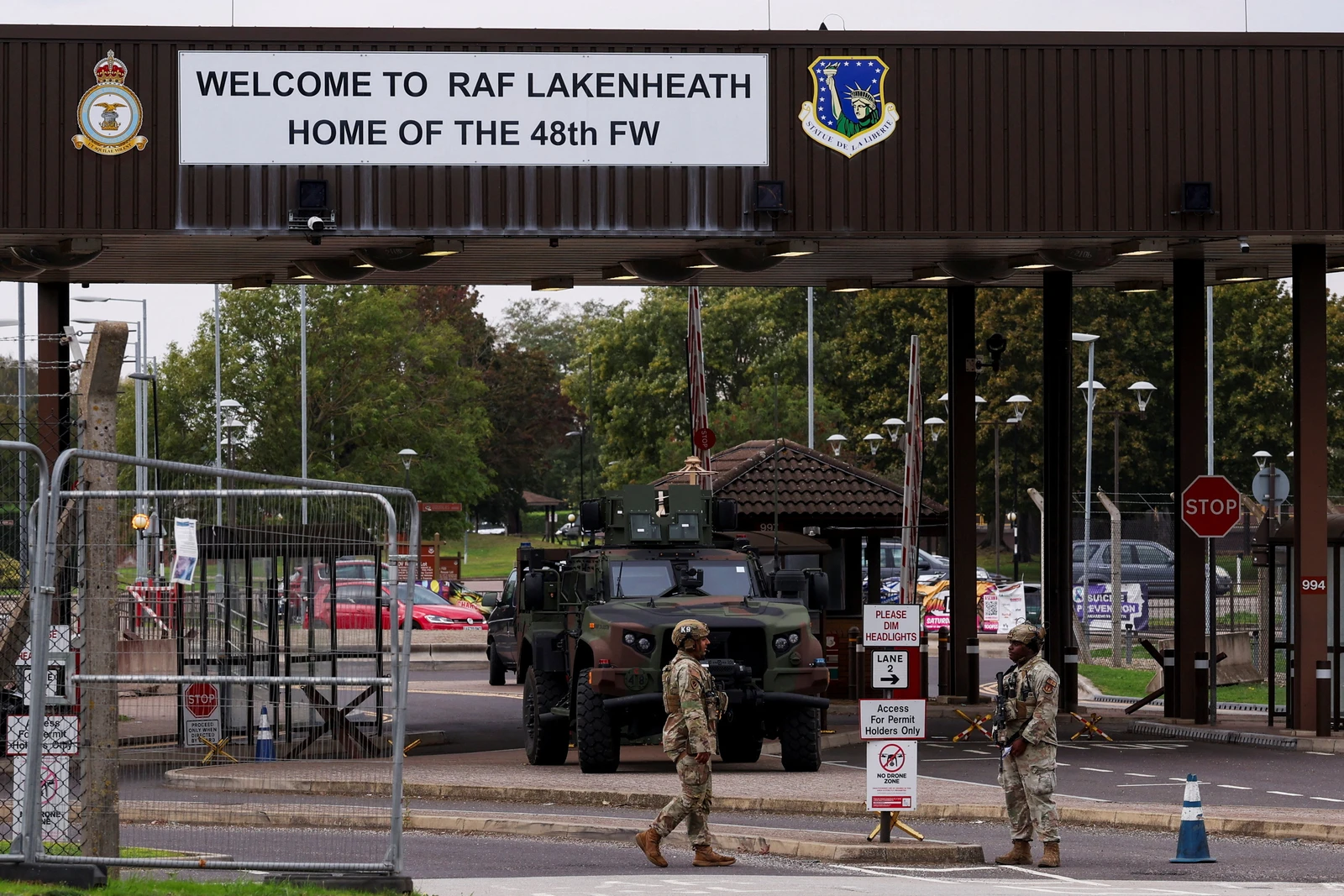
More than 200,000 troops are in the region and ready to strike. Gates wide enough to allow a column of tanks to pass are being installed in a fortified fence between Kuwait and Iraq.
UN military observers on the border said they were withdrawing civilian staff to Kuwait City for their own safety in view of a possible US invasion. “We are doing this as a protective measure for their safety in view of the situation,” said Daljeet Bagga, spokesman of the UN Iraq-Kuwait Observer Mission (UNIKOM).
He said UNIKOM had begun removing yesterday some of its 230 civilian UN staff from their residential quarters in the demilitarized zone that runs the length of the 200 km (130 mile) land border. He said more would go today.
Bush said that as Iraq was crushing some Al-Samoud missiles, it was covertly making more. “These are not the actions of a regime that is disarming. These are the actions of a regime engaged in a willful charade,” he said in a radio address. “As a last resort, we must be willing to use military force.”
British Foreign Secretary Jack Straw said war could still be avoided and the draft resolution could get through the Security Council, despite bitter opposition from some members who want weapons inspectors to be given more time in Iraq. He called on the 15 states to “face up to our responsibilities”.
US diplomats say the vote could come on Tuesday or later. A crucial motor of the diplomatic pace is the military’s desire to attack before soaring early summer temperatures in the Gulf make fighting in chemical and biological protection suits especially arduous. France, Russia and China, who hold veto power in the Council, maintained their opposition to any new resolution which would implicitly or explicitly authorize military action.
Deputy Foreign Minister Yuri Fedotov hinted Russia might use its veto. “Russia will do everything not to allow this resolution in the UN Security Council,” he said. Foreign Minister Igor Ivanov called it an “unjustified ultimatum”.
Modifying the resolution by extending the deadline for Iraqi compliance was intended to win over undecided nations Chile, Pakistan, Mexico, Angola, Cameroon and Guinea. Pakistan and Angola expressed immediate skepticism. Chile’s Socialist President Ricardo Lagos said he had already told Bush the March 17 deadline was too tight and inspectors needed months more.
Analysts say US promises of economic aid to the “undecided” may succeed where argument has so far failed.