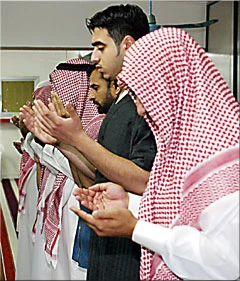
RIYADH, 31 March 2003 — In a show of solidarity with the people of Iraq, imams all over Saudi Arabia have begun offering Qunoot prayers for the welfare and protection of the Iraqi citizens.
The ritual was first performed in the days of the Prophet Muhammad (peace be upon him) when a tribe of Arabs killed several of the Prophet’s companions. The prayers have since been performed in mosques whenever disaster strikes the Ummah or when an Islamic state is invaded.
“Oh Allah, lead our Muslim brothers in Iraq to victory. Let them be victorious and let the invaders shoulder the burden of shame and defeat,” said an imam in a large mosque in Olaya district.
“Images of innocent Iraqis killed by American bombs dropped on them went through my head as I prayed,” the imam later told Arab News on condition that he not be named.
“Women and children staying in the safety of their homes have lost loved ones as bombs ripped through their homes,” he said.
“Imams should realize that they are the successors of the Prophet,” Saad Muhammad Alattalla, who is also a legal consultant and a religious counselor, told Arab News.
“There is no doubt that they play a very important role in discussing and guiding people in matters that concern the Islamic nation,” said the imam.
“Qunoot prayers are not just an Islamic ritual, they are also a way of relieving tension,” he said. “People come to mosques pumped up with tension from the images they see on television of the innocent being slaughtered. One of the benefits of Qunoot prayers is that they relieve this tension so that it does not lead to other things such as protests in the streets.”
The imam said that he often hears people weeping or raising their voices as they say “Ameen,” and when he prays for safety for the Iraqi people, “I have heard people weeping from the emotions they feel many times.”
Mamdooh Al-Hawshan, managing editor of the Islamic weekly magazine Al Daawwah, said that religious establishments in Saudi Arabia play a vital role in shaping domestic opinion.
He said at a time when American and British invaders refused to listen to the people of the world, it was important that religious establishments should remind Muslims of Islam’s ultimate victory and to call upon them to help the Iraqi people with aid.
“It is very important however, that imams and people who propagate Islam differentiate between combatants and other Westerners who have not shown any signs of hatred and have denounced this war completely, whether they are living in Muslim countries or in their home countries,” he added.
He said that every Muslim believer should refrain from issuing fatwas based on his own interpretation and that the source of that should be Islamic scholars.
“In such cases religious edicts issued by fatwa establishments in the Islamic nation such as the one in Saudi Arabia and Egypt should be followed.”
He advised imams to follow the basic guidelines of Islam in Qunoot prayers and said that prayers should not be hateful by calling for the destruction of Christians and Jews and followers of other religions. “That would be against human nature as we know people follow different faiths,” he added.