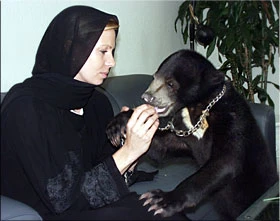
JEDDAH, 5 May 2003 — A vast number of animals in captivity in the Kingdom are in a pitiful state. Many exotic species are kept in substandard conditions, often undergoing operations that render them less dangerous to humans and can encourage the development of physical or psychological conditions that kill them.
Snakes, used as status symbols by young men, have their fangs broken off with pliers and their mouths crudely stitched shut to render them harmless to their owners.
Both commercial and underground sources exist to supply the market for exotic pets, putting the health of the animal second to commercial gain. Ostriches, used to running scores of kilometers a day, are cooped in cages of a few square meters. Lions, rotting with skin infection, lie listlessly in concrete pens.
“There is a tremendous challenge to be addressed in the Kingdom,” says Deborah Zahid, managing director of the Tahlia International Veterinary Clinic. “At the very least, understanding an animal’s needs and habits and catering for them reduces the need for veterinary care. At best, education and respect for larger animals might prevent their ever being captured and sold as pets in the first place.”
Household pets are often bought for pleasure and, when they outgrow their usefulness, abandoned. This is a regular occurrence and, when it involves a domestic cat or small bird, is not a major problem. “Some come to us because they present habits that annoy the owners,” said Deborah, “but more often than not, the animal can be trained out of them.”
When the animal belongs to an endangered species — a big cat, gazelle or turtle — it becomes an international legal problem, and veterinary practices can find themselves in a bind. The animal should not be in private hands and international wildlife bodies such as the Worldwide Fund for Nature and CITES can prosecute owners and those that treat animals illegally in captivity.
“Ethically, what can a vet do if presented with a dying turtle that can be saved or an endangered animal that, if I treat it, renders the vet liable to prosecution under international law?”
Deborah Zahid qualified as an animal psychologist, dolphin trainer and veterinary nurse.
Treating animals is only a superficial solution to an underlying problem, that of lack of public education about animal welfare.
“Once small-pet owners understand that there are techniques of training their animals, they are keen to learn more,” she said. “That same process needs introducing into the education system to encourage a respect for animals in general.”
The benefits of human contact with animals can be startling. The relationship that builds between disabled and autistic children and animals is well documented. Successes in child development from carefully programmed contact with dolphins by seriously challenged children have encouraged the idea of promoting such a project in Jeddah when a new dolphinarium opens in the near future.
“There are very positive things to be developed by association with animals,” said Deborah, “but the practice of keeping exotic species in frankly dreadful conditions has to stop.”