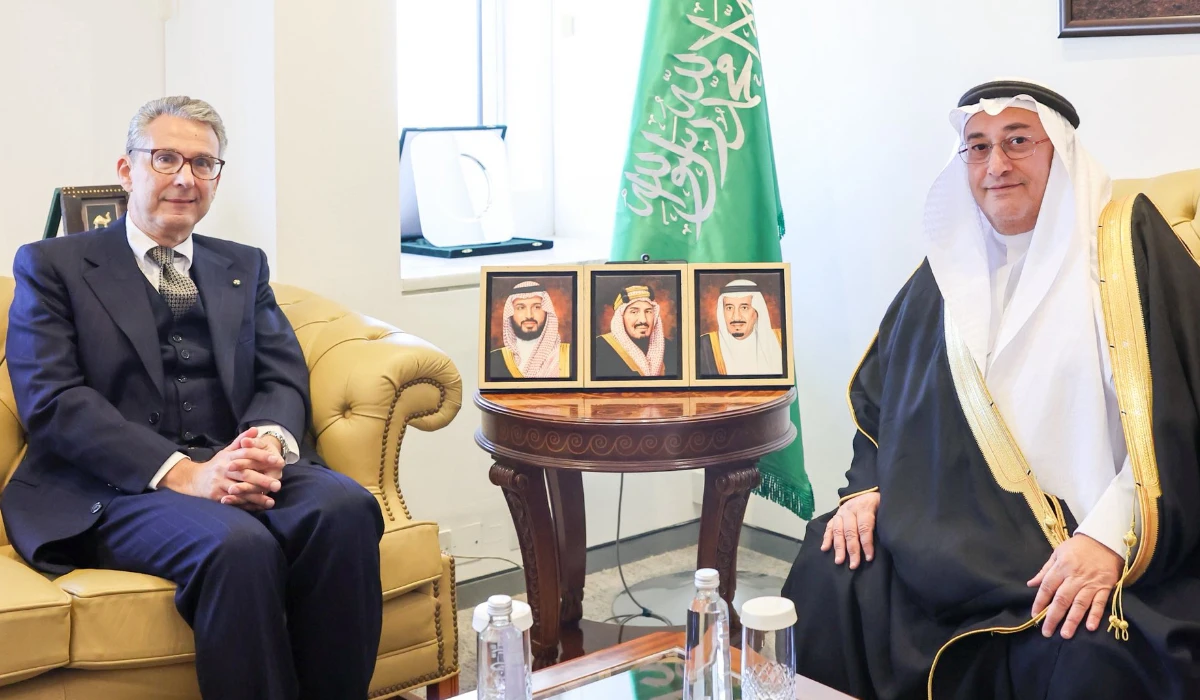
RIYADH, 13 September 2003 — Minister of Justice Dr. Abdullah Al-Shaikh will lead a Saudi delegation to an international conference on organized crime, slated for Sept. 15 to 19 in Italy.
The conference is being organized by the International Institute for Higher Studies in Criminal Sciences and the Center of Organized Crime in collaboration with the UN’s office for Combating Drugs and Crime, the Councils of the Arab Justice and Interior Ministers and the Arab League.
Osama Kurdi, a member of the Shoura Council and former secretary general of the Council of Saudi Chambers of Commerce and Industry, told Arab News the Kingdom had been in the forefront of the fight against organized crime. The Kingdom ratified the UN Convention on combating organized crime in December last year.
“We have cooperated with many countries in fighting crime, including money laundering and smuggling of arms and drugs. The Shoura Council has approved an anti-money laundering law last week. It has now gone to the Council of Ministers for approval,” Kurdi said.
He said the Saudi Arabian Monetary Agency had also been keeping a close watch on all transactions that could be linked to money laundering. Last year it organized a seminar on money laundering to raise awareness among financial experts and other members of the profession for detecting money laundering.”
In the aftermath of the Sept. 11 attack the Ministry of Commerce issued a circular advising government officials to monitor transactions closely and report large money transfers where payments are made either in cash, jewelry or rare artifacts. They should also be cautious when the names of Saudi citizens are used in business deals outside their normal domain.
The International Monetary Fund estimates that an estimated $640 billion to $ 1.6 trillion is laundered annually.
Those involved are dealers in arms and drugs trafficking, arms smuggling, terrorists and tax evaders.
More recently, SAMA has compelled account-holders to fill in application forms to avoid blocking of their accounts. The applicants, especially expatriates, have to attach copies of their Iqama and passport to prove that they are bona fide residents of the Kingdom.
However, economists have warned that rigorous monitoring of bank accounts could deter expatriates from keeping their money in Saudi commercial banks.