BAGHDAD, 18 February 2005 — A Shiite alliance of mainly religious parties won a slim majority of seats in Iraq’s new National Assembly, the Iraqi Election Commission said yesterday, based on final results from last month’s historic election.
The United Iraqi Alliance has been allocated 140 seats in the 275-seat National Assembly, the commission said in a statement.
A combined Kurdish bloc, which polled the second highest number of votes in the Jan. 30 ballot, won 75 seats and the list led by US-backed interim Prime Minister Iyad Allawi got 40 seats, the commission said.
Twelve parties will be represented in Parliament.
The Iraqiyun list of Sunni President Ghazi Al-Yawar was a distant fourth with five seats, followed by the Ankara-funded Iraqi Turkmen Front with three seats.
The National Independent Cadres and Elite, linked to Shiite cleric Moqtada Sadr, obtained three seats, followed by the People’s Union (communist) and the Kurdistan Islamic Group with two each.
The Islamic Action Organization in Iraq Central Direction, another Shiite party, also clinched two seats.
The National Democratic Alliance of Abed Faisal Ahmed, the National list of Mesopotamia (Christian), and the Reconciliation and Liberation Gathering of Sunni Mishaan Al-Juburi each secured one seat.
A two-thirds majority is required to approve the appointment of a president and two vice presidents, the next step in the process.
The Shiite alliance and Kurdish bloc could together form such a majority and are expected to do so.
Because dozens of parties failed to muster enough votes to gain any seats, those parties that were elected to Parliament have a larger share of seats than their share of the vote.
The commission said it had received 48 complaints since the release of the uncertified final results on Sunday, but senior electoral official Farid Ayar said none of them had affected the distribution of seats.
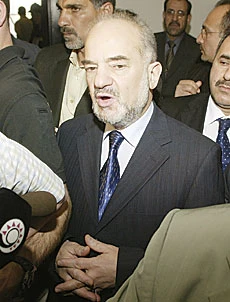
The only premiership hopeful present at the ceremony was Vice President Ibrahim Jaafari, who is thought to be the front-runner on the winning list but whose candidacy has been challenged by some of his rivals.
“To me it’s not important who is going to be prime minister. The most important to me is what he’s going to do. Our society, our country needs somebody efficient who can do the most important things, security and services,” he told reporters.
A meeting of candidates of the Shiite alliance later failed to reach agreement on who should be their candidate for prime minister. “The meeting was spent looking at possible candidates for the prime minister’s job as well as candidates for ministerial portfolios,” said Nuri Kamel Mohammed, a political adviser to Dawa, one of the two main parties on the winning list.
“Nominations have been left to another meeting,” he said following talks at the offices of the Supreme Council for the Islamic Revolution in Iraq, the other main party on the list backed by Shiite leader Grand Ayatollah Ali Al-Sistani.
Other officials from the United Iraqi Alliance list present at the talks said that two candidates were in the running for the premiership nomination: Jaafari and Ahmed Chalabi of the Iraqi National Congress.
Several sources said earlier this week that Jaafari had secured the nomination, but an aide to Chalabi insisted yesterday that the one-time Pentagon favorite was still in the running.
UIA candidates will cast ballots to decide on who should be their candidate, said Mohammed. “Next week will be decisive and the meeting will be held on Monday or Tuesday,” said Mohammed.
— Additional input from agencies