ZAMBOANGA CITY, 20 February 2005 — At least three soldiers were reported killed in fresh clashes yesterday between government troops and rebels in the southern Philippine island of Jolo, three days after the army scaled back its offensive.
Officials said suspected Abu Sayyaf militants attacked the soldiers, who were securing villages in Indanan town to allow civilians displaced by the fighting to return to their homes.
A still undetermined number of militants were also believed killed and wounded in the fighting that began 9.30 a.m. and lasted several hours.
“Three soldiers and a still undetermined number of Abu Sayyaf members were killed in the encounter,” said Jolo military chief Brig. Gen. Agustin Dema-ala.
ABS-CBN television reported that five Abu Sayyaf gunmen were also killed in the ensuing firefight.
A reporter for DZBB radio in Jolo town near Indanan reported that the area was shelled by military artillery and saw two armored vehicles rushing in the direction of Indanan to help recover the government casualties.
The Abu Sayyaf backed followers of jailed Muslim rebel leader Nur Misuari who have been pursued by about 3,000 soldiers and marines since they attacked an army outpost in Panamao town on Feb. 7.
Yesterday’s clash raised the number of soldiers killed to 30 since early this month. Troops have killed more than 40 gunmen and wounded scores of others, the military said.
More troops were sent to Indanan town to pursue retreating militants under Abu Sayyaf leader Albader Parad, who was among those who kidnapped 21 mostly Asian and European holiday-makers from the Malaysian island resort of Sipadan in April 2000, officials said. The military had blamed Parad’s group for the ambush of former Jolo governor Yusop Jikiri in Indanan town on September 2003. Jikiri, a former leader of the Moro National Liberation Front (MNLF), survived the attack, but one of his aides was killed.
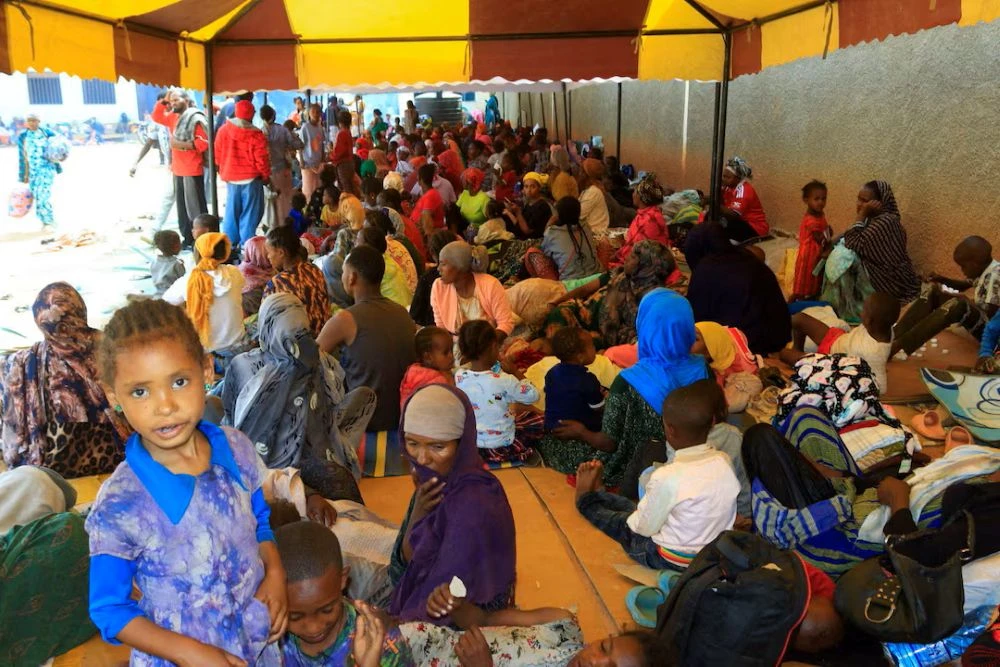
The military said about 30 soldiers and an estimated 70 to 100 rebels had been killed in clashes since a rebel ambush on an army convoy in Patikul town two weeks ago. Some 25,000 villagers from five towns have poured into Jolo town to escape the fighting.
Heightened Alert
The latest attack came a day after local authorities announced the arrest of two senior Abu Sayyaf members, implicated in a series of kidnappings for ransom and killings, in the southern Philippines.
Officials said policemen swooped down early Thursday on Baliwasan village and arrested Nashid Tajid, tagged as one of those who participated in the March 2000 kidnapping of a Catholic priest Roel Gallardo and about 50 other people in the southern island of Basilan. The priest and several hostages were later killed by their captors.
A second militant Jubail Sahibul, also implicated in the Sipadan kidnapping, was also arrested by soldiers in Zamboanga City, just north of Sulu province
Officials said the Abu Sayyaf rebels were helping a faction of the MNLF loyal to jailed leader Nur Misuari, who have been engaged in heavy fighting with government forces the past two weeks in Jolo.
Security forces in Manila have remained on heightened alert after authorities learned from an intercepted mobile phone message that rebels were planning to bomb some shopping malls in the capital.
“There is a continuing threat,” said Director Avelino Razon, the capital’s police chief. “We continued to receive a lot of information. We can’t just ignore them. We have to verify them and caution the people to be vigilant.”
Razon said a man had volunteered to help police unmask those behind three explosions on Valentine’s Day in Manila’s Makati financial district and southern port cities of General Santos and Davao, which killed 13 people and wounded more than 150.
Initial investigation showed all three blasts were triggered by mobile phones. A mixture of C-4 plastic explosives and dynamites were used.
Two 81mm mortar shells were used at a bus terminal in Davao and fragments of a 105mm shell were found at a shopping mall in General Santos City.
The military said the attacks on Valentine’s day were a diversion to relieve pressure from a government’s offensive against 800 militants since Feb. 7.
National ID System
Meanwhile, mayors in Metro Manila yesterday backed a proposal to adopt a national ID system, ostensibly as a means to counter domestic and international terrorism.
Led by Metro Manila Development Authority Chairman Bayani Fernando and Manila City Mayor Lito Atienza, the group supported a plan by Interior and Local Government Secretary Angelo Reyes to employ a national ID system in order to more easily track down terrorist bombers and prevent more such incidents.
The reach of the national ID system will also extend to security inspections by the military, police, and even security guards.
Reyes explained that implementing a national ID system could hinder would-be terrorists from performing their activities. Suspected terrorists will be immediately checked.
Atienza noted, however, that the national ID system is just one of the means and not an absolute weapon against terrorism.
Reyes also told the mayors present that the Federation of Filipino-Chinese Chambers of Commerce has expressed its support for a national ID system. (Additional input from Reuters & Inquirer News Service)