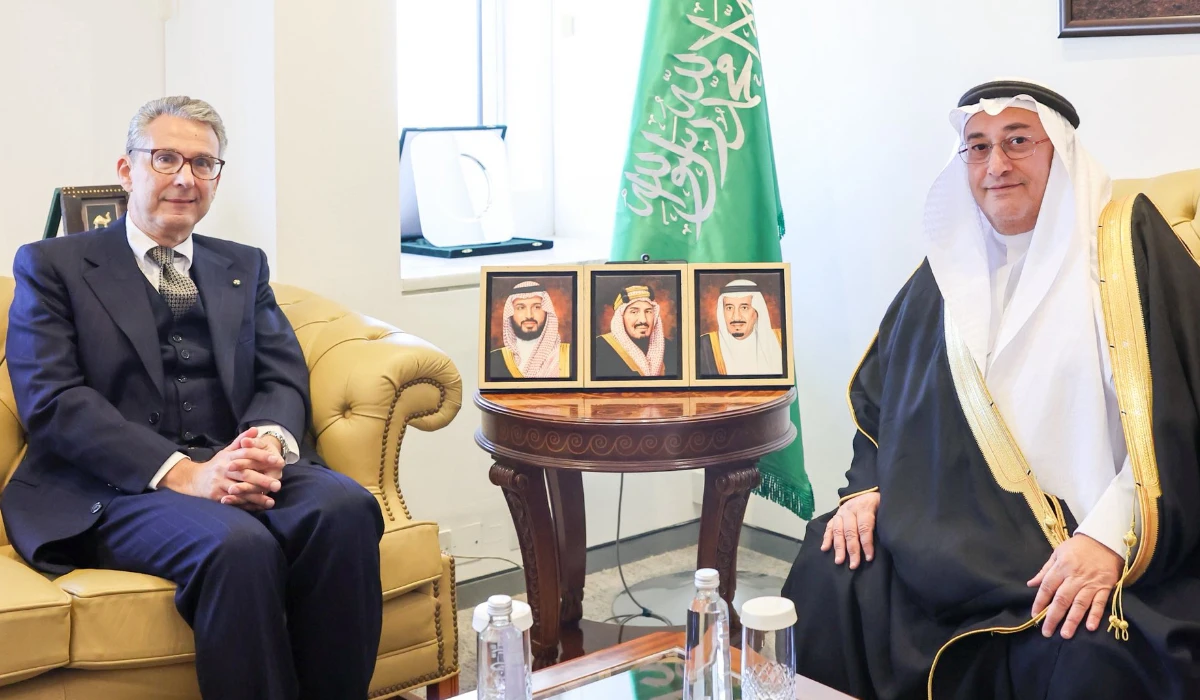
JEDDAH, 21 February 2005 — Labor Minister Dr. Ghazi Al-Gosaibi announced yesterday that Saudi Arabia would be able to eradicate unemployment in five years. He said there was a plan to employ 120,000 Saudis in the private sector every year.
“Our ambition is to achieve 100 percent Saudization. We have worked out a scientific and practical program that will enable us to eradicate unemployment within the next five years,” he told the Jeddah Economic Forum on the second day of its three-day annual event.
The minister commended the services being rendered by expatriates for the Kingdom’s development. “We are proud of the foreign work force, which has extended its expertise to the private sector and organizations,” he said and opposed a proposal to tax expatriate workers.
Gosaibi noted the ministry’s efforts to train Saudis to take up different jobs. “We have established 75 training centers in various parts of the Kingdom and they are expected to train 300,000 young Saudis within three years,” he said.
The minister emphasized the need for radical reforms in education in tune with the requirements of the labor market. “Some 40 secondary schools have been established across the country with a completely new approach helping students to display their skills and capabilities,” he pointed out.
He said the private sector had been acclimatized with employment of Saudis. The Manpower Development Fund is currently supporting 40,000 Saudis to get employed in private companies. He disclosed plans to establish an employment center.
Gosaibi referred to the difficulties in employing women. “We are now in the process of establishing the necessary infrastructure for the employment of women,” he said and noted the efforts of some Saudi businesswomen in creating jobs for women.
Referring to complaints from the private sector about the pressures on the business community to adhere to the Saudization policy, the minister said: “In fact, the private sector has been importing labor from abroad for the last 30 years and naturally find it difficult to replace them, one of the reasons being they are able to recruit them at comparatively low salaries. However, this is a passing phase and I hope the private sector will be able to adjust itself to the growing needs of employment local labor.”
Outlining the difficulty of employing women in the private sector, he said this was partly because girls’ education was introduced in 1960 and since then they had been finding employment in the public sector. Employing women in the private sector is fairly new and it is for the society to decide with what pace it has to move in the matter of liberally employing women in the private sector.
“Providing segregated workplaces means providing separate infrastructure for them, which involves cost” he said.