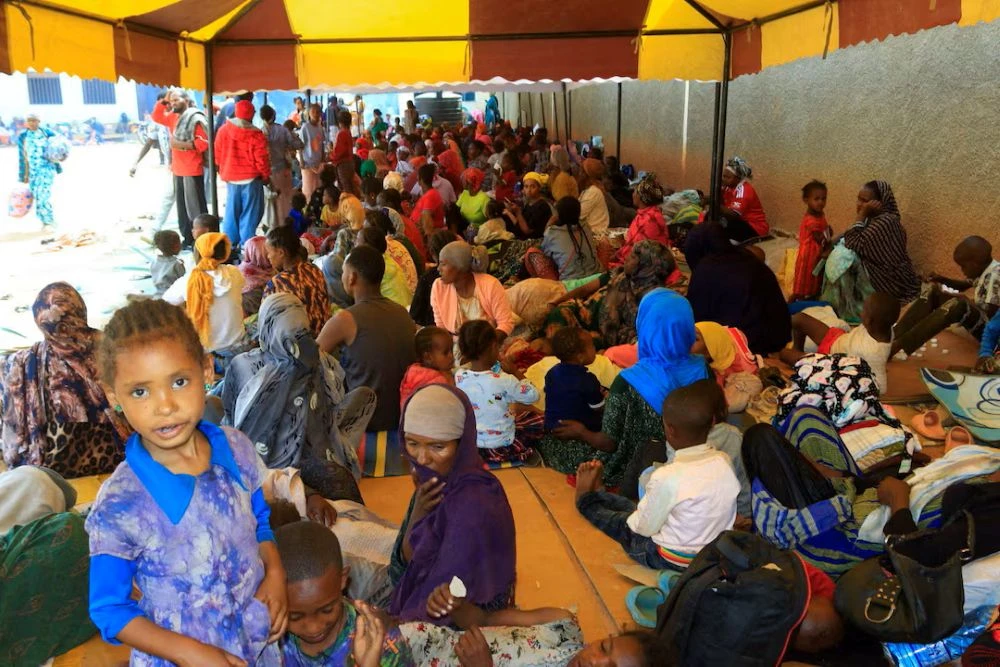
UNITED NATIONS, 20 March 2005 — After weeks of negotiations, the UN Security Council remains deadlocked on the next steps in Sudan where a 21-year civil war has just ended and a two-year conflict that has killed an estimated 180,000 people is still raging. The council is under mounting international pressure to act quickly but members are still divided over sanctions against the government and punishment for the perpetrators of atrocities.
At the request of the United States, the council voted Thursday for a second weeklong extension of the UN political mission in Sudan. But many members including France, Algeria and Britain made clear they are fed up with the delays and want a vote next week on a new resolution. “The time has come now to adopt the resolution,” said France’s UN Ambassador Jean-Marc de La Sabliere, stressing that the conflict in the western Darfur region is “very bad.”
The US-drafted resolution would establish a broader UN mission and authorize a 10,000-strong UN peacekeeping force to monitor a peace accord ending the civil war between the government and southern rebels. It would also bolster efforts by the 2,200-strong African Union force in Darfur to promote peace.
Council members agree on these provisions though diplomats are concerned that the large UN peacekeeping force will be deployed in generally quiet areas monitoring the north-south peace deal while the much smaller African force is struggling on its own in Darfur to help end a conflict that has forced over 2 million people to flee their homes.
But it is primarily on the issues of sanctions and punishment for atrocities in Darfur that council members disagree. Conflict has engulfed Darfur since February 2003, when two non-Arab rebel groups took up arms against the Arab-dominated government to win more political and economic rights for the region’s African tribes.
Sudan’s government is accused of responding by backing Janjaweed militiamen who have carried out rapes and killings against Sudanese of African origin. The government denies backing the Janjaweed.
The resolution would impose a travel ban and asset freeze against those who block peace efforts, threaten stability in Darfur, violate international, humanitarian or human rights law, or are responsible for military overflights. It also calls for those responsible for “crimes and atrocities” to be punished - but doesn’t specify how, saying this needs “to be developed.” The United States dropped a proposal to extend an arms embargo already in force in Darfur for both black African rebel groups and the Janjaweed to include Sudan’s government.