RIYADH, 10 April 2005 — A British Islamic scholar has called on Muslim countries to reform the educational setup in religious schools, so that graduating students are well-grounded in both Islamic studies and modern sciences.
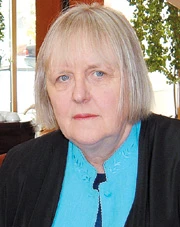
Professor Carole Hillenbrand, this year’s winner of the King Faisal International Prize for Islamic Studies, spoke to Arab News ahead of the presentation ceremony tonight. Professor Hillenbrand, who teaches Islamic History at the University of Edinburgh in the United Kingdom, won the award for her book “The Crusades: Islamic Perspectives.”
A linguist fluent in 11 languages, including Arabic, Persian and Turkish, Professor Hillenbrand gravitated to Islamic studies after a stint in a government department working on airplanes. Since then she has been flying high in linguistics and Islamic studies, especially the medieval period from 5th to 7th centuries A.H.
She said she was proud of receiving the award. “The King Faisal Foundation has shown that it selects an award winner purely on the basis of merit. I am grateful to them for the honor conferred on me. My work was evaluated by best Islamic scholars from the Arab world.”
Professor Hillenbrand expressed concern over the growing Islamophobia in the West and said the Western countries that used to target Communism in the past have now identified a new target in the form of Islam.
“The perception about Muslim East and Christian West is no longer valid, since the Muslim diaspora is scattered all over the Western countries. This kind of Islamophobia could produce extreme reaction, and Muslims living in the Western countries could be adversely affected,” she said, adding that she would devote her time and effort to promoting better understanding between the two peoples.
In this context she called on the Arab journalists to have greater interaction with the West — just as Western journalists do in this part of the world. On her part, she would like to have closer links between her university and Islamic universities through an academic exchange program.
Asked about the phenomenon of political Islam, Professor Hillenbrand said it was understandable that every Muslim country would like to have a society not based on materialism or globalization and to genuinely establish a Muslim society in modern times. Nevertheless, it depends on whether that interpretation of political Islam is one that does not involve extremist groups using methods opposed to Islamic teachings.
“I don’t believe that Islam and democracy are incompatible, but there is a lack of understanding in the Western countries of the fact that different Muslim countries will have a different interpretation of what democracy means depending on their local situation.”
Responding to a question on the challenges facing the Islamic world, she said they should take what is best from their Islamic traditions and blend them with information technology and other high-tech areas. The Islamic world during the medieval period rose to its pinnacle by paying greater attention to science, medicine and mathematics thereby attracting students from the West, she noted.
Referring to the current situation in Iraq, she said it could not be called a jihad, since a fatwa (Islamic verdict) was never issued by any internationally recognized Islamic scholar. “If Muslims want to describe the current fighting in Iraq as a jihad, it is for them to say, but I don’t think it can be called a jihad, since Iraq had a secular government before it was toppled. From the Islamic point of view, the person eligible to call for jihad was either the caliph during the Islamic era or an Islamic scholar in modern times. No such call has been issued.”
The professor also clarified that the fighting in Iraq cannot be called a Crusade either, since it is now a dead concept. “You can only call for a crusade against smoking or in another secular sense.”
Asked about the main conclusions she had drawn about the Crusades, Professor Hillenbrand said although the Franks lived in the Muslim world for some 200 years, they did not leave their mark on the canvas of medieval history in that region. The Muslims became inward-looking as a result of the Crusader invasion from the West and the Mongol invasion from the East. However, they were able to overcome the challenges by drawing upon the strength of Islam.