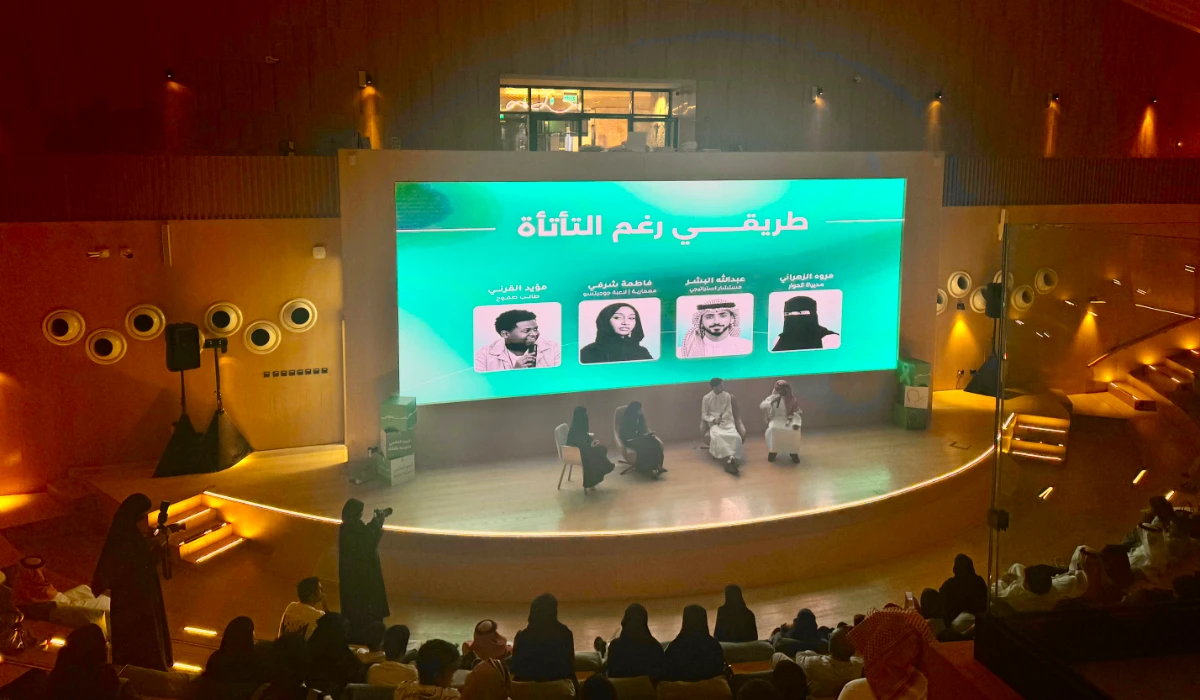
ABHA, 14 December 2005 — The three-day Fifth National Dialogue Forum, entitled “Us and Others,” began yesterday in Abha with 70 participants of both sexes. Saleh Al-Hosayen, president of the King Abdul Aziz Center for National Dialogue, chaired yesterday’s sessions. He began by mentioning that the 13 preparatory meetings held in different parts of the country had helped in deciding the topics to be discussed.
“All citizens of the Kingdom are Muslims and they believe that Islam is a system which can regulate all our activities, including our relations with the other,” he said. He added that when religious scholars consider Islam in terms of its treatment of others, they find that justice is the basis.
“In the case of dealing with non-Muslims, Islam requires at the very least both justice and sympathy. And when it comes to Muslims’ relations with fellow Muslims, the relation must be based on loyalty to Islam and governed by a bond of brotherhood,” he said.
Al-Hosayen pointed out that the United States only banned racial discrimination in the 20th century whereas Islam applied the principle of equality since its beginnings over 1400 years ago.
When the discussions turned to civil societies building relations with the other in terms of religious, cultural, educational, and social aspects, the participants expressed very frank opinions. A number of participants digressed from the main topic and emphasized that Saudis must learn to deal with “the other” who is also Saudi. In other words, all Saudis must learn to accept and deal with Saudis who may be different in terms of the religious school they follow, ethnic origins and even in color.
Zakiya Abu Sag, a school principal from Najran, pointed out that it is very important to deal with the “other Saudi” — the non-Sunni. “We have to unite and end any kind of discrimination based on others following different Islamic schools. Don’t we all work side by side as Saudis for the good of our country?” she asked.
She added that steps must be taken to create equality between Saudis. She mentioned working to end discrimination and promoting fairness in dealing with Saudis, regardless of what Islamic school they follow; abandoning all forms of extremism; and spreading tolerance and acceptance.
She ended her speech by pointing that the Ismailis in Najran were disappointed by the final announcement from the Makkah Summit last week because it mentioned all Islamic schools and ignored the Ismailis.
Saed Al-Harthy, a consultant in the Interior Ministry, stressed that there was little point in having a dialogue when Saudis themselves are divided into many different groups. At the same time, many speakers stressed that it was very important to indulge in dialogue with the “other” living in the country.
Tawfiq Al-Gosayer, a well-known Saudi intellectual, said that we should take advantage of the foreigners living and working in Saudi Arabia and those who come to perform Haj and Umrah. “We should give them a good impression of us by treating them with kindness, consideration and respect.”
Radio personality Dalal Diaa agreed. “We must end the contempt that many Saudis feel toward non-Saudis.”
Many participants strongly attacked the dominance of extremist beliefs in the Kingdom’s education sector. Hind Al-Sudairi said that Saudi society suffered from the intolerance of one religious school that denounced all others.
Fatima Al-Ghasham, a school principal from the northern region, said: “We have had enough of the one-sided belief which has controlled the country for too long.” She told Arab News that in other cultures — as well as in the Kingdom — there were many people who longed to establish relationships based on peace and understanding. “The most important thing for Saudis is to defeat terrorism and also to correct the incorrect image of the other in the minds of our youth. The youth have been fed intolerance and hatred of others for years,” she explained.
There were also participants who said that Saudis must be alert and careful not to melt into the “other” as a result of globalization. Mohsen Al-Awaji, a religious scholar, pointed out that the “other” had not deserted their principles and that as Saudis, neither should we desert our beliefs and principles.
Saleh Al-Ayed, general secretary of the Higher Committee of Islamic Affairs, observed: “Many people have accused us of disliking unbelievers. Aren’t those people aware that the unbelievers also look upon us also as unbelievers?”
It was announced during the proceedings yesterday that at the conclusion of the forum, the participants will go to Riyadh for a meeting on Saturday with Custodian of the Two Holy Mosques King Abdullah.