KABUL, 21 December 2005 — The first full session of Afghanistan’s new Parliament almost broke down yesterday after a lawmaker demanded that all warlords — some of whom are delegates — be brought to justice.
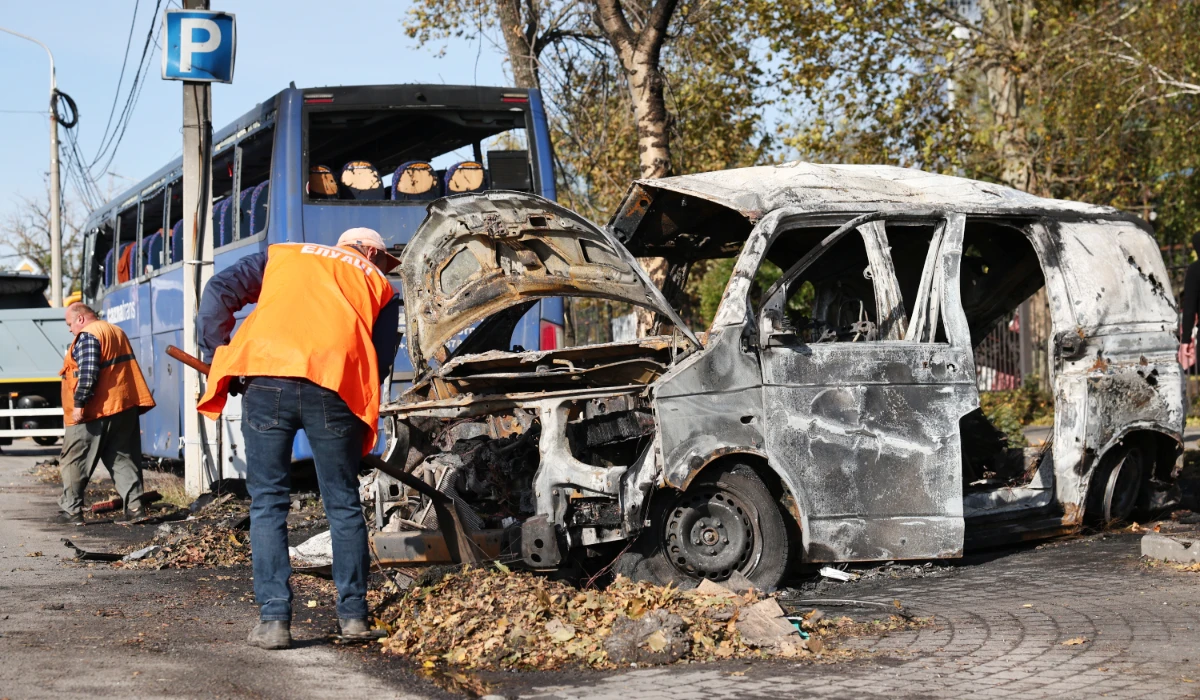
Meanwhile, a suicide bombing in the western city of Herat wounded six people, three of them Italian peacekeepers and the rest civilians, underscoring the continued security threat to the fledgling democracy. Herat police chief Gen. Mohammad Ayub Salangi said the civilians included a woman who was hospitalized in critical condition.
He said the NATO peacekeepers were on their way to the airport when the bomber’s car pulled up next to their vehicle and exploded. The bomber was killed.
The attack occurred as the National Assembly in Kabul, which was inaugurated in an emotional ceremony on Monday, convened its first working session. Good feelings quickly gave way to a stormy debate over procedural matters, as well as the potentially explosive issue of warlords sitting among the elected representatives.
One delegate, Malali Joya, called for all of Afghanistan’s human rights abusers and “criminal warlords” to be brought to justice. Delegates responded by pounding their fists on the tables to demand she sit down. Joya refused, shouting that it was her right as an elected official to speak her mind.
She rose to prominence with a similar display at the 2003 Loya Jirga — or grand council — under which Afghanistan’s constitution was hammered out.
Another delegate, Sayed Mubat Shah, appealed for calm, saying, “We have a big responsibility. We all have equal rights. We are the voice of the Afghan people.” The popularly elected Parliament marked this country’s final step in its transition to democracy after the ouster four years ago of the hard-line Taleban.
The country has had no elected National Assembly since 1973, when coups and a Soviet invasion plunged it into decades of chaos that left more than 1 million people dead. That was followed by the disastrous rule of the Taleban, the hard-line government ousted in late 2001 by the US-led invasion for sheltering Osama Bin Laden.
Among those in the Parliament with allegedly bloody pasts are Abdul Rab Rasul Sayyaf, a militia leader accused of war crimes by Human Rights Watch, and Abdul Salaam Rocketi, a former Taleban commander who has since reconciled with the government. “It’s still a confusing situation,” said Mirahammad Joinda, one of the delegates. “Everybody is backing their own side. It’s not clear what will happen.”
The legislature has come under fire for including many regional strongmen, raising concerns over whether it can truly be a positive political force.
Sibghatullah Mojadidi, president of the first mujahedeen (holy warrior) government of the early 1990s, was picked to head the 102-seat upper house, or Meshrano Jirga (Elders’ Assembly), a spokeswoman for Parliament’s secretariat said.
Mojadidi, a close ally of Karzai and seen as a moderate, will serve for the five-year term of the parliament. More than 30 delegates made statements before the assembly yesterday. The debate on how to select the bodies’ leaders was to continue today.