BAGHDAD, 23 December 2005 — Dozens of Sunni Arab and secular Shiite groups threatened yesterday to boycott Iraq’s new legislature if complaints about tainted voting are not reviewed by an international body.
A representative for former Prime Minister Iyad Allawi described the Dec. 15 vote as “fraudulent” and the elected lawmakers “illegitimate.”
A joint statement issued by 35 political groups that competed in last week’s elections said the Independent Electoral Commission of Iraq, which oversaw the ballot, should be disbanded.
It also said the complaints about fraud and intimidation should be reviewed by international organizations such as the United Nations, the European Union, the Organization of the Islamic Conference or the Arab League.
“We hold the IECI responsible for all the violations which took place during the elections and demand that it be dissolved and a suitable alternative to be found,” said the statement, read by Ali Al-Timimi, the head of the secular Shiite Hilla Al-Fayha List. “If this is not achieved, then we will have no choice but to refuse the results and boycott the new parliament.”
Allawi representative Ibrahim Al-Janabi dismissed the voting in all of Iraq’s 18 provinces as “fraudulent.”
“These elections are fraudulent, they are fraudulent, and the next parliament is illegitimate. We reject all this process,” Al-Janabi told a news conference.
The political turmoil came as foreign politicians conducted high-profile surprise visits to Iraq to meet with their countries’ troops ahead of the Christmas holiday.
British Prime Minister Tony Blair visited his troops in the southern city of Basra, US Defense Secretary Donald H. Rumsfeld arrived in Baghdad and Polish Prime Minister Kazimierz Marcinkiewicz visited troops in central Iraq.
Rumsfeld hinted that the US military soon will begin a modest additional reduction in troop levels by canceling the scheduled deployment of two Army brigades.
Blair, on his fourth trip to Iraq since the 2003 US-led invasion, said good progress was being made in training Iraqi security and police forces to protect the country.
The ability of Iraqis to manage the country’s security is the key condition for the 8,000 British troops, most of them stationed in the southeast near Basra, to return home.
Asked if six months was a viable time for a withdrawal to begin, Blair said: “If everything goes to plan. It is our strategy, we want to draw down our own forces.” “This is a completely different situation from the situation a year ago,”
Violence around the country, including a suicide car bombing and several shootings, left more than a dozen people dead.
Six Iraqi police officers were shot dead in Baghdad, while three Iraqi police were killed and four wounded in an attack in Samarra, 95 kilometers north of Baghdad, a US military official said. A US soldier was also killed by a bomb explosion while on patrol in Baghdad, the US military command said.
Gunmen in the capital killed politician Khazaal Jasib Al-Saiedi, the head of the small independent Iraq Reforming Movement.
In the southern city of Basra, an Iraqi translator working in the British consulate was shot and killed, Basra police said.
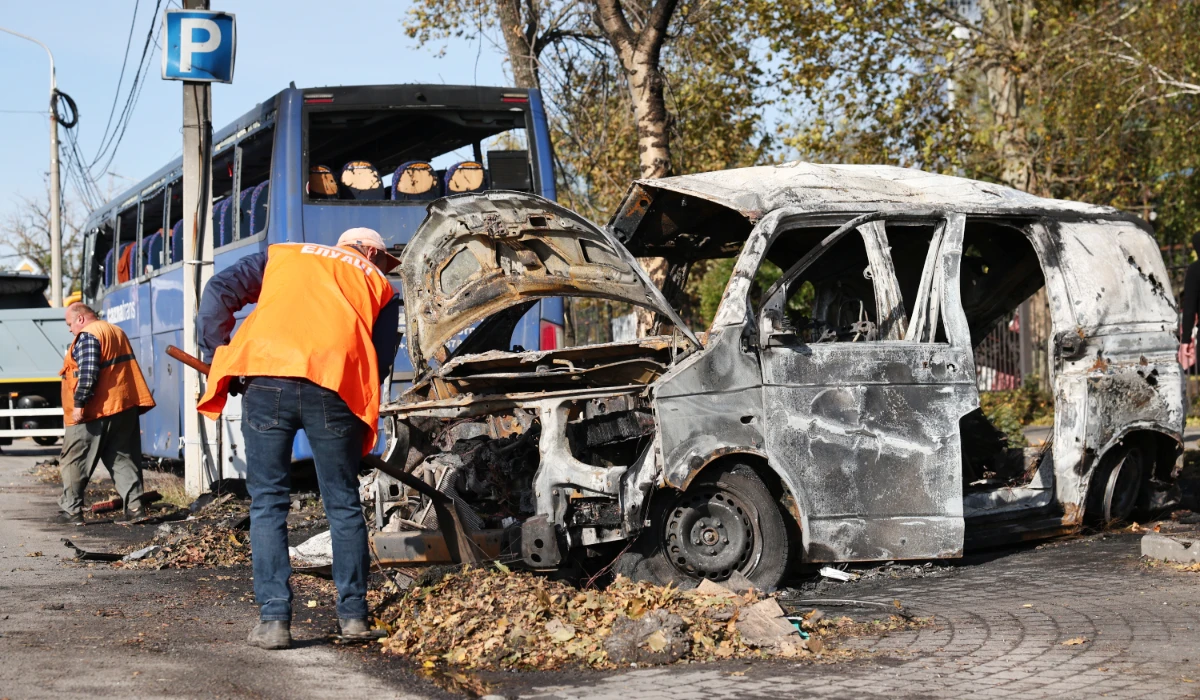
A suicide car bomb attack against a police patrol on a highway in Iskandariyah, 50 kilometers south of Baghdad, wounded seven policemen, local police said.
In Samarra, a roadside bomb targeting a vehicle carrying municipal workers killed four people and wounded another two, police in the city said.