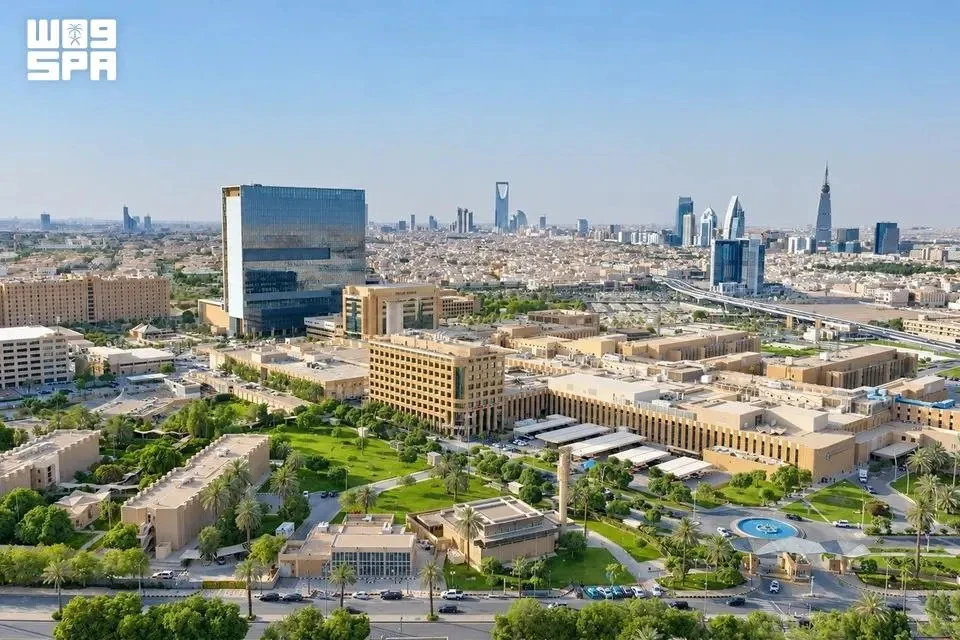
The Kingdom of Saudi Arabia, which used to be portrayed by the Western media as the land of camels and deserts, has changed dramatically. With its immense strides in almost all walks of life, particularly science and technology, Saudi Arabia has shattered this myth.
The Kingdom has convinced the world that it is lagging behind none in any field of advancement. For years, under the leadership of King Fahd, Saudi Arabia was going through the development process. And with the ascension of Custodian of the Two Holy Mosques King Abdullah in August 2005, the Kingdom has already seen certain major developments.
An ardent advocate of Arab and Islamic unity, King Abdullah began his rule with a vow to lend his support for women's rights and empowerment by allowing them to take part in local chamber elections and increasing their job opportunities. Although he is a cautious reformer, in his brief but significant speech after taking power, King Abdullah said he would work to establish justice for all.
"I pledge to God, and then I pledge to you, that I take the Holy Qur'an as my constitution, Islam as my program, and I will work for justice and serve all citizens without discrimination," he declared.
Within five months of his rule, he has proved an able administrator, successful diplomat, benign ruler, and a humanitarian king. Widely read and well-traveled, King Abdullah successfully organized an extraordinary Islamic summit in Makkah recently, won Saudi Arabia's accession to the World Trade Organization, launched the huge King Abdullah Economic City in Rabigh, north of Jeddah, and enacted other laws and regulations for the benefit of the citizens.
With his loving nature, the fifth son of Saudi Arabia's founder, King Abdul Aziz, the new king is expected to forge ahead with economic reforms along with social and political programs in order to guide the Kingdom to new heights for its citizens as well as outside world.
The Kingdom has already established its image around the world as the custodian of holy sites and Islamic heritage. The late King Fahd and the new king have left no stone unturned in spreading the cause of Islam throughout the world through various means.
The ruler of the world's largest oil exporter, King Abdullah has always reiterated his Kingdom's support to stabilize the international oil market with a view to protecting the interests of both the producers and consumers.
On the home front, the first national budget last month announced by King Abdullah was the largest in the Kingdom's history. It allocated a monumental amount for new projects. Taking into account the extremist and terrorist tendencies within the Kingdom, King Abdullah took no time to initiate National Dialogue forums two years ago, when he was officiating in the presence of ailing King Fahd. His major concern was how to combat extremism and intolerance.
"The forums organized by the center must deal with issues and thoughts, which citizens want experts to discuss. These forums bring together Saudi people and build bridges of contacts and discourse between them," said the king.
Because of his desire to prove that Islam is a religion of tolerance and peace and that Saudi Arabia does not support terrorism and extremism, King Abdullah has won accolades for his efforts. He won international recognition by launching an unprecedented crackdown on terrorists belonging to different extremist groups, most particularly Al-Qaeda, which has been blamed for a series of bombings and acts of destruction of life and property in the Kingdom since May 2003.
During the last several years, King Abdullah has been traveling widely with a view to strengthening the Kingdom's relations with other countries. His remarkable achievements in this field include the Kingdom's relations with almost all the countries. But his unforgettable achievement was his bringing Saudi-US relations back to normal. He visited US President George Bush at his Texas ranch in April last year. Following the wide-ranging discussions with the US president, King Abdullah came back to the Kingdom beaming with success. He also invited American businessmen to invest in the Kingdom. The Kingdom's major sectors for investments are mining and gas projects.
King Abdullah has won the hearts of the youth by creating new job opportunities for them in the private sector. Every year thousands of youth have been graduating from the colleges and universities in the Kingdom as well as from other universities from around the world. The Kingdom, naturally, is facing the job crunch. Hence, King Abdullah has been implementing policies to employ Saudi youth.
The Kingdom's relations with India are also on firm foundations. Although, it is the first time in more than 50 years that a Saudi king is visiting India, bilateral relations - political and economic, in particular - are already on sound footing. High-level Saudi delegations have been visiting India and India has been reciprocating in the same manner. There is no denying the fact that relations between the Kingdom and India have always been firm and cordial.
India used to get six million tons of oil from Iraq and four million tons from Kuwait. These sources were stopped with the invasion of Iraqi forces in Kuwait in 1990. Saudi Arabia came to the rescue and helped India in a big way by offering the oil previously supplied by both countries.
Another important factor in strengthening bilateral relations is the growing number of expatriate workers from India to the Kingdom. In 1982, the figure stood at little more than 250,000. This figure has now reached over 500,000. Foreign exchange between the two countries has also doubled in approximately the same period of time, to $8.7 billion in 2004, dominated by Saudi oil and petrochemicals exports to India. Trade is expected to breach $10 billion this year.
The ongoing visit by King Abdullah and his presence at India's Republic Day celebrations, a unique distinction for such a dignitary, speaks volumes of the nature of bilateral relations in the years to come.
(Syed Liyaquat Husain is a senior editor at Arab News.)