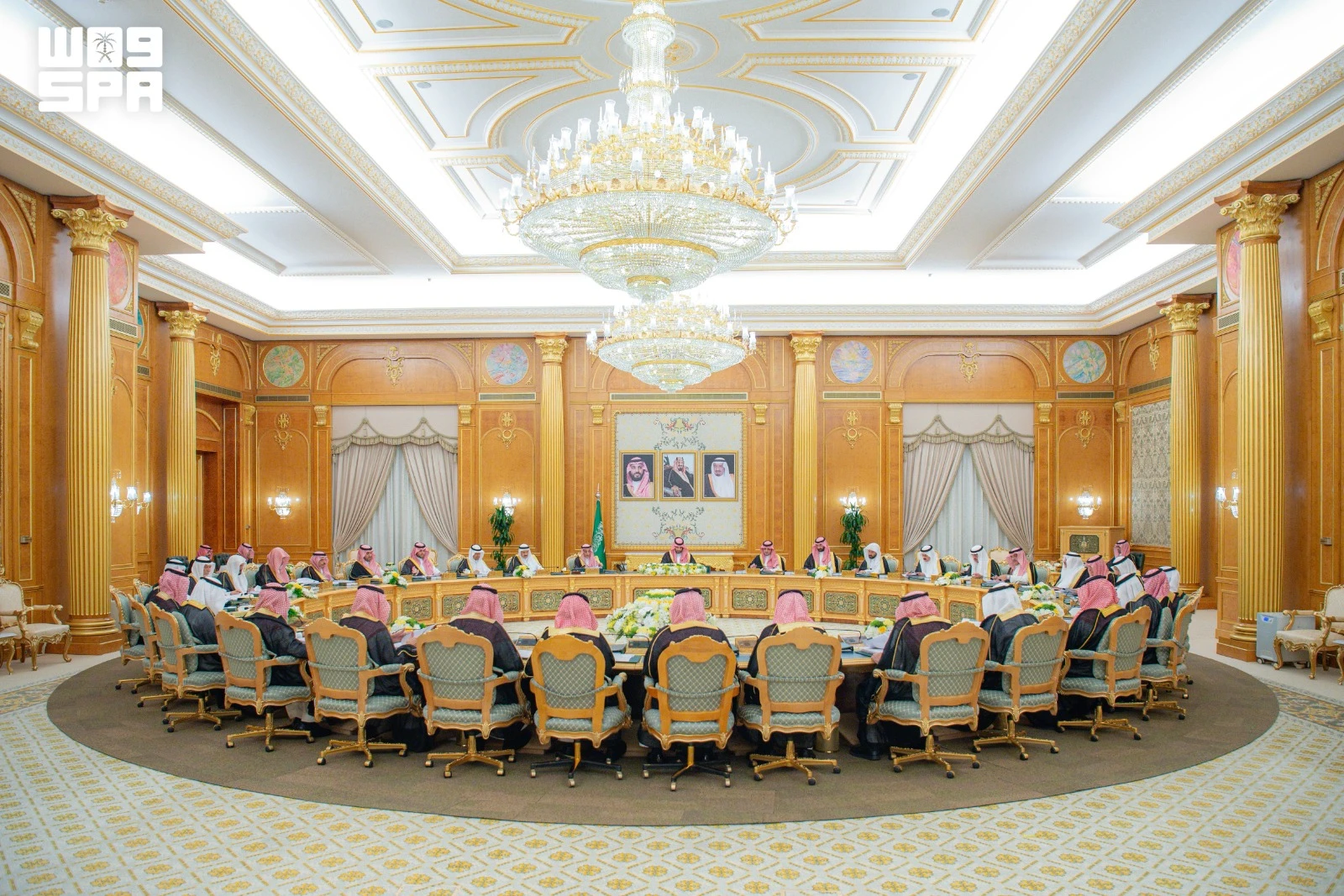
ISLAMABAD, 3 February 2006 — Saudi Arabia and Pakistan yesterday signed wide-ranging agreements to promote increased political dialogue, vocational training, higher education and cooperation in science and technology. They also agreed to reduce tariffs and taxes in bilateral trade.
The two countries also called on the world to accept the victory of Hamas in Palestinian legislative elections and hoped the group would work for peace in the Middle East.
In a joint statement issued at the end of a two-day visit by Custodian of the Two Holy Mosques King Abdullah, they “urged the acceptance of the results of these elections, as they reflect the free will of the Palestinian people.” The statement called for a “wise and objective dealing with these results and avoid premature judgments and hasty conclusions.”
At the same time, the two countries “expressed their hope that Hamas will form a government which preserves the legitimate rights of the Palestinians, safeguards their interests and works for progress in the peace process.”
Hamas clinched victory in Palestinian elections last week, winning 74 seats in the 132-member Parliament.
The Kingdom and Pakistan described terrorism as a “palpable” threat and called for greater cooperation at regional and international level. “There is a need to intensify cooperation to combat terrorism and to eradicate its root causes,” the statement said.
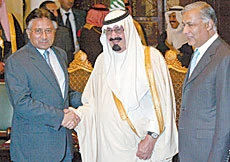
The statement came after Abdullah met with Pakistan President Gen. Pervez Musharraf and Prime Minister Shaukat Aziz. Abdullah, the first Saudi king to visit Pakistan in 30 years, and Musharraf announced the five agreements at a news conference.
Saudi Arabia has been Pakistan’s largest oil supplier and a major source of financial assistance. Pakistan is interested in Saudi investment in its new seaport at Gwadar on the Arabian Sea coast, which it sees becoming a major hub for energy imports and exports.
A statement by Pakistan’s Foreign Ministry said that during their meeting, King Abdullah and Premier Aziz agreed to boost anti-terrorism efforts, as well as fight “other international crimes, such as money laundering, drug trafficking and arms smuggling.”
Radio Pakistan said they also discussed Iran, but did not give details. Pakistan opposes Iran’s referral to the UN Security Council while the Kingdom, which wants a nuclear-free Middle East, last month urged more time for negotiations.
Speaking at a banquet for Abdullah on Wednesday, Musharraf, who has been the target of several Al-Qaeda-inspired assassination bids, said religious militancy posed a danger to all religions and societies.
“Nothing can justify disruption of stability, progress and development in a society and killing of innocent people,” Musharraf was quoted as saying by the state-run Associated Press of Pakistan news agency.
Replying to Musharraf’s toast, Abdullah expressed hope that the two-year peace process between archrivals Pakistan and India would be successful. “We appreciate your keenness for peace in our region and we in turn are keen that your region does not become subject of destructive force,” the king said.
At the start of his visit on Wednesday, Abdullah received Pakistan’s highest award, Nishan-e-Pakistan.
Abdullah has visited Pakistan before, including a tour in October 2003 when he was the crown prince, but the last visit by a Saudi king was in 1976.
Saudi Arabia has pledged $573 million in assistance for Pakistan to rebuild areas that were hit by an Oct. 8 earthquake in which about 87,000 people died. The quake left more than 3 million people homeless in Pakistan’s northwest and in Azad Kashmir.
More than a million Pakistani workers are employed in Saudi Arabia, and annual trade between the two countries stood at $2.8 billion in the 2004/05 fiscal year. Saudi investment in Pakistan during the same period amounted to $275 million.