JEDDAH, 14 March 2006 — The Council of Ministers yesterday adopted a series of measures to contain dengue fever in Jeddah where nearly 400 people, including a number of expatriates, have been affected by the ailment. It allocated more than SR1.42 billion for projects aimed at combating the mosquito-borne disease.
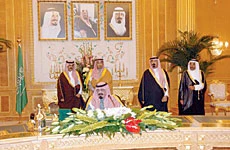
Culture and Information Minister Iyad Madani said the Cabinet meeting, chaired by Custodian of the Two Holy Mosques King Abdullah, approved the recommendations made by a ministerial committee that was set up to study Jeddah’s requirements to confront the danger posed by the disease.
“The meeting called for quick implementation of projects to combat dengue fever in Jeddah,” the Saudi Press Agency quoted Madani as saying. The Cabinet also sought a “radical, effective and comprehensive solution” for this problem and other problems caused by the non-completion of sewage projects.
The government has already set aside SR7 billion for sewage projects in Jeddah, Madani said. According to Water and Electricity Minister Abdullah Al-Hussayen, Jeddah’s sewage problem would be solved within three years.
“Once the ongoing sewage pipeline project is completed, we hope the problem will be solved once and for all,” Al-Hussayen said.
Spelling out the projects approved by the Cabinet to combat dengue fever, Madani said they included programs to combat mosquitoes and other insects, fill in areas of stagnant water, aerial spraying, implement health awareness campaigns, refurbish rainwater canals and prevent environmental pollution caused by ponds. A three-year program to monitor and combat the spread of insects in the city is also under way.
Statistics published by the Health Ministry said at least 402 people in Jeddah, mostly in the southern part of the city, have been affected by dengue fever. “Sixty-two cases of dengue fever were reported last Friday,” said Yasser Al-Ghamdi, director of health in the Makkah region.
He also pointed out that 10 workers of a company situated east of the expressway had undergone medical tests at King Fahd Hospital in Jeddah. Four dengue fever deaths have been reported in the Kingdom so far this year.
Dengue fever is an infectious disease carried by mosquitoes and caused by any of four related dengue viruses. The disease is also called break-bone fever because it sometimes causes severe joint and muscle pain. Dengue fever is found mostly during and shortly after the rainy season in tropical and subtropical areas.
The World Health Organization estimates 50 to 100 million cases of dengue infection occur each year. During the last part of the 20th century, cases of dengue increased in many tropical regions of the world. Epidemics also began occurring more frequently and with more severity. In addition to typical dengue, dengue hemorrhagic fever and dengue shock syndrome also have increased in many parts of the world.
People get dengue virus infections from the bite of an infected Aedes mosquito. Mosquitoes become infected when they bite infected humans, and later transmit infection to other people they bite. The two main species of mosquito, Aedes aegypti and Aedes albopictus, have been responsible for all cases of dengue.
Dengue is not contagious from person to person. Symptoms of typical uncomplicated (classic) dengue usually start with fever within five to six days after the infected person has been bitten by an infected mosquito and include severe headache, retro-orbital (behind the eye) pain, severe joint and muscle pain, nausea and vomiting and rash.
During the Cabinet meeting, King Abdullah briefed the ministers on the outcome of his talks with Kuwaiti ruler Sheikh Sabah Al-Ahmed Al-Sabah, adding that the talks focused on strengthening relations among the GCC member states and bilateral ties. Abdullah also conferred on Sheikh Sabah the King Abdul Aziz Medallion, the country’s top honor, reflecting the historic relations between the two neighboring countries.
Madani said the Cabinet endorsed the memorandum of understanding signed by the foreign ministries of the Kingdom and Uzbekistan last year for bilateral political consultations. In accordance with this agreement, Saudi Arabia and Uzbekistan would hold regular discussions on regional and international issues of mutual concern, he added.
The Cabinet also agreed to hold discussions with Austria to sign an accord for the avoidance of double taxation and preventing tax evasion.