- Cairo’s history, culture, outings and lively nightlife continue to amaze travelers worldwide
If you are a frequent visitor of Cairo, you are bound to feel that the Egyptian capital is different from what you had seen earlier. This was our feeling too as we returned to Cairo after ending our trip to Alexandria. As we traveled by coach, the 220-kilometer drive gave us a peep into the spectacular countryside.
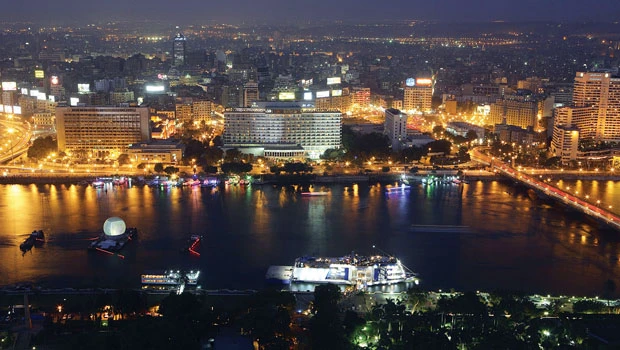
Revisiting Cairo after a couple of years gave us a glimpse of the changes that the city is witnessing. Its teeming population, traffic snarls, dusty pathways are all there and so is the increasing eyesore of laundry hanging down residential balconies. But, then again, there is a positive side to the city with its best-designed multistoried buildings and endless construction activity, flyovers that dot the city and the Nile and plenty of floating restaurants.
Our guide was quick to point out that the Egyptian capital not only hosts one of the ancient wonders of the world, but has many more tourist attractions as well. “With its unforgettable past and luminous present, Cairo brings together the Orient and the Occident in a fascinating fusion,” said Mahmoud Hameduddin of the Egyptian Tourist Authority (ETA). While Cairo’s history, culture, outings and lively nightlife continue to amaze travelers from all over the world, for the Egyptians it is the ‘victorious’ ‘mother of the world’ or simply ‘Misr’ — the name for Egypt as a whole, home to a spectacular ancient civilization.
A tour of Alexandria, Luxor or Sharm El Sheikh, or any other part is not complete without spending at least a day or two in Cairo. And, that’s what we, as part of the Middle East media group, did while returning from the Arab tourism ministers conference in Alexandria. From where the city stretches along the banks of the Nile, it is just a short walk to the pyramids of Giza and the Sphinx. Three of Egypt’s most magnificent pyramids are The Great pyramid of Cheops, the pyramids of Chephren (the indomitable) and Mykerinos (the unfinished). The Sphinx at Giza is the largest freestanding sculpture in the world.
It was a Herculean task negotiating a steep, narrow and dark climb through the entrance of the pyramid of Cheops. “Robbers have spared not a single mummy in the pyramids,” added Hameduddin. The Pyramids and the Sphinx are regarded as the symbols of Cairo around the world.
A visit to the Egyptian Museum was fascinating indeed, with its most beautiful work of ancient Egyptian art, including Tutankhamen treasures and the fascinating Royal Mummy Room. Situated on the east and on the bank of the Nile at the southern tip of Roda Island, is the oldest inhabited section on this side of the river. The area encompasses three historical religious institutions: The Hanging Church, the Be Ezra Jewish Temple (synagogue) and the Mosque of Amr Ibn Al Aas, one of the oldest in Cairo.
Dominating the Cairo skyline, the massive Citadel fortress was originally built by Saladin in the 12th century and looks out across the city’s Islamic Quarter — a UNESCO World Heritage Site. Inside, one can see its mosques, Jewel Palace and museums. A nearby highlight is the beautiful 1,000-year-old Al-Azhar Mosque, with its graceful minarets and crenelated walls. It looks at its best when lit up at night. The city of a thousand minarets as Cairo is known is home to some of the great Islamic monuments, especially Al-Azhar Mosque — a thousand year old gem — as well as ancient palaces, caravanserais and Qur’anic schools. The two monumental gateways, Bab El-Futuh (Gate of Conquests) and Bab El-Nasr (Gate of Victory) mark the northern edge of Fatimid Cairo. Between the two lie the remains of the fortified wall, which once encircled the city and still gives the impression of invulnerability.
Beside the Gate of Victory stands the El-Hakim Mosque, which was built during the initial years of 1,000 AD. Leading away from the front of the mosque is Al-Mouizz Li-Din Allah Street, lined with magnificent Islamic monuments. On Dahab Street, one of the first streets on the right, stands Beit El-Souhaymi, former residence of a 17th century El-Azhar Sheikh, which gives an idea of the splendor of dignitaries’ houses in the Mameluk period. Mouizz El-Din-Allah Street leads to the El-Aqmar Mosque (1125 AD) and the 14th century madrasa of Sultan Barkuk.
One of the prominent city landmarks that can be seen from anywhere is the 187-meter Cairo Tower, which allows visitors to witness some of the most beautiful and panoramic views of the city. Located on the Gezira island of Zamalek, this granite lotus-inspired structure boasts views extending as far as the Muqattam hills and outskirts of the city where the Giza pyramids stand.
Cairo today boasts a large number of international hotel chains including the Four Seasons, Sheraton, Ritz, Carlton, Marriott, the historical Mena House Oberoi Hotel, as well as several boutique hotels such as the Villa Belle Epoque and Le Riad Hotel de Charme, said Samy Mamoud, Undersecretary and Head of International Tourism at ETA. Over 75 hotels in the city offer spectacular views of the Nile, pyramids and vast green parks.
With abounding nightlife, dining has been raised to a higher level with a wide selection of luxurious and unique restaurants and bistros. Indigo Estoril, Abu El Sid restaurants, Sequoia in Zamalek and Ontparnasse are just a few of them that get crowded by dusk. Those on the banks of the Nile or the floating boats are a great attraction as they have entertaining shows reflecting the rich Middle Eastern culture such as dancing. Cinemas and theaters also dot the city, with some of the best-known theaters offering concerts, performing arts, poetry readings, seminars and exhibitions. Folkloric dances take center stage at the Balloon Theater, piano concerts by international musicians are hosted at Al Manaserly Palace, which with its splendid ornamented ceilings and bird and greenery garnished walls, overlooks the Nile and Nilometer. Cairo Opera House and Gomhouria Theaters present unforgettable entertainment of classical music, symphony orchestra and ballet. The list is unending.
The Nilometer in Cairo, on the southern tip of Roda Island, is a unique historical site. It is one of the oldest existing structures, which dates back to the period just after the Arab conquest of Egypt. Nilometers, known as Al-Miqyas in Arabic, were used to measure the levels of the Nile River and are a remarkable reminder of Egypt’s illustrious past. These water measurement structures continued to be useful up until the modern era when the Nile’s natural flows were disrupted by large water storage reservoirs. Since the Nile River has been of critical economic importance to both ancient and modern civilizations alike, officials have gauged its water levels for more than 5,000 years, writing them down for more than 13 centuries.
Cafes and restaurants also dot the Khan El-Khalili area, best known for shopping. The Naguib Mahfouz café features a great traditional cuisine with a live band playing classical Egyptian and Arabic music and the Al Fishawy Café, next to the Mosque of Al-Hussein, is surrounded by magnificent mashrabiya. Khan El-Khalili is one of the most interesting bazaars, not only in Egypt but also in the whole Middle East. Look for oriental souvenirs and handmade crafts, and they are all there. This traditional market has a medieval atmosphere amid the labyrinth layout of the streets. It gives a glimpse of how medieval markets were. Shopping here can never end without bargaining for Egyptian cotton clothes and dresses, native handicrafts and, of course, gold and silver souvenirs.
True to the belief, Cairo is the city that never sleeps, and nowhere in the region will you find such a wild variety of mosques, museums, restaurants and nightspots.
One of the prominent city landmarks that can be seen from anywhere is the 187-meter Cairo Tower, which allows visitors to witness some of the most beautiful and panoramic views of the city. Located on the Gezira island of Zamalek, this granite lotus-inspired structure boasts views extending as far as the Muqattam hills and outskirts of the city where the Giza pyramids stand.
Cairo today boasts a large number of international hotel chains including the Four Seasons, Sheraton, Ritz, Carlton, Marriott, the historical Mena House Oberoi Hotel, as well as several boutique hotels such as the Villa Belle Epoque and Le Riad Hotel de Charme, said Samy Mamoud, Undersecretary and Head of International Tourism at ETA. Over 75 hotels in the city offer spectacular views of the Nile, pyramids and vast green parks.
With abounding nightlife, dining has been raised to a higher level with a wide selection of luxurious and unique restaurants and bistros. Indigo Estoril, Abu El-Sid restaurants, Sequoia in Zamalek and Ontparnasse are just a few of them that get crowded by dusk. Those on the banks of the Nile or the floating boats are a great attraction as they have entertaining shows reflecting the rich Middle Eastern culture such as dancing. Cinemas and theaters also dot the city, with some of the best-known theaters offering concerts, performing arts, poetry readings, seminars and exhibitions. Folkloric dances take center stage at the Balloon Theater, piano concerts by international musicians are hosted at Al-Manaserly Palace, which with its splendid ornamented ceilings and bird and greenery garnished walls, overlooks the Nile and Nilometer. Cairo Opera House and Gomhouria Theaters present unforgettable entertainment of classical music, symphony orchestra and ballet. The list is unending.
The Nilometer in Cairo, on the southern tip of Roda Island, is a unique historical site. It is one of the oldest existing structures, which dates back to the period just after the Arab conquest of Egypt. Nilometers, known as Al-Miqyas in Arabic, were used to measure the levels of the Nile River and are a remarkable reminder of Egypt’s illustrious past. These water measurement structures continued to be useful up until the modern era when the Nile’s natural flows were disrupted by large water storage reservoirs. Since the Nile River has been of critical economic importance to both ancient and modern civilizations alike, officials have gauged its water levels for more than 5,000 years, writing them down for more than 13 centuries.
Cafes and restaurants also dot the Khan El-Khalili area, best known for shopping. The Naguib Mahfouz café features a great traditional cuisine with a live band playing classical Egyptian and Arabic music and the Al-Fishawy Café, next to the Mosque of Al-Hussein, is surrounded by magnificent mashrabiya. Khan El-Khalili is one of the most interesting bazaars, not only in Egypt but also in the whole Middle East. Look for oriental souvenirs and handmade crafts, and they are all there. This traditional market has a medieval atmosphere amid the labyrinth layout of the streets. It gives a glimpse of how medieval markets were. Shopping here can never end without bargaining for Egyptian cotton clothes and dresses, native handicrafts and, of course, gold and silver souvenirs.
True to the belief, Cairo is the city that never sleeps, and nowhere in the region will you find such a wild variety of mosques, museums, restaurants and nightspots.