- Although many predicted the recent events in Egypt, such as the spontaneous demonstrations on Jan.
- 25, 2011 where men and women from all classes took to the streets asking for the resignation of President Hosni Mubarak, no one knew this would happen.
Egypt has now entered a difficult and uncertain period. If the post-revolutionary government fails to grant political freedom and give out jobs and services, anything can happen. The situation is delicate: Tourism has reached its lowest ebb, industrial production is crippled, foreign investment has come to a standpoint and a liquidity crunch is looming.
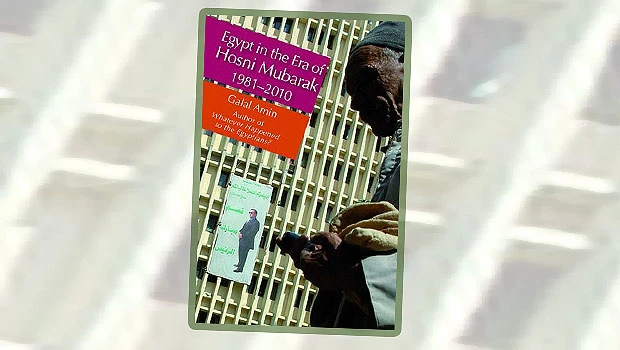
It is too early to write about Mubarak’s legacy, but Galal Amin did not intend to write one. Instead, he chose to comparatively analyze the three successive regimes that have ruled Egypt since the 1953 revolution. In that respect, “Egypt in the Era of Hosni Mubarak” is not exclusively about Mubarak. The title is therefore somewhat misleading.
From the very first page, Amin insists that contrary to certain foreign commentators, the demonstrations had no obvious leaders. They were neither led by the Muslim Brothers nor by protesters wanting cheaper food. When the newly appointed Vice President, Omar Sleiman, announced the president had stepped down, the whole country celebrated the end of an unpopular regime.
Yet, when Mubarak came to power in 1981, he inherited an unprecedented foreign debt, a high rate of inflation, thousands of political prisoners, no opposition press (all opposition newspapers had been closed when Sadat was assassinated) and a well organized Islamic movement which Sadat had strengthened assuming the Muslim Brothers would back him up against his leftist opponents.
Mubarak, however, had an extremely brief honeymoon. In less than a year, people had ceased to believe in his promise of change. Interestingly enough, the author acknowledges that “Egyptians have always been better off under a strong state.” Even Napoleon wrote in his memoirs that he knew of no other country in the world in need of a strong central government to the degree that Egypt does.
The truth is that from Nasser to Mubarak, the state became gradually weaker, a fact which was hidden by remittances of Egyptian workers in the Gulf, foreign aid, Suez Canal revenues, oil and tourism.
“This prosperity was, however, like a beautiful mansion built on sand: The rate of growth in the manufacturing and agricultural sectors fell sharply because of the drop in public investment in both sectors, the neglect of maintenance and renovation of the public sector and the decline in protection given to it from competing imports,” explains Amin.
Moreover, the increasing number of private schools and universities that appeared during the last three decades, drew attention to the failure of public education. The state was also withdrawing its help to theater production, the film industry and book publishing. Even the Cairo International Book Fair, run by the State since 1969, gave in to sponsorship by private companies in recent years.
Until the 1980s, privatization was strongly opposed by Egyptian bureaucracy and factory workers. However, following a series of agreements signed with the International Monetary Fund (IMF) and the World Bank in 1991, the pressure to privatize increased. Foreign investment remained relatively small from 1985 until 2004 — the year a new government, headed by Ahmad Nazif, hoped to attract private foreign investment and privatize public enterprises as well as remove government subsidies on essential goods and services.
In December 2004, Egypt signed a controversial agreement with Israel and the United States, which allowed the establishment of the Qualifying Industrial Zones (QIZ). This guaranteed some Egyptian products to enter the US market duty-free on the condition that a minimum percentage of their imports be of Israeli origin.
The new government announced a seven percent increase of GDP growth rate as more people were queuing up for subsidized flatbread whose size and color was changing. Wealth failed to trickle down; consequently, both the poor and the middle classes were even further marginalized.
The author believes that the period between 1986 and 2006 has been among the worst in the lives of the Egyptian poor in the entire 20th century. This was caused by the sudden reduction in the price of oil and the growing involvement of the International Monetary Fund in the Egyptian economy. As a result, Egyptian workers in the Gulf returned, followed by tens of thousands of Egyptians returning from Kuwait and Iraq when Saddam Hussein invaded Kuwait in 1990.
It is interesting to note that during the first ten years of Sadat’s open-door policy “infitah’’ (1976-86), which resulted in a significant growth in wealth, the poor were able to find jobs in the Gulf. Yet, in the following decades, unemployment grew while a happy few were getting richer.
In 1940 with an average monthly salary, one could buy 60 kilograms of meat while in today’s Egypt that would amount to merely six kilograms. In fact, the 1940s mark the beginning of Egypt’s decline, especially in the Arab world. Egypt has lost its political clout; it is no longer the place where Arab politicians will go to before taking an important decision. It is also striving hard to remain the cultural capital of the Arab world. On the economic front, while in the mid-twentieth century, Egypt boasted of the highest per capita income in the Arab world, excluding Lebanon. Now, it has the lowest per capital income, apart from Somalia, Mauritania and Yemen.
This gradual decline began under the rule of Nasser whose 1967 defeat triggered anger and a profound disenchantment. It expanded during Sadat, who steered Egypt in the opposite direction, and reached its peak in the Mubarak era. During the latter’s rule, the agreements signed by Sadat with Israel and the US were implemented and the country’s assets sold off one by one.
This comparative analysis of military rule in Egypt under Nasser, Sadat and Mubarak ends on a hopeful thought as Amin highlights the emergence of a new generation of middle-class Egyptians who can make valuable contribution to national revival. They are more politically aware, with a greater sense of patriotism and less consumption-oriented, compared to their parents.
“This situation reminds one of the situation which prevailed in Egypt just before the 1952 revolution. For it was that revolution which broke similar barriers that stood in the way of a whole generation of Egyptians, who grew up in the 1930s and 1940s, and made a wonderful contribution to the economic, social and intellectual life of the country in the 1950s and most of the 1960s,” concludes the author.