
- DUBAI: Inflation in Yemen may surge to as much as 30 percent this year as ongoing unrest cripples the Arab country’s economy and damage to an oil pipeline strains already weak government finances, an International Monetary Fund official said.
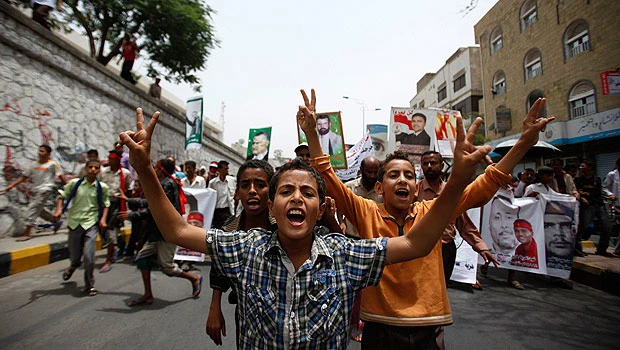
More than five months of protests against President Ali Abdullah Saleh’s 33-year rule have brought Yemen’s economy to the brink of collapse, with its people facing fuel, food, water and electricity shortages.
“The situation is serious. Economic activity has ground to a halt,” Hassan Al-Atrash, the IMF’s head of mission to Yemen, said in a telephone interview.
“We are very much concerned about inflation ... We think that inflation could reach up to 30 percent in 2011,” he said after meeting Yemeni government officials in Jordan recently.
In its April review, the IMF projected inflation in Yemen, some 40 percent of whose 23 million people live on less than $2 a day, would accelerate to 13 percent this year from 12.1 percent in 2010.
It has also revised its view on real gross domestic product growth, which in April it forecast would slow to 3.4 percent in 2011 from 8.0 percent last year.
“The political crisis has taken its toll on the economy. We now think that economic growth will be negative this year,” Atrash said.
Violence has gripped Yemen’s south, while clashes have broken out in the north over the past week, bringing the turmoil closer to oil giant Saudi Arabia.
Yemen, where a third of the population faces chronic hunger, is a poor country with per capita income of below $2,600. Poverty, corruption and soaring unemployment have helped fuel the protests, which began in January.
Atrash also said the Yemeni fiscal deficit may soar to around 10 percent of GDP this year, well above April’s projection of 6.4 percent and 4.0 percent last year.
Analysts have said it could swell as high as 17 percent, a level unseen since a 1994 civil war with southern separatists.
“The damaged pipeline has serious implications for the fiscal account and also for foreign exchange reserves,” he said, but declined to say how high the central bank’s foreign currency reserves are.
“They expect it to be repaired relatively soon.”
Armed tribesmen attacked the pipeline in March, cutting the flow of crude to Yemen’s Aden refinery, but have agreed to let the government fix it, the tribe’s leader said this week.
Atrash also said the central bank has so far avoided printing too much money, which is “critical” to keeping inflation under control, sustaining the value of the rial and preserving foreign currency reserves.
The rial has lost around 14 percent of its value during the protests, nearing an historic low of 250 to the dollar seen last August. It has traded at around 243 to the dollar for the past two months.
The central bank’s net foreign currency reserves, which the government uses to reduce its budget gap, dropped to around $5.1 billion in March from $5.7 billion at the end of 2010 but analysts have disputed the figure, which they say is inflated.
The IMF is ready to provide new financial aid to Yemen when the political deadlock is over, Atrash said, adding it was premature to speculate on the size of any package.
“The IMF stands ready to assist Yemen, including by providing new loans once the political crisis is resolved and the parties are able to implement a program of reforms that is consistent with inclusive growth, low inflation, and lower poverty,” he said.
The fund approved a $370 million loan for the Arabian Peninsula country last August, but only one disbursement of around $50 million has been made, he said.
The IMF and Yemeni officials did not discuss aid at their last meeting.
The country, whose government relies on oil for 60 percent of its income, will need at least $2 billion from donors in the next six to 12 months to keep basic public services running, analysts have said.
Its foreign minister urged foreign donors in March to inject up to $6 billion into state coffers over the next five years.
A government official said in June that Yemen needs $1.5 billion in foreign aid to meet the government’s development commitments.