- WASHINGTON: US President Barack Obama and Republicans traded demands for a serious deficit plan on Friday, as an acrimonious stalemate deepened in negotiations to avert a looming US government default.
Republicans in the House of Representatives said they would vote next week on a bill to raise the debt ceiling by the $2.4 trillion Obama has requested as long as Congress adopts a balanced budget amendment — an unlikely prospect. The measure will consume much of next week.
The vote could placate conservatives and give House Speaker John Boehner more leeway to work out a final compromise with the White House.
Congress must raise the $14.3 trillion limit on America’s borrowing by Aug. 2 or the government will run out of money to pay its bills. Democrats and Republicans were far from a breakthrough on a deficit-reduction deal, making markets increasingly uneasy.
Obama urged his Republican opponents to drop their resistance to higher taxes and agree to a large measure that would include spending cuts and heavier taxes on wealthier Americans. He said he has reluctantly agreed to spending cuts and reforms of popular but expensive social programs and wants Republicans to make concessions as well.
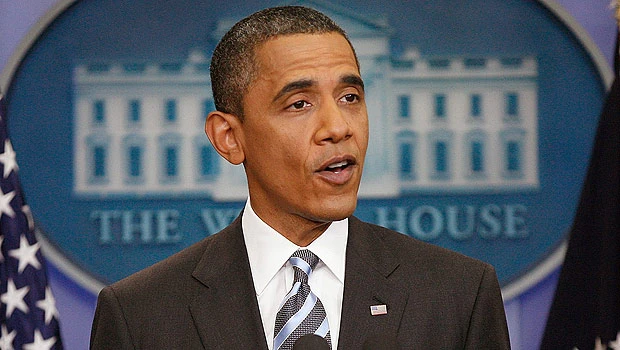
“Show me a plan in terms of what you’re doing in terms of debt and deficit reduction. If they show me a serious plan I’m ready to move even if it requires me to make some tough decisions,” Obama said at a White House news conference.
“We’re running out of time. That’s the main concern that I have at this point,” Obama said.
Boehner lobbed the same charge at Obama.
“They’ve been unwilling to put a real plan on the table. Without serious spending cuts, without real reforms to entitlement programs, this problem is not going to be solved,” Boehner said after a meeting of House Republicans.
With both sides entrenched, a last-ditch plan offered by Senate Republican Leader Mitch McConnell may be the best hope for a solution.
McConnell’s plan would establish a legal framework to raise the debt limit and put nearly all the burden on Obama to carry it out. Senate Democrats are working to modify the plan, but it remains unpopular with conservatives.
Obama said the plan would “at least avert Armageddon” but fretted that it does not resolve the underlying problem of ongoing deficit spending. Obama notably did not reject the plan. Boehner also left the door open.
Financial markets are starting to worry that Republicans and Democrats are too far apart to reach a major budget agreement by Aug. 2.
Ratings agencies Moody’s and Standard & Poor’s have signaled they may cut the gold-plated US credit rating if the borrowing limit is not raised and bills are not paid. Even if the United States does not default, its rating will be under pressure if negotiators do not agree to long-term deficit reduction.
Experts say failure to seal a deal would cause turmoil in global financial markets and could force the United States into another recession.
Five rounds of White House talks this week produced no agreement and much partisan bickering. The talks may resume over the weekend.
The White House says Obama has agreed to roughly $1.7 trillion in spending cuts and wants tax increases to fill out the rest of a plan to increase the debt ceiling long enough to get the country through 2012, when Obama and most lawmakers are up for re-election.
“Until the art of compromise is rediscovered in the nation’s capital, the McConnell ‘fall-back’ plan to raise the debt ceiling ... will be the leading ‘agreement’ candidate to avoid default,” said Ward McCarthy, chief financial economist and managing director at Jefferies & Co. in New York. “This would make the rating agencies unhappy, however.”
Obama canceled budget negotiations for Friday, telling congressional leaders to come up with a “plan of action” on how to unblock talks meant to cut deficits and avert default.
Republican leaders on Friday said they will pass legislation next week that would link a debt-ceiling increase with deep, immediate spending cuts, a cap on future spending levels and a constitutional amendment that would require Washington to balance its budget each year.
The balanced-budget amendment has little chance of reaching the two-thirds vote needed to pass both chambers, and House leaders have not yet scheduled a vote for that part.
House Democratic Leader Nancy Pelosi called the Republican legislation “outrageous.”
Obama, who warned earlier in the week that senior citizens might not receive Social Security checks if the country goes into default, said interest rates would also be affected in a default, increasing costs to Americans for home and car loans and beyond.
It would be, he said, “effectively a tax increase on everybody.”