- Indian port city to wield its soft power to attract wealth and knowledge
Kerala's port city of Kochi is all set to host India's first international Biennale in November next year, pushing the southern Indian state's tourism to new heights.
A record number of 1.3 million visitors from all over the world are expected to converge at the Kochi-Muziris Biennale during the three months, beginning November 2012, in the heritage zones of the city to view art works by some 75 artists from 45 countries as part of a visual arts festival taking place in Kochi and Muziris; an area rich and unique in culture and history.
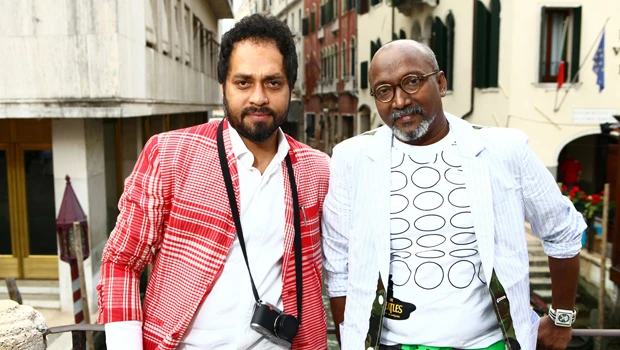
Internationally acclaimed Kerala-born artist-curators Bose Krishnamachari and Riyas Komu, the chief promoters of the event, are on an extensive research trip that has already taken them to Brazil, South Korea, France and the Scandinavian countries, besides Sharjah in the Middle East. They are also expecting many participants from the members of the South Asian Association for Regional Cooperation to attend as well.
Inspired by the world’s oldest Biennale held every two years in Venice, the Kochi-Muziris Biennale aims to bring together superstars in the art world across the globe and young local talents in the centuries old city which boasts of rich legacies of Europe, Africa, South East and Far East Asian and the Chinese.
The legendary Muziris port city that existed until the flood of 1341(add: CE), was discovered during the recent excavations at the nearby Kodungallur region. The state government is building a tourism circuit there and archaeological excavation is currently underway. Muziris is known as the gateway to Judaism, Christianity and Islam in India.
The authorities hope to cash in on its rich maritime history dating back to the first century BC. The Biennale comes in handy for the southern state that wields its soft power to attract tourists.
Krishnamachari is now abroad for some 12 days every month participating in similar events and taking note of their features and ensuring the presence of high quality curators, production companies and allied supporters to make the Indian show unique and most contemporary.
Kochi Biennale Foundation will restore the heritage buildings built by the Dutch, the Portuguese, the English and the local maharajahs to their past glory and leave them to the participating artists to exhibit their works. The cost of the maiden edition of the Biennale is estimated at Rs. 750 million, part of which will come as the budgetary support from the state government.
"Riyas and I had already visited many countries to meet artists, architects and curators and discuss the project with them. The response so far has been very encouraging and we expect many of them to come and participate in the event," said Krishnamachari.
Kochi Biennale Foundation will have a presence at the upcoming 4th International Short and Documentary Film Festival of Kerala, where they will be screening short films pertaining to Kochi-Muziris Biennale from the 31st of July to the 4th of August, 2011.
"For the first time this year, India has its own pavilion at the 54th Venice Biennale. Our intention and vision is that Kochi will become kind of cultural hub in the future. We wanted to make it happen. That's why we are working hard, day and night, on this project," he said.
"Kochi is a melting pot of different kind of cultures. It's almost like a larger world made into a small place. Kochiites speak 13 different languages,” Krishnamachari added.
Krishnamachari left the port city in 1985 to enroll as a student at Sir JJ School of Arts in Mumbai. He's now one of the most sought after artists and curator in India whose paintings fetch millions of rupees. His work, “Ghost: Transmemoir,” was bought by Greek art collector Dimitri Daskalopoulos for 15 million rupees.
Like many Kerala migrants who return to their roots, he also has big dreams about his hometown. He wants to develop it like Bilbao, the Spanish city that transformed itself into a successful service city following an industrial crisis, by building the Guggenheim Bilbao, along with sustainable infrastructure enabling cultural tourists to visit, and artists to work and exhibit there.
"The state can help us by conducting erudite programs and promoting cultural tourism. Bilbao, once a poor industrial town, is now one of the most well known places in the art world. The transformation is known as the Bilbao effect," he said.
According to him, Kochi has all the qualities to get the place in the international art map. It's an emerging IT hub, which will complement the biennale’s web-based learning and research, and it'll broaden knowledge of visual arts in India.
"Kochi Biennale Foundation will collaborate with international heritage foundations to celebrate the rich and diverse history of Kochi. We are in talks with international arts councils such as the Dutch Heritage Council who are interested in renovating Indo-European heritage buildings in Fort Kochi for this festival," he said.
"It will also be an important forum for underrepresented voices along with the celebrated," Krishnamachari added.
He feels that the absence of top class curators capable of providing museum quality exhibitions and taking care of the historical buildings has meant the area has not been able to discover its rightful place in the art world. For instance, the Hill Palace in Thripunithura is a wonderful place but is in very bad condition.
"There are some young people who really want to make this the most beautiful and interesting place. They are all working on this project. Like Riyas, everyday, they conduct some exhibitions. They are all working very hard for this festival – indeed it is the first time an artistic event of this scale and ambition is being realised in India" he said.
"We aim to provide an opportunity to elevate Indian art to an international level and create broad access and introduce new artistic expressions to a broad cross-section of society. If you have foresight, the amount you spend on this is nothing. This will be one of the greatest wealth people can achieve in a few years of time,” said Krishnamachari.