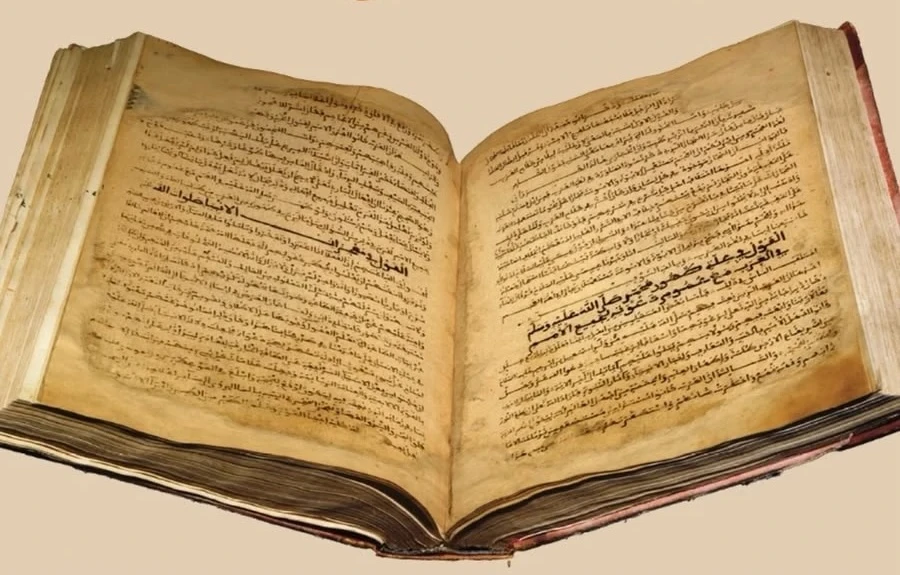
RIYADH: A unique manuscript copy of “Ithbat Al-Nubuwwat” (“Proof of Prophethood”) by Andalusian philosopher and linguist Ibn Al-Sid Al-Batalyawsi has been discovered by the King Faisal Center for Research and Islamic Studies.
The unveiling of the text, which was considered lost for centuries, coincides with the launch of the Arabic Philosophy Studies Program, marking World Philosophy Day.
The discovery comes as part of the center’s efforts to revive Arab and Islamic heritage and highlight its intellectual contributions. The manuscript is the only known surviving copy of the book to date and was copied by Mohammed ibn Abdullah ibn Abd Al-Salam Al-Sudafi in around 1229 in a partially vocalized Andalusian script. Most of its text remains legible despite damage to some sections over time.
The book is of particular significance for its philosophical and theological discussions of the possibility and truth of prophethood. Its author draws on rational arguments to examine differing views, presents responses to those who deny prophethood, and discusses the claim that it is a product of imagination. He also explores the visions experienced by prophets and the distinctions between a prophet, a sorcerer and a soothsayer.
It also reviews the views of several Greek and Islamic philosophers, allowing researchers to Al-Batalyawsi’s intellectual sources, analyze his approach to constructing arguments and addressing objections, and understand his perspective on the relationship between reason and revelation, and philosophy and religion.
The book’s title has been preserved in biographical works. Al-Firuzabadi listed it among Al-Batalyawsi’s works in his book “Al-Bulghah fi Tarajim A’immat Al-Nahw wa Al-Lughah” (“Summary of the Biographies of the Imams of Grammar and Language”.) The discovery of the manuscript allows researchers to move beyond merely knowing the title of the work to studying its text and analyzing its ideas.
The Arabic Philosophy Studies Program aims to study, uncover, critically edit and critique Arabic philosophical texts dating from around the eighth to 16th centuries, with particular attention to the development of philosophical terminology and concepts and the transmission of ideas across cultures and languages.
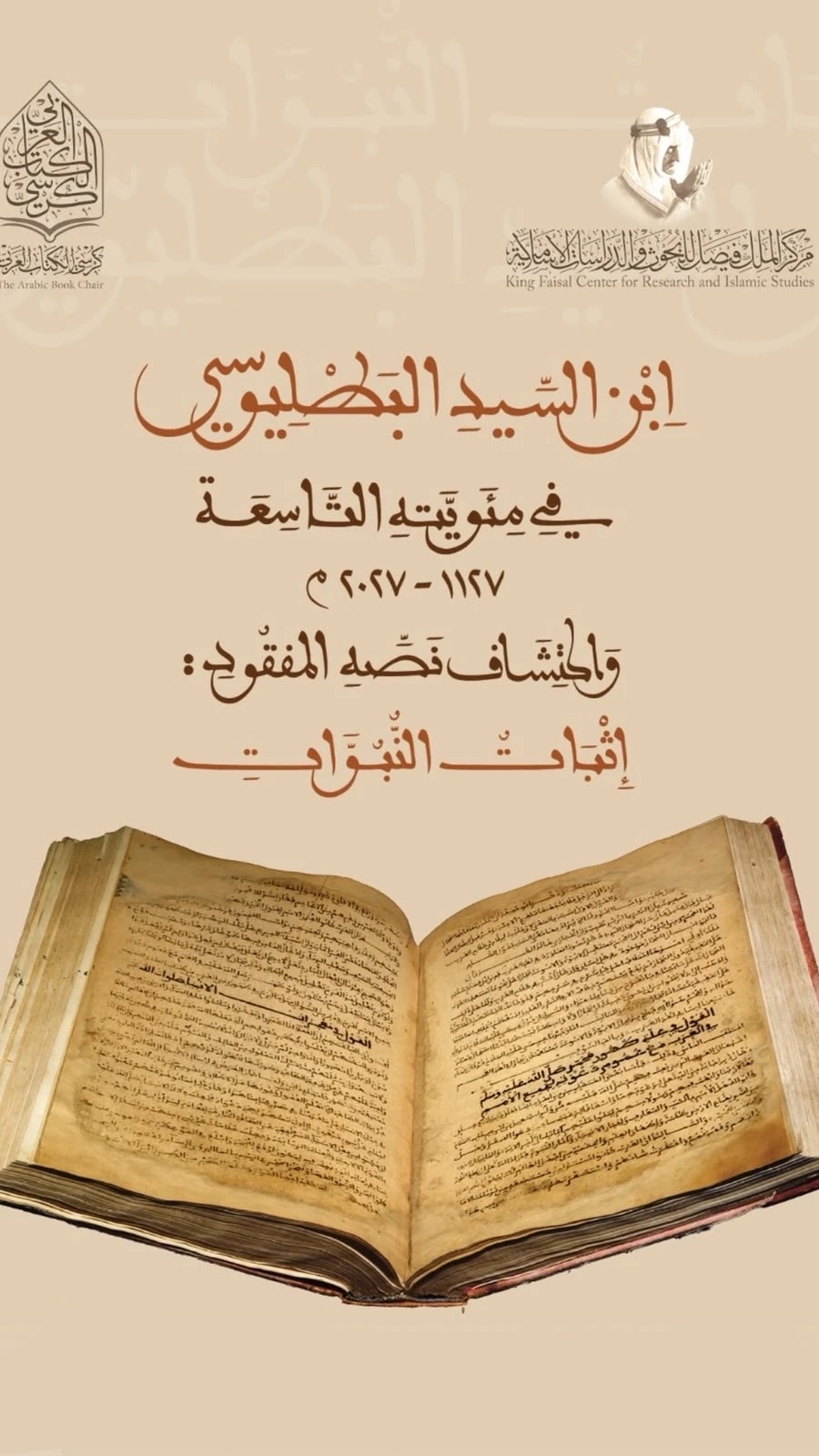
In partnership with the KFCRIS Arabic Book Chair, the program is set to undertake a critical edition of “Ithbat Al-Nubuwwat” and publish it in a scholarly edition accompanied by a specialized study during an academic symposium that the center plans to organize in November 2027. The event will introduce the author, examine the context in which the book was written, describe the manuscript, analyze its content and sources, and compare it with his other works.
KFCRIS has also announced it will dedicate 2027 to celebrating Al-Batalyawsi’s legacy, marking the 900th anniversary of his death according to the Gregorian calendar. It invited researchers, universities and research centers to participate through academic studies and symposia, and to support efforts to publish his works and highlight his contributions to philosophy and Arabic linguistics.
The initiatives include preparing a bibliographical study of his writings, documenting their manuscripts, published editions and works that remain lost, as well as compiling studies and research related to him. They also include translating into Arabic a study by Spanish researcher Salvador Pena Martín titled “The Quran, the Word and Truth: Ibn Al-Sid and Humanism in Al-Andalus.”
The symposium will also be accompanied by an exhibition, Masterpieces of Andalusian Manuscript Heritage, which will highlight selected Andalusian manuscripts and provide information on when they were copied, their scripts and their scholarly value. It will also explore the relationship between language and logic in Al-Batalyawsi’s writings, his views on questions of prophethood, reason and revelation, and the presence of his works in Hebrew and Spanish studies.
Al-Batalyawsi, who lived from 1052 to 1127 CE, is regarded as one of the most prominent philosophers and linguists of Al-Andalus. He lived through the final years of the Taifa kingdoms and the period of Almoravid rule, settled in Valencia, and engaged in scholarly debates with the philosopher Ibn Bajjah, some of which were preserved in his book “Al-Masa’il wa Al-Ajwibah” (“Questions and Answers”.)
KFCRIS previously demonstrated interest in his intellectual legacy by publishing “Rasa’il fi Al-Lughah” (“Treatises on Language”) in 2007. The book, which comprised 18 treatises, was published as part of its critical heritage edition series edited by Dr. Walid Muhammad Al-Sarraqbi. The discovery of the Al-Nubuwwat manuscript builds on this longstanding interest and opens up a new avenue for studying the philosophical dimension of his intellectual output.