- MAKKAH: The Civil Defense Department in Makkah has adopted precautionary measures to reduce pollution from excessive carbon emissions by vehicles inside tunnels leading to the Grand Mosque.
“We have adopted a comprehensive plan for the management of tunnels around the Grand Mosque, especially during the peak hours before and after Isha and taraweeh prayers,” the department said.
The department would calculate the rate of carbon emissions from the tunnels and coordinate with the traffic authorities in controlling the flow of vehicles passing through the tunnels.
Such a measure was essential to avoid traffic jams and reduce the rate of carbon inside the tunnels, it said.
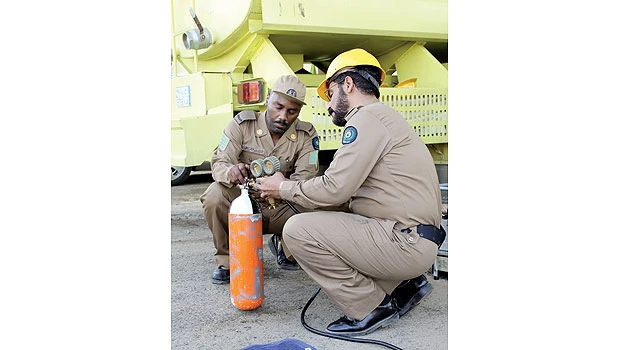
The department has deployed a number of specialized teams to monitor rates of chemicals, carbon dioxide and radioactive materials inside the tunnels. These teams work in four locations around the clock and intensify their activities during peak hours.
The department takes quick measures to prevent overcrowding of vehicles inside tunnels that would lead to increasing carbon emissions.
“We prevent vehicles from entering the tunnel until the vehicles inside are cleared,” the department said. “This way we control the flow of vehicles in order to avoid overcrowding and related problems.”
The department has deployed 12-member teams near tunnels for monitoring carbon emissions and taking necessary measures to prevent overcrowding of vehicles inside tunnels.
It uses devices such as MDX and GAM to calculate the rate of carbon emissions.
In a related development, the department’s geological survey and monitoring unit has taken steps to prevent rocks from falling onto streets, either by fixing them in place or removing them.
The department has also set up a rapid deployment force to deal with dangerous chemicals and other materials in Makkah during Ramadan.
The department’s precautionary measures are significant to ensure the security and safety of the millions of pilgrims and worshippers who are assembling in Makkah for Umrah and special prayers.